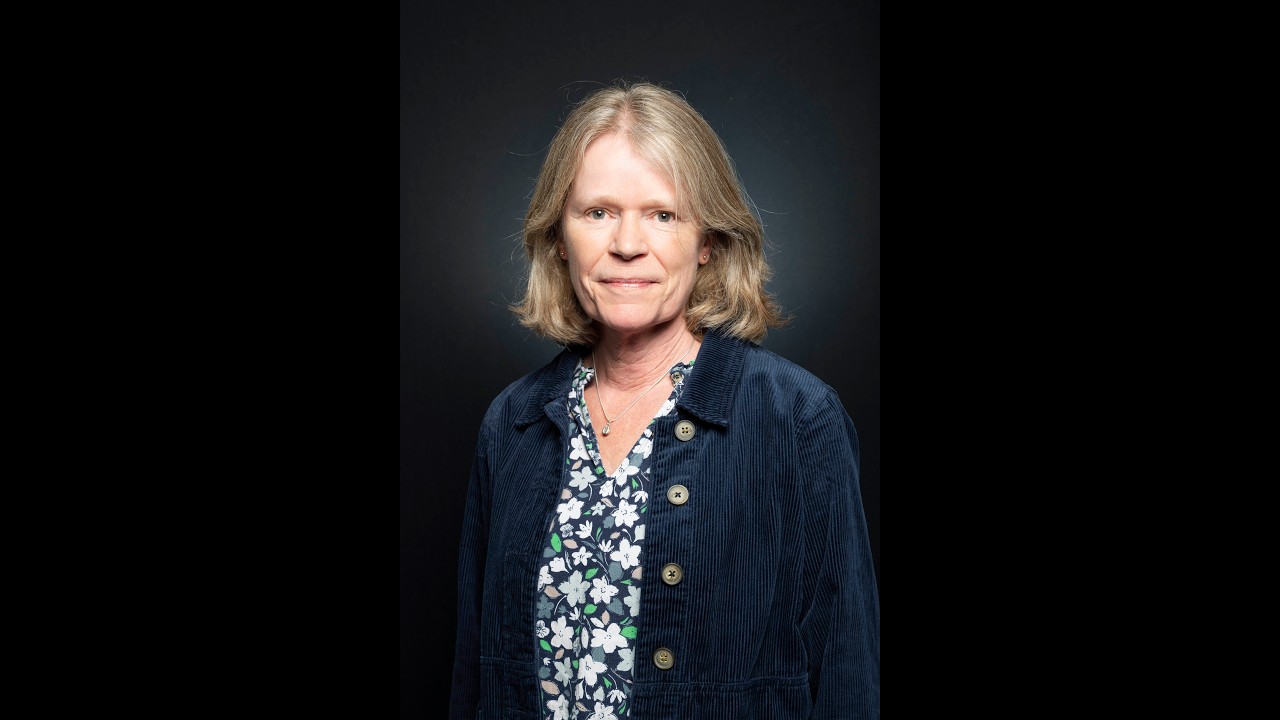
Deborah Greaves, Statutory Professor of Civil Engineering, University of Oxford
Title history
- Deborah Greaves, Statutory Professor of Civil Engineering, University of Oxford — observed on 20261026-0836 UTC (YouTube)
Keywords
Summary
156 words
Critical Evaluation
Value of the Information & Strength of the Argument
The talk provides valuable insights into the current status and future directions of offshore renewable energy, supported by her expertise and involvement in major research programs. The argumentation is coherent, presenting challenges and solutions, and stresses the need for diversifying energy sources. She uses concrete examples and data (e.g., capacity numbers, consent reduction) to support her points.
Scientific Rigor, Source Quality, Title Accuracy
The scientific rigor appears solid, drawing from government plans and research collaborations. However, the talk does not cite specific external sources or provide references, so the audience cannot verify claims directly. The title is inadequate as it does not reflect the content, but the description provides the actual talk title. Overall, the content is well-structured and reliable though not deeply sourced.
133 words
Title / Content Match
The title is simply the speaker's name and does not indicate the topic, but the description provides the talk title 'Offshore renewable energy: Navigating the course'. This is a common format for recorded lectures.
Quality & Reliability
8/10
The talk is given by a leading professor and expert in offshore renewable energy, with references to government plans and research programs. However, it is a presentation without peer review, and some claims are not quantified. The content is reliable but not exhaustive.
Key Moments
Markers derived by PSI from the transcript: the creator did not define chapters.
- Introduction and speaker biography.
- UK's offshore renewable capacity and targets for 2030.
- Challenges of deeper water and need for floating structures.
- Overview of the Supergen Offshore Renewable Energy Hub.
- Research highlights: scale models, wave tanks, and computational work.
- Hybrid systems and environmental impact research.
- New reports: Outlook 2040 and Strategic Research Agenda.
- New infrastructure: floating laboratory and digital twin.
Cited Sources
- Outlook 2040 — Report mentioned as looking at needed actions for 2050 ambitions.
- Strategic Research Agenda — Newly published report to set research priorities for the next five years.
- EquiFAS project — Collaborative project studying ecosystem and atmospheric impacts of large-scale offshore wind.
Contribution & Novelties
She provides a comprehensive overview of the UK’s offshore renewable energy landscape and highlights the importance of combining wind, wave, and tidal energy for system resilience. She introduces the Supergen hub and its role in fostering research and innovation. The talk also presents new strategic reports and a planned floating laboratory, showcasing the direction of future research. This adds value by informing about the latest initiatives and research priorities.
Pour aller plus loin :
- Offshore wind power - Provides background on technology and global deployment.
- Tidal power - Explains tidal stream energy and its potential.
- Wave power - Overview of wave energy conversion.
- Digital twin - Concept used for virtual replicas in the new infrastructure.
115 words
Radar Profile
The profile shows high scores in quantity and quality of information, with slightly lower technical depth, reflecting a broad but accessible overview suitable for a general audience with some technical background.