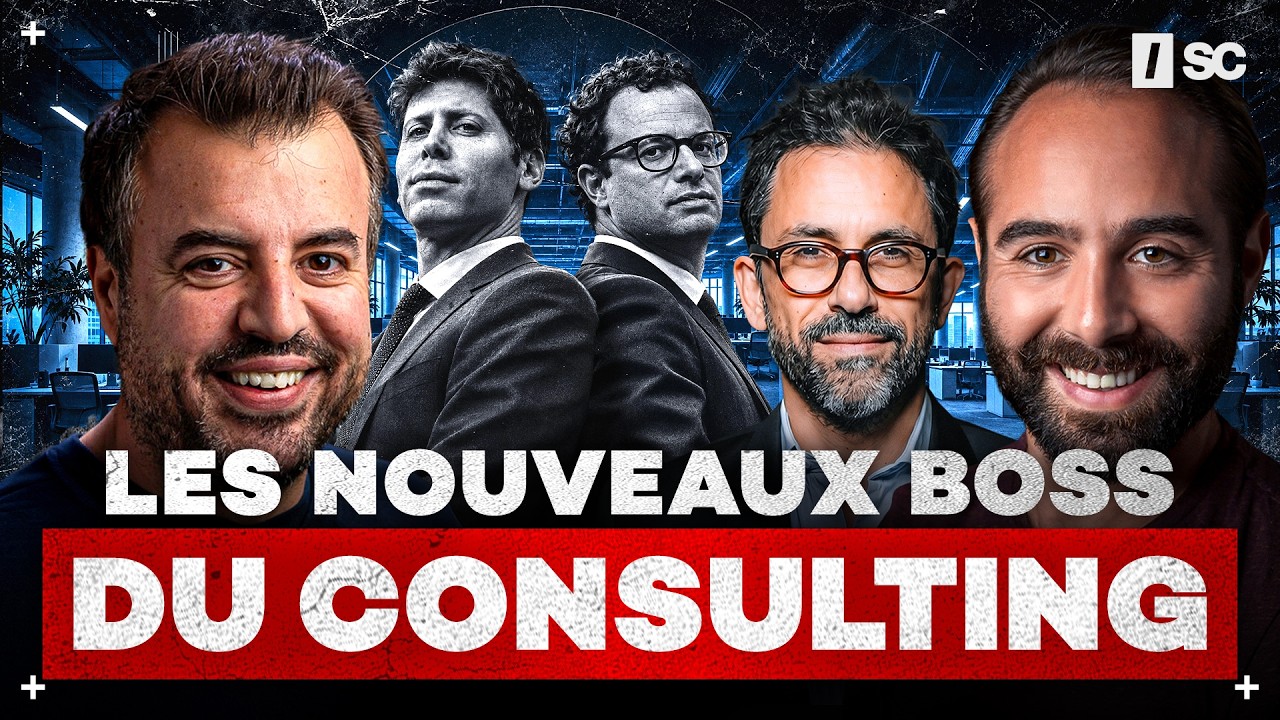
Anthropic et OpenAI deviennent consultants, les Big Four tremblent !
Anthropic and OpenAI become consultants, the Big Four are trembling!
Title history
- Anthropic et OpenAI deviennent consultants, les Big Four tremblent ! — observed on 20261109-1804 UTC (YouTube)
Keywords
Summary
131 words
Critical Evaluation
Value of the Information & Strength of the Argument
The value lies in the expert panel’s ability to contextualize recent news with strategic insight. The argumentation is solid: they identify the root causes of consulting’s decline (talent drain, commoditization) and propose that AI labs are the natural successors due to their technical superiority and feedback loops. The debate between Stéphane Mallard (predicting the end of Big Four) and Michel Levy-Provençal (seeing a hybrid future) adds nuance. They support claims with concrete examples (Accenture’s numbers, McKinsey’s salary hikes) and well-known concepts like spinoff strategies. The reasoning is coherent, though some points rely on anecdotal evidence.
Scientific Rigor, Source Quality, Title Accuracy
The scientific rigor is moderate: the video cites a Financial Times article without providing a direct link, and relies heavily on expert opinions. The quality of sources is limited; no academic or official reports are referenced. The title accurately reflects the content, which is centered on the competitive threat posed by AI labs to traditional consultancies. The discussion is well-structured but would benefit from more transparent sourcing and data to support the strong claims.
184 words
Title / Content Match
The title accurately reflects the core topic: Anthropic and OpenAI entering the consulting market and the implied threat to the Big Four. The content fully aligns with this premise.
Quality & Reliability
7/10
The discussion is based on recent news (FT article) and expert opinions. While the arguments are coherent and well-reasoned, no primary sources are directly linked, and some claims are speculative.
Chapters
- Sommaire
- Anthropic et OpenAI lancent leurs propres armées de consultants
- La fuite des talents a tué la légitimité du conseil
- Big Four : changer la nappe ou renverser la table ?
- Accenture fait des records : les Big Four résistent vraiment ?
- Andreessen : créez des spinoffs AI-native, arrêtez de transformer
- Adopter l'IA maintenant ou attendre les agents autonomes ?
- McKinsey relève ses salaires : la bataille des talents est ouverte
- La formation IA est-elle vraiment inutile ?
- L'État face au conseil : Palantir et Mistral en embuscade
- Les Émirats créent le premier gouvernement full AI-native
- Steve Jobs avait tout prévu sur les consultants
Cited Sources
- Event: After Silicon Carne on 18/11 — Announced at the beginning of the episode.
- Silicon Carne newsletter (L'Hacienda) — Promoted as a paid newsletter with analyses.
- Substack subscription page — Linked for subscribing to the newsletter.
- Podcast version of Silicon Carne — Mentioned that the show is available as a podcast.
- LinkedIn of Carlos Diaz — Profile of one of the hosts.
- LinkedIn of Michel Levy-Provençal — Profile of one of the guests.
- LinkedIn of Stéphane Mallard — Profile of one of the guests.
Contribution & Novelties
The episode offers an original angle: instead of seeing AI as a threat to consulting, it posits that AI labs themselves are becoming the most legitimate consultants due to their technical ownership and data feedback loops. It also discusses the strategic choice between transforming existing firms and creating AI-native spinoffs, a distinction that adds practical value.
Pour aller plus loin :
- Management consulting - Wikipedia — Provides background on the consulting industry and its evolution.
- Big Four accounting firms - Wikipedia — Context on the large professional services networks discussed.
- Artificial intelligence - Wikipedia — General reference on AI and its applications in business.
104 words
Radar Profile
The radar profile shows relatively high scores in information quantity and quality, with moderate technical level and reliability. This reflects a discussion rich in insights but lacking in rigorous data sourcing.