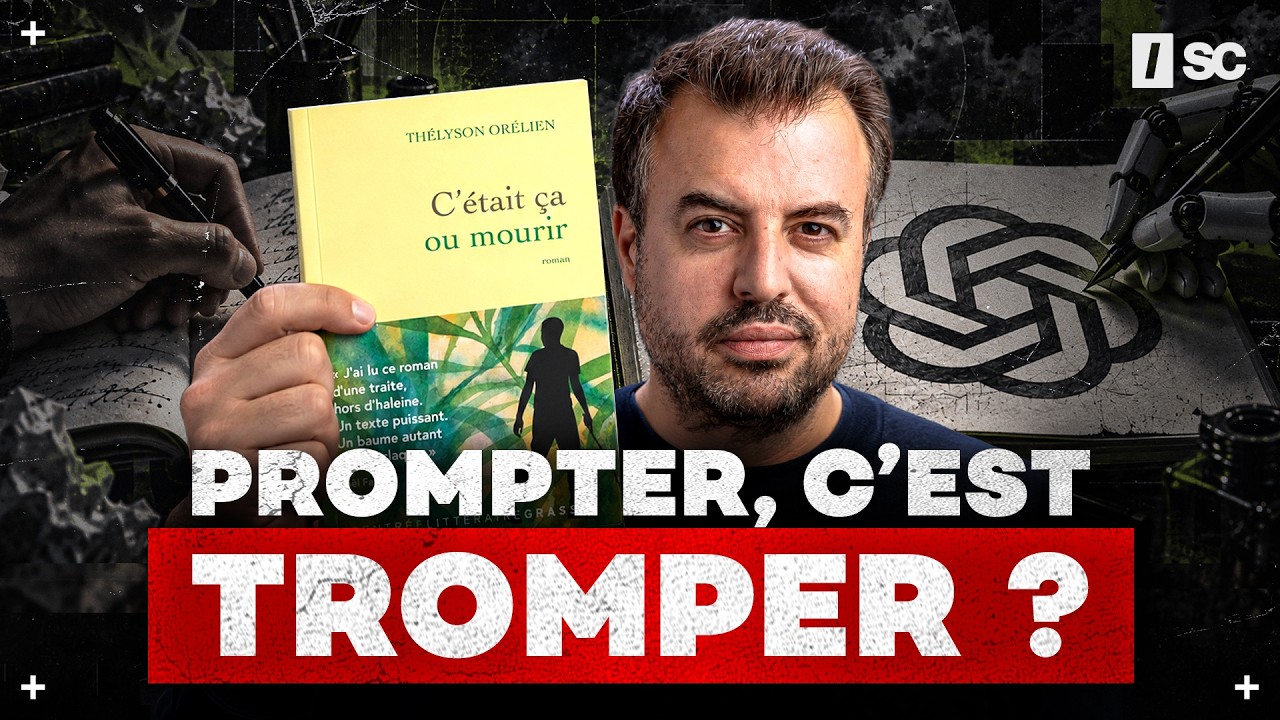
Prix Fnac, Goncourt… L’IA a-t-elle infiltré la littérature ?
Fnac Prize, Goncourt... Has AI infiltrated literature?
Keywords
Summary
130 words
Critical Evaluation
Value of the Information & Strength of the Argument
The episode provides valuable insights into the current French literary debate, offering multiple perspectives from a tech entrepreneur (Rodriguez) and a media expert (Douani). The arguments are presented with emotional anecdotes and analogies, notably the comparison with Daft Punk and sampling, which effectively illustrate the creative potential of AI. However, the reasoning is largely based on personal experience and opinion rather than empirical evidence, and some claims (e.g., that ’everyone uses AI’) are asserted without concrete data. The discussion effectively highlights the tension between traditional authorship and AI assistance, but the lack of a more rigorous examination of the economic and legal dimensions weakens its depth.
Scientific Rigor, Source Quality, Title Accuracy
The episode references real events (the Prix Fnac controversy, Hervé Le Tellier’s boycott, the Prix Pascal) and relies on the personal stories of the guests. Sources cited from the description include the Substack newsletter, podcast links, and LinkedIn profiles of the participants, but no direct references to studies or articles are provided. The title is well-suited to the content, which is a balanced discussion of the topic. The rigour is moderate; the episode is more conversational than academically rigorous, but it does present a genuine debate with opposing viewpoints, and the title accurately captures the theme.
217 words
Title / Content Match
The title accurately reflects the content; the episode explores the controversy surrounding a literary prize for AI-written works and the broader infiltration of AI into literature.
Quality & Reliability
6/10
The discussion is opinion-based with occasional references to events and figures, but lacks rigorous scientific sources or data. The claims about AI writing and the literary world are anecdotal and not systematically verified.
Chapters
- Sommaire
- La perte d'un père comme déclencheur littéraire inattendu
- Une armée d'agents IA pour fabriquer des romans
- Le Tellier refuse... et utilise Claude pour le dire
- Boycott littéraire en France : résistance ou hypocrisie ?
- Pillage, peur, identité : tout ce que l'IA révèle aux auteurs
- [Sponsor] : Qonto, pilotez votre trésorerie avec l'IA intégrée !
- Comment Philippe fabrique vraiment un roman avec l'IA
- Daft Punk, sampling : le précédent musical que la littérature ignore
- La Nouvelle Vague aux LLM : l'outil qui change tout
- Tout le monde utilise l'IA : pourquoi personne ne l'admet ?
- Ce que l'IA efface : la douleur d'apprendre
- Personne ne lit plus : l'IA peut-elle réenchanter la lecture ?
- La France a choisi la rareté : l'IA menace ce modèle
- Jacques Attali préside le Prix Pascal : la réponse au boycott ?
Cited Sources
- Silicon Carne Newsletter — Official newsletter for the podcast community
- Silicon Carne Podcast — Podcast version of the show
- Carlos Diaz LinkedIn — Host's professional profile
- Damien Douani LinkedIn — Guest's professional profile
- Philippe Rodriguez LinkedIn — Guest's professional profile
External References
Contribution & Novelties
The episode contributes to the public debate by exposing the real-life controversy around the Prix Pascal and the reactions of the literary establishment. It offers a rare insider perspective on how AI agents can be used to write novels, and raises the provocative question of whether AI should be eligible for literary prizes. The discussion also highlights the hypocrisy in the literary world, exemplified by Le Tellier using Claude for his refusal letter.
Pour aller plus loin :
- Artificial intelligence art — Relevant to the broader context of AI-generated creative works.
- Large language model — Provides background on the technology behind AI writing.
- Sampling (music) — The Daft Punk analogy is rooted in this concept, analogous to AI training.
- Oulipo — A literary movement that experimented with constraints, relevant to the idea of AI-assisted creation.
135 words
Radar Profile
The radar profile shows a balanced set of scores, with quantity of information slightly higher than quality and technicality. The fiabilite_globale is moderate, reflecting the opinion-driven nature of the discussion. The episode is informative but not deeply technical or scientifically rigorous, which is typical for a conversational podcast format.
💬 positive. The 30 comments analyzed show a largely positive reception, with many viewers appreciating the topic and the quality of the discussion, while a few offer critical or nuanced viewpoints on AI and authorship.