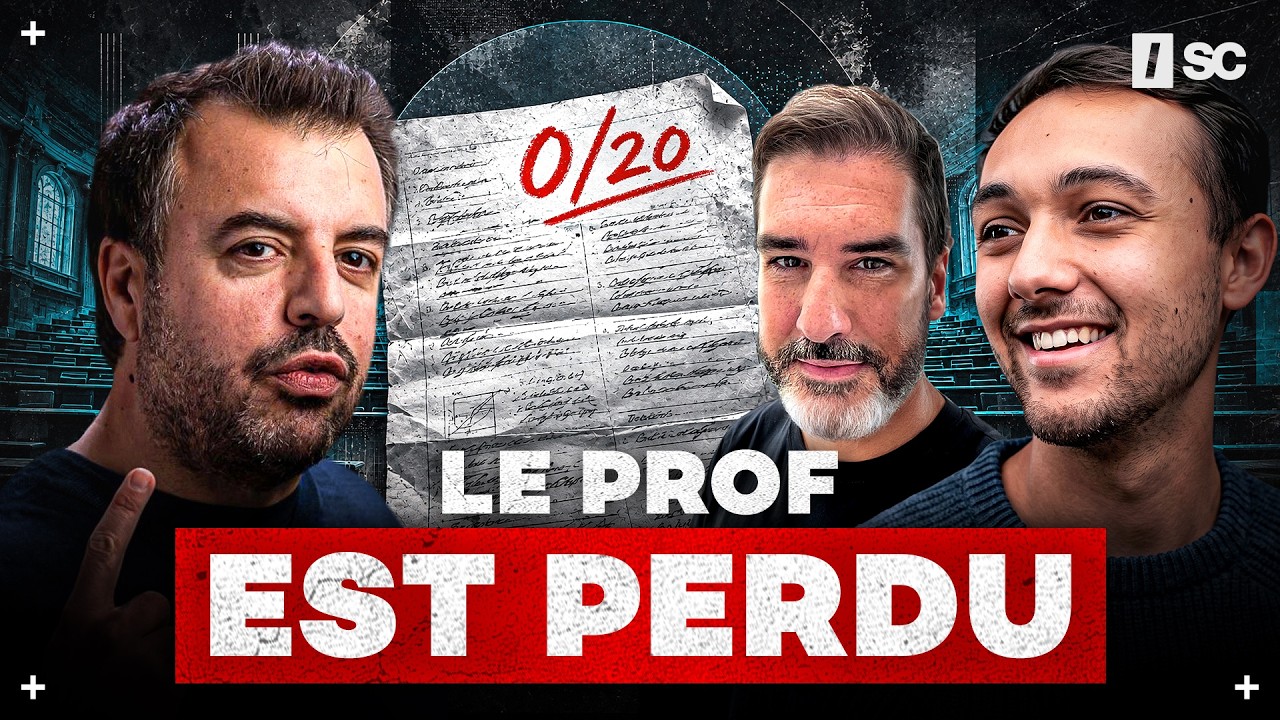
ChatGPT vs l'École : le grand danger pour nos enfants ?
ChatGPT vs School: the great danger for our children?
Keywords
Summary
156 words
Critical Evaluation
Value of the Information & Strength of the Argument
The video provides valuable firsthand perspectives from practitioners who work directly with students and AI. The hosts present concrete examples, such as the drop in exam scores and the empty office hours, which illustrate real trends. The argumentation is coherent: they distinguish between superficial use of AI (asking for answers) and meaningful use (as a tutor or tool for deeper learning). They also stress the importance of teaching transferable skills like initiative and discernment. However, the argumentation relies more on anecdotal evidence and expert opinion than on systematic data, and some claims, like the 96% to 48% grade drop, are not independently verified. The debate is thoughtful but lacks scientific depth.
Scientific Rigor, Source Quality, Title Accuracy
The title is well-matched to the content, which centers on the perceived dangers of ChatGPT in schools. The video mentions a specific study (Ipsos survey) and a post by Daniel Adiomov, but no direct links or references are provided for these. The discussion references the experiences of teachers at Stanford and Brown, but specifics are not documented. The description includes LinkedIn profiles of the guests and links to the podcast and newsletter, which serve as sources for further reading but not as citations for the claims made. Overall, the sourcing is informal, typical of a talk show, and the rigour is moderate. The title is engaging but does not overstate the content, as the debate indeed addresses dangers and opportunities.
246 words
Title / Content Match
The title accurately reflects the content: a debate on the impact of ChatGPT on education and children.
Quality & Reliability
7/10
The discussion features two experts with practical experience in AI and education, and cites specific anecdotes (Brown University, Stanford) and a survey (Ipsos) but relies heavily on personal observations rather than peer-reviewed research. The information is credible but lacks systematic verification.
Chapters
- Sommaire
- Bureaux des profs désertés : l'IA a-t-elle tué le dialogue ?
- Devoirs parfaits, exam raté : l'IA comme béquille invisible
- [Sponsor] : Granola, automatisez vos notes de réunion !
- La moitié des étudiants utilise l'IA même quand c'est interdit
- Maîtriser l'IA ou juste la subir : le vrai fossé
- Quelles compétences restent à l'école à l'ère de l'IA ?
- IA tuteur contre IA supermarché : deux usages, deux avenirs
- Idée, regard, décision : ce que l'IA ne peut pas remplacer
- Curiosité ou obligation : peut-on enseigner l'envie d'apprendre ?
- France interdit, Chine impose : un choix qui divise le monde
- Des profs perdus face à des cerveaux qui ont changé
- Utiliser ChatGPT, ce n'est pas maîtriser l'IA
- Faut-il remplacer les profs par des coachs ?
- L'esprit critique : vrai pilier ou slogan creux ?
- Se planter : l'erreur comme seul moteur d'apprentissage
Cited Sources
- Loïc Conan - LinkedIn — Guest profile
- Damien Douani - LinkedIn — Guest profile
- Carlos Diaz - LinkedIn — Host profile
- Silicon Carne Substack — Newsletter
- Silicon Carne Podcast — Audio version of the show
External References
Contribution & Novelties
The episode contributes to the ongoing discussion on AI in education by juxtaposing the perspectives of an AI consultant and a teacher, highlighting the gap between students’ superficial use of AI and the deeper skills needed. It offers a nuanced view that two distinct uses of AI (as a ‘supermarket’ for answers vs. a ’tutor’) lead to very different outcomes. The hosts propose that education must shift from knowledge transfer to fostering initiative and critical judgment.
Pour aller plus loin :
- Artificial intelligence in education - Wikipedia — Overview of AI applications in education.
- ChatGPT - Wikipedia — Background on the tool that is the subject of the debate.
- Critical thinking - Wikipedia — Key skill discussed in the video.
120 words
Radar Profile
The radar profile shows moderate scores across all dimensions, with quantity of information slightly higher than reliability. This indicates an informative but not deeply rigorous production, typical of a debate show relying on expert opinions and anecdotes.