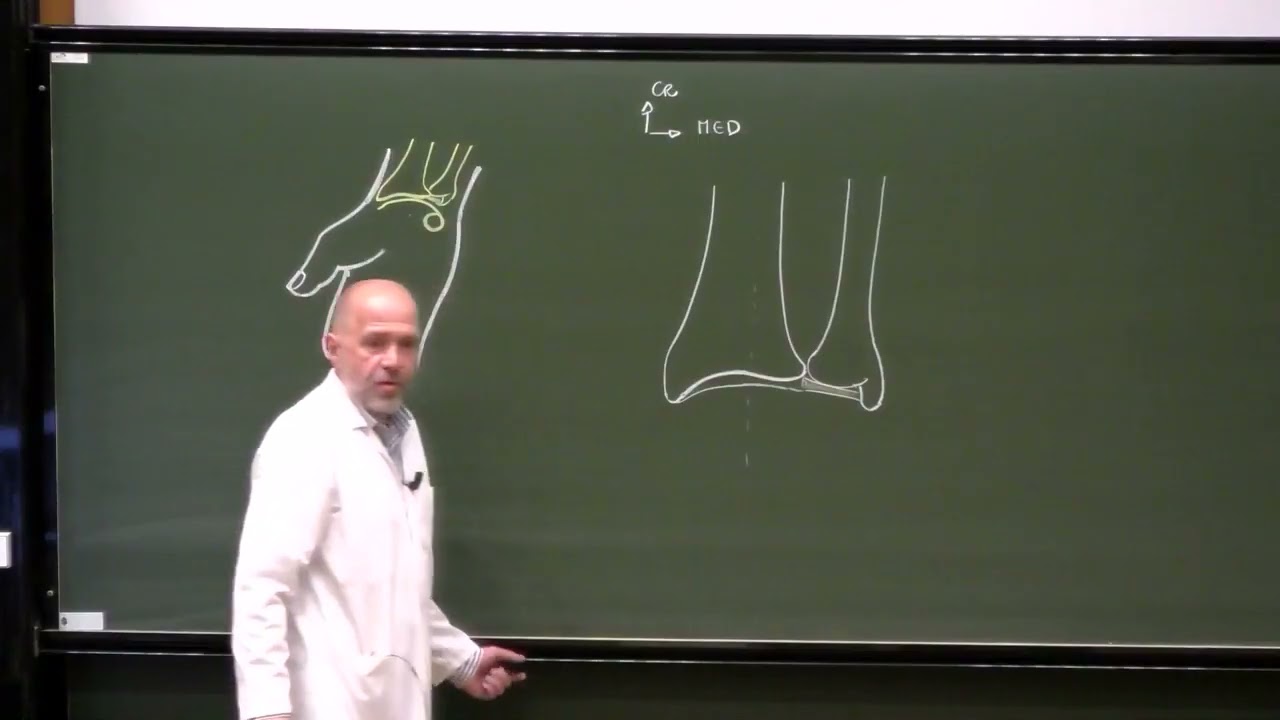
MS 3-2: Articulations du poignet et de la main (Wrist and hand joints) 2026 version
MS 3-2: Wrist and hand joints 2026 version
Title history
- MS 3-2: Articulations du poignet et de la main (Wrist and hand joints) 2026 version — observed on 20261112-1038 UTC (YouTube)
Keywords
Summary
119 words
Critical Evaluation
Value of the Information & Strength of the Argument
The value lies in its comprehensive and systematic anatomical description, using a clear pedagogical structure (surfaces, unions, gliding, movements). The argumentation is solid, based on standard anatomical knowledge, with occasional clinical correlations (e.g., carpal tunnel syndrome, hamate hook fracture in golfers) that enhance relevance. The lecture also highlights functional integration, such as the synergy between joints for prehension. The approach is didactic, using diagrams and palpation instructions, which supports understanding.
Scientific Rigor, Source Quality, Title Accuracy
The title exactly matches the content. No external sources are cited; the material is presented as established anatomical knowledge. The lack of citations is typical for lecture-style content but limits verifiability. The description of anatomical structures and variations (e.g., 40% communication between synovial cavities) aligns with standard medical texts. The presentation is rigorous in its terminology and systematic approach.
144 words
Title / Content Match
The title accurately reflects the content: a detailed lecture on wrist and hand joints.
Quality & Reliability
8/10
Detailed anatomical lecture with systematic description of surfaces, unions, and movements, based on standard anatomical knowledge. No external citations provided, but content is consistent with established medical education.
Key Moments
Markers derived by PSI from the transcript: the creator did not define chapters.
- Introduction to wrist anatomy and key regions.
- Definition of radiocarpal joint and role of articular disc.
- Detailed description of distal radius articular surface.
- Carpal bones: proximal row (scaphoid, lunate, triquetrum, pisiform).
- Distal row (trapezium, trapezoid, capitate, hamate) and carpal tunnel.
- Ligaments: collateral (radial and ulnar), palmar, dorsal.
- Movements of the wrist: flexion, extension, abduction, adduction.
- Overview of hand joints, emphasizing functional importance.
- Clinical notes and palpation tips.
Contribution & Novelties
The lecture provides a complete and systematic review of wrist and hand arthrology, with clear diagrams and palpation tips. Its originality lies in its pedagogical structure and integration of clinical notes.
Pour aller plus loin :
- Radiocarpal joint - Wikipedia — Overview of structure and function.
- Carpal tunnel syndrome - Wikipedia — Clinical condition mentioned.
- Scaphoid bone — Details on this bone’s anatomy and clinical relevance.
66 words
Radar Profile
The radar profile shows high scores in information quantity and technical level, indicating a dense, detailed lecture. The lower score in 'quality information' relative to quantity suggests the content is comprehensive but relies on traditional teaching rather than novel evidence.