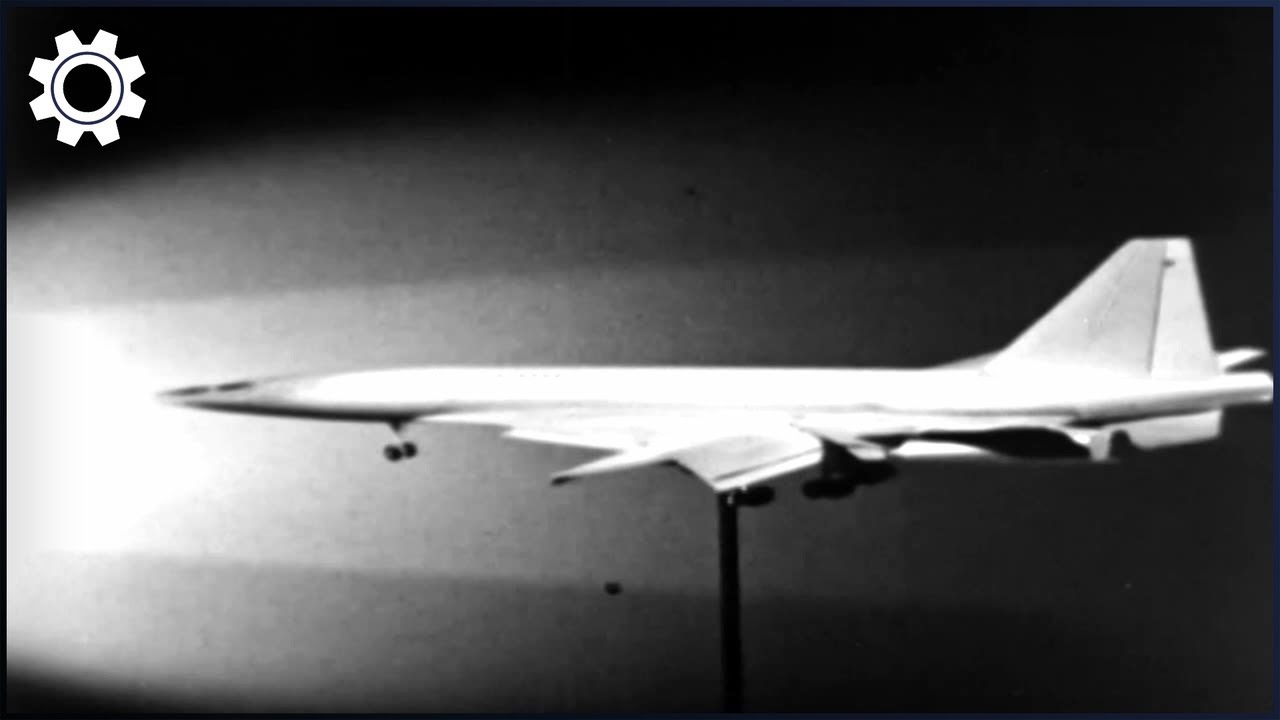
The Concorde Story - How Supersonic Passenger Flight Changed Aviation
Keywords
Summary
141 words
Critical Evaluation
Value of the Information & Strength of the Argument
The value of the information lies in its comprehensive historical narrative, weaving together political, economic, and technical aspects of the Concorde project. The argumentation is well-structured, moving from concept to design, production, testing, and operational debut. It presents balanced perspectives on controversies, such as the fuel reserve debate and the naming dispute, and underscores the immense engineering effort without oversimplifying. The use of archival footage and interviews with engineers lends authenticity, though the documentary does not engage in critical analysis of potential negative environmental or economic impacts, focusing instead on achievements. The strength of the argumentation is in its chronological clarity and attention to technical detail, making complex engineering accessible while preserving historical context.
Scientific Rigor, Source Quality, Title Accuracy
The documentary demonstrates moderate scientific rigor: it references real institutions (Bristol Aeroplane Company, Sud Aviation, BAC, RAE) and authentic technical processes, but it lacks explicit citations or references to primary sources. The quality of sources is inferred from archival material and testimonies, which appear authentic. The title is perfectly aligned with the content, as the video indeed tells the story of Concorde and its role in changing aviation. However, the scarcity of direct source attribution and the absence of contrasting viewpoints on environmental or sonic boom issues slightly diminish its scientific completeness. Overall, the rigor is commendable for a general-audience documentary, but not at the level of peer-reviewed scholarship.
238 words
Title / Content Match
The title accurately reflects the content, which comprehensively covers the development, engineering, and historical impact of supersonic passenger flight with Concorde at its center.
Quality & Reliability
8/10
The documentary provides a detailed and coherent historical account of the Concorde program, with accurate technical descriptions of aircraft design, engines, and testing procedures. While lacking direct scientific citations, it relies on archival footage and expert testimony, and presents information consistent with known aviation history.
Key Moments
Markers derived by PSI from the transcript: the creator did not define chapters.
- Explanation of sound barrier breaking using special camera footage.
- Introduction of Concorde at the Paris Air Show and the Anglo-French agreement.
- Discussion of design heritage including Delta 2, Trident, and wind tunnel testing.
- Rivalry with Boeing 2707 and Soviet Tu-144, and the impact on Concorde's development.
- Manufacturing techniques: sculpture milling, chem etching, and electron beam welding.
- Roll-out of Concorde 1 and its public debut at Toulouse.
- Ground tests and first successful test flight with test pilots André Turcat and Brian Trubshaw.
- Noise testing and engineering anecdotes including the incident of the mains cable melting.
- First supersonic flight reaching Mach 1.5, marking a milestone in aviation history.
Cited Sources
- Anglo-French Concorde Agreement — Mentioned as the treaty signed between Britain and France in 1962 to jointly develop the Concorde.
- Bristol Siddeley Olympus 593 Engine — The engine type chosen to power the Concorde, tested on the test bed and in flight.
- Royal Aircraft Establishment — Reference to wind tunnel and flight testing facilities used during development.
Concurring Sources
- Concorde - Wikipedia — The reliable historical record of Concorde's design, performance, and service correlates with the documentary's account.
- Boeing 2707 - Wikipedia — Independent details about the rival American SST program align with the video's description.
- Tupolev Tu-144 - Wikipedia — The Soviet counterpart's capabilities and fate match the documentary's portrayal.
Contribution & Novelties
The documentary offers an engaging synthesis of the Concorde story, presenting a wealth of archival footage and technical anecdotes that are rarely seen in a single feature. It adds value by contextualizing the engineering decisions within political and economic pressures, and by highlighting lesser-known aspects such as the sabotage attempt and the extensive testing program. The narrative connects past achievements to future supersonic ambitions, providing a historical basis for current discussions.
Pour aller plus loin :
- Concorde - Wikipedia — Overview of the aircraft’s development, specifications, and operational history.
- Supersonic transport - Wikipedia — Covers various supersonic airliner projects worldwide, including Boeing 2707 and Tu-144.
- Sound barrier - Wikipedia — Explanation of the aerodynamic phenomena and its historical significance.
119 words
Radar Profile
The radar profile shows a strong emphasis on quantity and quality of information, with high scores for content density and reliability. Technical depth is moderate, indicating the documentary is accessible without being superficial. The overall fiabilité is high, reflecting a well-researched presentation, though the absence of explicit citations prevents a perfect score.