London Cure Salmon, Priestley's Fizz, and Perfume's Flashpoint Secrets
Title history
- London Cure Salmon, Priestley's Fizz, and Perfume's Flashpoint Secrets — observed on 20261108-1723 UTC (YouTube)
Keywords
Summary
204 words
Critical Evaluation
Value of the Information & Strength of the Argument
The video provides a rich layering of historical narrative, scientific explanation, and hands-on demonstration. The smoked salmon segment benefits from direct commentary by a family business owner, giving authentic insights into a 100-year-old craft. The carbonated drinks section effectively combines historical milestones (Priestley, crown cap) with a simple quantitative experiment (boiling soda to reveal sugar content), making the health argument tangible. The perfume segment explains advanced analytical techniques like gas chromatography and flash point testing in an accessible way, tying them to regulatory and quality control. The argumentation is coherent and logical, though some historical claims are simplified (e.g., the exact origins of smoking) and could benefit from more nuance. The overall narrative structure—moving from food to drink to scent—maintains engagement while consistently connecting science to consumer products.
Scientific Rigor, Source Quality, Title Accuracy
The documentary relies on primary interviews and site visits, which generally support its credibility. However, no explicit external citations or references are provided, limiting the ability to verify specific numbers (e.g., 1.7 billion servings of cola, cost of raw materials). Historical anecdotes are presented without sourcing, though they align with common knowledge. The title accurately reflects the content, with each topic receiving a roughly equal segment. The production quality is high, with clear explanations and demonstrations. While the lack of formal references is a drawback, the use of practitioner interviews (e.g., the owner of H. Forman & Son, the perfumer) adds practical authority. The sugar experiment is a reproducible demonstration that reinforces the health message. Overall, the rigor is acceptable for a popular science documentary, but scholarly precision is not a priority.
275 words
Title / Content Match
The title accurately lists the three main topics covered: smoked salmon, carbonated drinks, and perfume, with each receiving substantial attention.
Quality & Reliability
8/10
The documentary combines firsthand interviews with industry experts and practical demonstrations, providing a reliable overview of traditional and modern processes. Historical claims are broadly accurate but simplified, and the lack of explicit citations reduces full verifiability.
Key Moments
Markers derived by PSI from the transcript: the creator did not define chapters.
- Introduction to the three topics: smoked salmon, carbonated drinks, and perfume.
- History of smoked salmon, including Native American spiritual associations and Eastern European origins.
- H. Forman & Son: hand filleting, salt curing process, and the importance of freshness.
- Explanation of the London Cure, smoking, pellicle removal, and pin bone plucking (32 per fillet).
- History of carbonated drinks: from natural springs to Joseph Priestley's 1767 breakthrough and the health tonic origins.
- The crown cap invented by William Painter in 1892, and the science of CO2 dissolution and bubble formation upon opening.
- Sugar content experiment: boiling a can of soda to reveal six teaspoons of sugar.
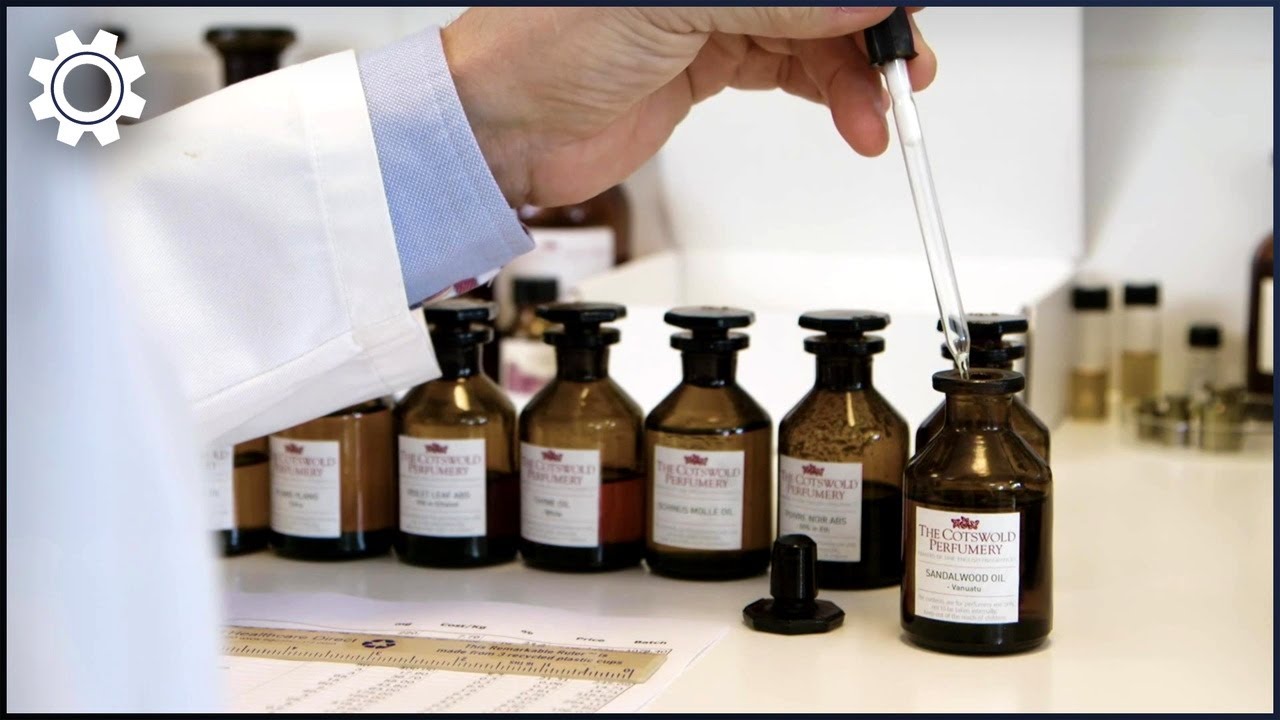
- Perfume history, from medieval Europe to Queen Elizabeth I, and the establishment of the Cotswold Perfumery.
Cited Sources
- H. Forman & Son — Family business in London, oldest smoked salmon producers, demonstrating the London Cure process.
- Joseph Priestley — English scientist who discovered how to infuse water with carbon dioxide in 1767.
- William Painter — US inventor of the crown cap in 1892, solving the bottling pressure problem.
- Cotswold Perfumery — Perfumery in Bourton-on-the-Water, showcasing perfume manufacturing and quality control.
- Schweppes at the Great Exhibition, 1851 — Mentioned as selling over 1 million bottles of carbonated drinks, illustrating commercial success.
Contribution & Novelties
The documentary offers a concise yet engaging synthesis of three distinct industries, highlighting the underlying science and craftsmanship. Its original value lies in the combination of historical context with live demonstrations (e.g., the sugar evaporation experiment) and expert interviews that give a behind-the-scenes look at niche production. The segment on perfume manufacturing demystifies advanced analytical tools like gas chromatography and flash point testing, making them accessible to a general audience. The portrayal of the London Cure as a preserved heritage technique adds cultural depth. While each individual topic is not groundbreaking, the juxtaposition of food, beverage, and fragrance within a single narrative emphasizes the universality of applied chemistry and engineering.
Pour aller plus loin :
- Joseph Priestley - Wikipedia — For a detailed biography and his contributions to chemistry, including the discovery of carbon dioxide infusion.
- Crown cork - Wikipedia — Explains the technical aspects and history of the crown cap.
- Gas chromatography - Wikipedia — Provides a deeper explanation of the analytical technique used in perfume quality control.
- Flash point - Wikipedia — Defines the concept and its importance in safety regulations.
- Smoked salmon - Wikipedia — Covers the various curing and smoking methods, including the London Cure.
199 words
Radar Profile
The score profile is balanced, with high quantity of information and good reliability, while technical depth is moderate. The video excels in providing a broad overview with practical demonstrations, but does not delve into rigorous scientific detail, making it suitable for general audiences.