How Many Earth-Like Planets Are There? The Search for Exoplanets Explained
Title history
- How Many Earth-Like Planets Are There? The Search for Exoplanets Explained — observed on 20261111-1230 UTC (YouTube)
Keywords
Summary
136 words
Critical Evaluation
Value of the Information & Strength of the Argument
The video provides a solid overview of exoplanet science, balancing historical context with technical explanations. It effectively argues that planets are common around stars, supporting this with statistical estimates and concrete examples. The presentation is logical, progressing from detection methods to major discoveries and future missions. Arguments are backed by references to actual missions and planetary systems, though some predictions are now superseded. The inclusion of expert commentary from NASA scientists adds credibility.
Scientific Rigor, Source Quality, Title Accuracy
The scientific content is generally accurate and well-sourced, referencing NASA and ESA missions and specific exoplanet designations. However, the video does not provide direct citations or URLs, and some mission timelines are outdated (e.g., JWST launch). The title accurately reflects the content, which both estimates the number of Earth-like planets and explains the search techniques. No user comments are available for analysis.
150 words
Title / Content Match
The title accurately reflects the content, which both estimates the number of Earth-like planets and explains the search techniques.
Quality & Reliability
7/10
The video presents a broad and accurate overview of exoplanet detection methods, key missions, and notable discoveries, but some predicted launch dates (e.g., TESS 2017, JWST 2018) are now outdated. The content is consistent with established astronomical knowledge up to the mid-2010s.
Key Moments
Markers derived by PSI from the transcript: the creator did not define chapters.
- Introduction of the estimate of up to 40 billion Earth-like planets in the Milky Way.
- Discovery of first exoplanets around pulsar PSR B1257+12 in 1992.
- Explanation of radial velocity method and detection of 51 Pegasi b.
- Transit method described and note of orbital misalignments like WASP-17b.
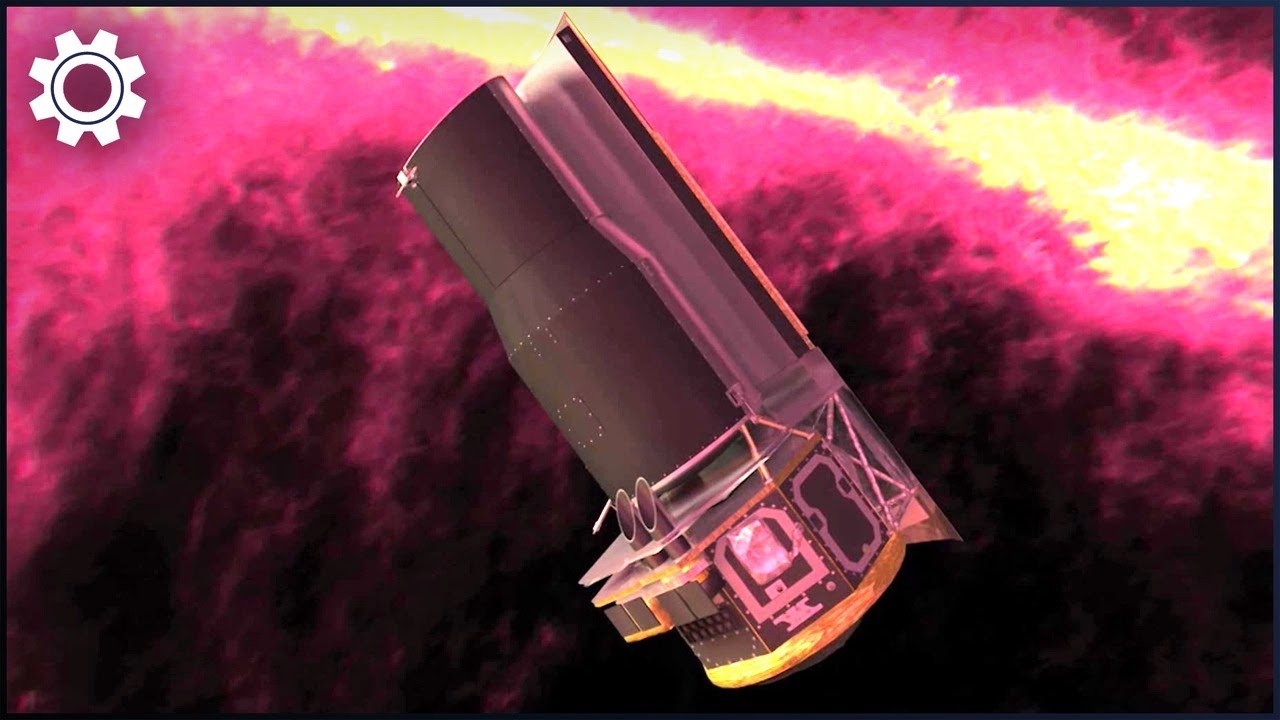
- COROT and Spitzer missions, including hot Jupiters and UCF-1.01.
- Kepler mission launch and its discoveries of multiple planet systems and candidates.
- Definition of habitable zone and discovery of Kepler-186f.
- Other habitable-zone candidates like Kepler-62f and Gliese 581d.
- Future missions and telescopes: TESS, JWST, PLATO, and ground-based giants.
Contribution & Novelties
The video synthesizes a wide range of exoplanet discoveries and methods into a coherent narrative, making the case that Earth-like planets are abundant. Its main novelty lies in explaining multiple detection techniques and contextualizing the significance of Kepler’s results. It also provides a forward-looking view of the then-upcoming missions.
Pour aller plus loin :
- Exoplanet - Wikipedia — Comprehensive overview of exoplanet science and methods.
- Habitable zone - Wikipedia — Detailed explanation of the Goldilocks concept.
- Kepler space telescope - Wikipedia — Mission profile and discoveries.
- James Webb Space Telescope - Wikipedia — successor mission with exoplanet capabilities.
- TESS - Wikipedia — Survey mission for exoplanets around bright stars.
109 words
Radar Profile
The radar profile shows high scores in information quantity and technical depth, with slightly lower quality and reliability due to outdated predictions. The video is comprehensive but not cutting-edge, offering strong educational value with minor caveats.