Olo Boards, Moving Magnetic North, and the Cricket Bat Shinbone Secret
Title history
- Olo Boards, Moving Magnetic North, and the Cricket Bat Shinbone Secret — observed on 20261030-1718 UTC (YouTube)
Keywords
Summary
237 words
Critical Evaluation
Value of the Information & Strength of the Argument
The video provides valuable insights into the design and manufacturing of surfboards and cricket bats, offering a rare look inside real factories with clear explanations of techniques like CNC shaping, carbon fiber reinforcement, and hand finishing. The compass segment effectively simplifies concepts like magnetic declination and earth’s magnetic field generation, using analogies and a practical experiment. The argumentation is solid, relying on expert interviews (e.g., Hayden Cox, B3 craftsmen) and physical demonstrations. However, some historical claims are presented without citation, and the science is sometimes oversimplified, but overall the evidence and reasoning are convincing for a general audience.
Scientific Rigor, Source Quality, Title Accuracy
The video does not explicitly cite external sources, but it features interviews with specialists and footage from actual manufacturing facilities, lending authenticity. The title accurately summarizes the content, and the three subjects are presented with sufficient depth. The production values are high, and the explanations are generally accurate, though a few simplifications (e.g., the mechanism of pole reversal) could be misleading. The description mentions ‘Wicked Inventions’ as a series, suggesting an established format, but no specific scientific references are given, which slightly detracts from rigor.
198 words
Title / Content Match
The title accurately reflects the three main topics covered: olo boards (surfboards), magnetic north, and the cricket bat shinbone secret, each receiving substantial treatment.
Quality & Reliability
7/10
The video presents accurate but simplified explanations of scientific principles (magnetism, material properties) and detailed manufacturing processes, with no evident misinformation. However, some historical claims lack precision and sources are not cited explicitly.
Key Moments
Markers derived by PSI from the transcript: the creator did not define chapters.
- Introduction to surfing history: Polynesian origins, olo and alaia boards, and George Freeth's 1907 board modification.
- Hayden Shapes factory tour: CNC machine shaping foam core, hand shaping with planer, and fin plug installation.
- Compass history: Chinese discovery of lodestone, early use in navigation, and spread via trade routes.
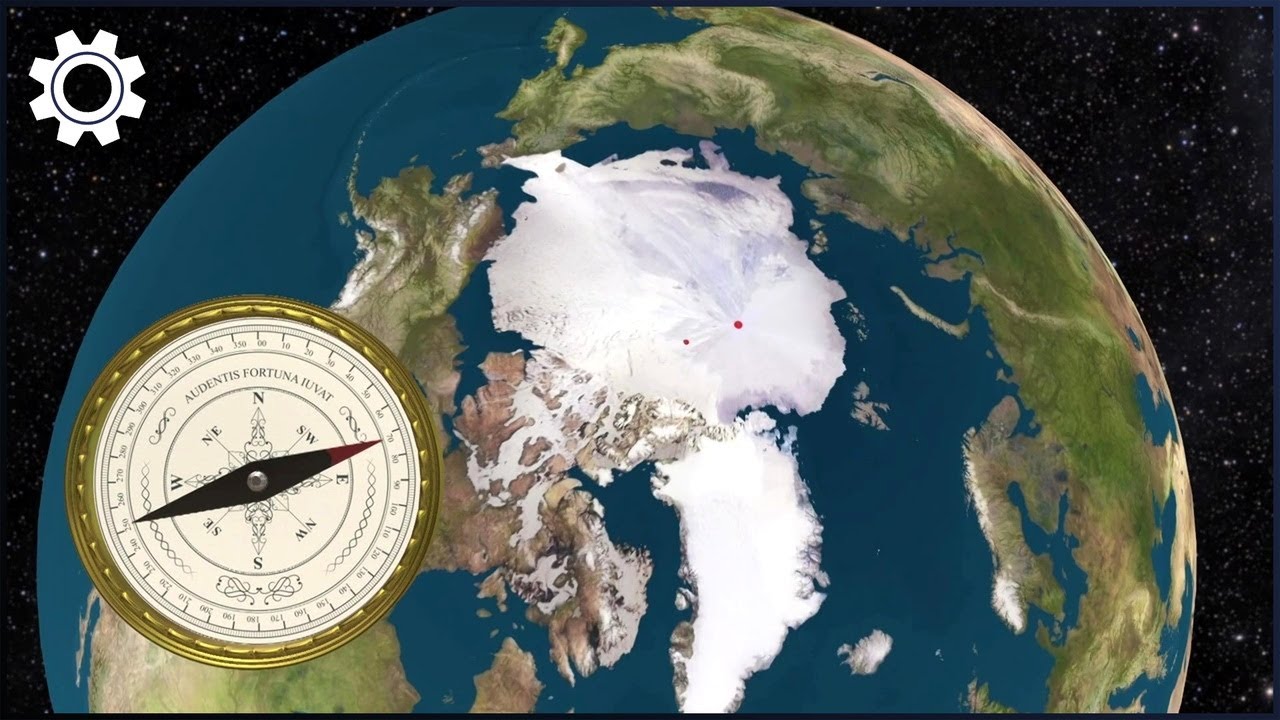
- Explanation of magnetic north vs true north, magnetic declination, and the moving position of the magnetic pole.
- Coat hanger and battery experiment to deflect compass needle, introducing the right-hand rule.
- Cricket bat history: evolution from hockey-stick shape to flat willow blade, introduction of spring handles.
- B3 Cricket manufacturing: willow pressing, hand splicing of cane handle, and use of horse shinbone for polishing edges.
- Final stages: handle binding, grip application, and completion of the cricket bat, leading to concluding remarks.
Cited Sources
- George Freeth — Mentioned as the half-Irish, half-Hawaiian surfer who cut his board in half in 1907, helping popularize surfing in California.
- Hayden Shapes — Surfboard manufacturer featured in the video, founded by Hayden Cox, demonstrating modern CNC and lamination processes.
- B3 Cricket — Nottingham-based cricket bat maker whose workshop is shown, using traditional and CNC methods.
Concurring Sources
- Magnetic declination - Wikipedia — Confirms the definition and practical importance of magnetic declination as described in the video.
- Surfboard - Wikipedia — Corroborates the historical evolution of surfboards and mention of olo and alaia types.
- Cricket bat - Wikipedia — Supports the described manufacturing process and use of willow and cane handles.
Contribution & Novelties
The video offers a unique behind-the-scenes look at contemporary manufacturing methods for surfboards and cricket bats, with detailed footage of skilled artisans and CNC machines. It also clarifies the science of magnetic declination and the dynamic nature of Earth’s magnetic field in an accessible way. The historical narratives add context to the evolution of these objects. While the information is not new, the combination of history, science, and hands-on engineering in a single episode provides a refreshing perspective.
Pour aller plus loin :
- Surfboard — Historical and technical overview of surfboard design and materials.
- Magnetic declination — Detailed explanation of the angle between true north and magnetic north.
- Cricket bat — Evolution and construction of cricket bats, including handle splicing and willow selection.
- Earth’s magnetic field — Scientific basis for the geomagnetic field and pole reversals.
136 words
Radar Profile
The radar profile shows a balanced performance across dimensions, with slightly higher scores for quantity of information and reliability, while technical depth is modest. This reflects a well-rounded educational video that offers substantial content without being overly technical, suitable for curious viewers seeking both historical context and practical insights into everyday technologies.