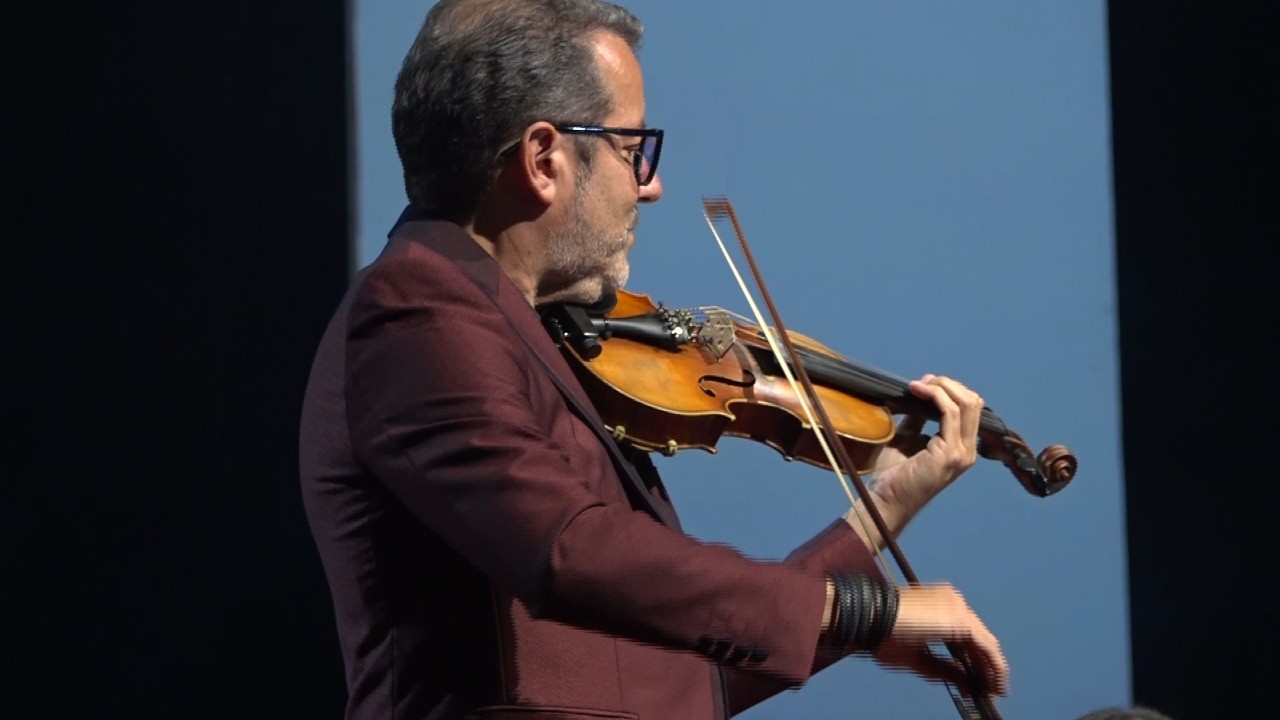
La música como medicina para el alma | Sonia Bruno & Ricardo Ramírez | TEDxPuraVidaSalon
Music as medicine for the soul | Sonia Bruno & Ricardo Ramírez | TEDxPuraVidaSalon
Title history
- La música como medicina para el alma | Sonia Bruno & Ricardo Ramírez | TEDxPuraVidaSalon — observed on 20261114-0313 UTC (YouTube)
Keywords
Summary
144 words
Critical Evaluation
Value of the Information & Strength of the Argument
The value of the information is limited from a scientific perspective. The claims about music’s benefits for mental health are presented as common-sense observations without supporting data or expert references. The argumentation relies on emotional appeal and the performers’ authority as musicians, rather than on studies or systematic review. The musical performances themselves are valuable as cultural and artistic demonstrations, but they do not constitute an evidence-based case for music as medicine. The lack of any causal explanation or measured outcomes weakens the overall argumentative solidity.
Scientific Rigor, Source Quality, Title Accuracy
The scientific rigor is low. No academic sources, clinical studies, or references to evidence are provided. The only link in the description is to the general TEDx program, which does not substantiate the specific claims. The title is well-aligned with the content, as the talk indeed presents music as a soul-healing tool. However, the absence of verifiable sources and the purely anecdotal nature of the remarks make the presentation more of an artistic statement than a scientifically reliable contribution. No comments were available to infer public reception.
188 words
Title / Content Match
The title accurately reflects the content: a talk and performance presenting music as beneficial for emotional and mental well-being.
Quality & Reliability
3/10
The talk combines brief personal reflections on music and mental health with live musical performances. It contains no scientific citations, empirical data, or verifiable research references. The claims remain anecdotal and emotionally persuasive rather than evidence-based.
Key Moments
Markers derived by PSI from the transcript: the creator did not define chapters.
Cited Sources
- TEDx program information — Description link providing general context about independently organized TEDx events.
Contribution & Novelties
The original contribution of this video is primarily artistic: it highlights the work of two contemporary Costa Rican composers through live performance, offering cultural exposure that may not be widely available elsewhere. The spoken content does not present novel scientific insights. For readers seeking deeper understanding of music’s effects on mental health, the following resources are suggested.
Pour aller plus loin :
- Music therapy — Directly relevant to the claim that music contributes to mental health; overview of clinical applications.
- Music and emotion — Explores psychological and neuroscientific research on how music evokes emotional responses.
- Music of Costa Rica — Context for the cultural heritage reflected in the performed pieces.
110 words
Radar Profile
The radar profile shows very low scores for information quantity, quality, and reliability, with a slightly higher technical score due to the musical performances. This indicates a content that is aesthetically compelling but scientifically negligible.