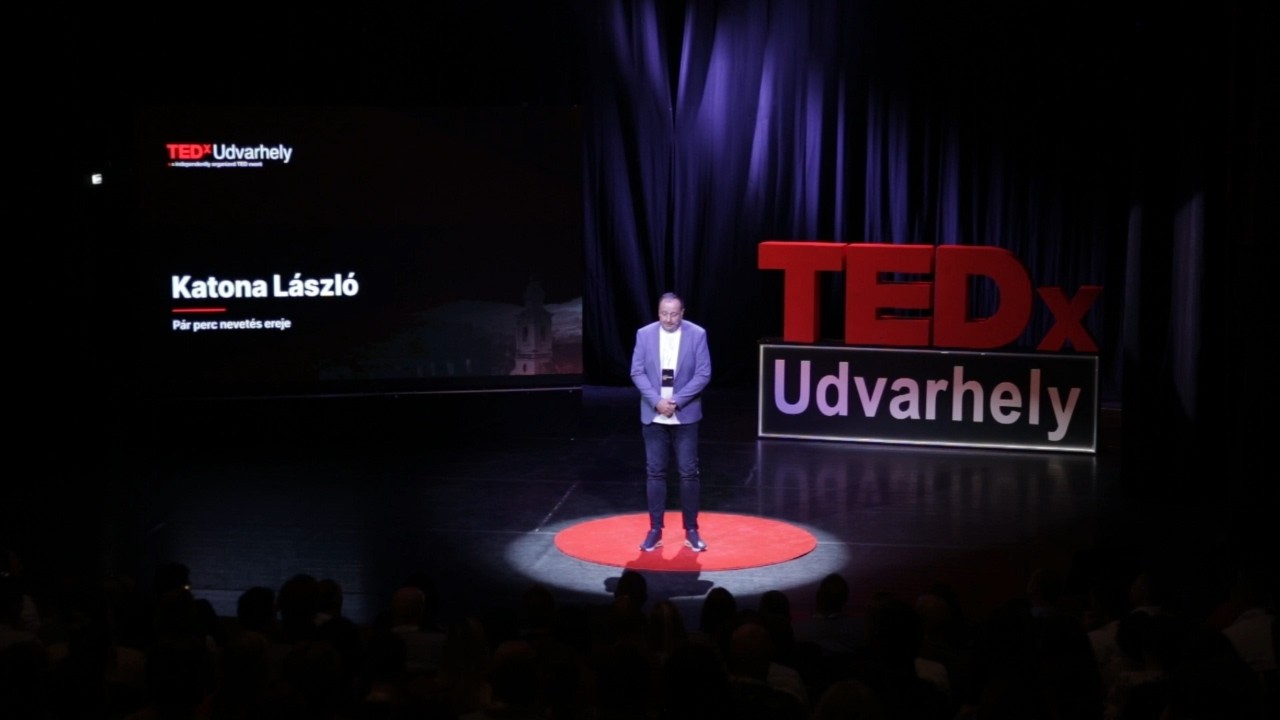
Pár perc nevetés ereje | László Katona | TEDxUdvarhely
The Power of a Few Minutes of Laughter | László Katona | TEDxUdvarhely
Title history
- Pár perc nevetés ereje | László Katona | TEDxUdvarhely — observed on 20261110-1620 UTC (YouTube)
Keywords
Summary
188 words
Critical Evaluation
Value of the Information & Strength of the Argument
The value of this talk lies in its authentic, first-hand insight into the psychology of performance and the social impact of humor. The argumentation is purely anecdotal, built on personal stories and reflections rather than logical deductions or external evidence. Katona’s strength is his engaging storytelling, which effectively conveys the emotional weight of his experiences. However, the talk does not offer novel scientific concepts or quantitative analysis; its value is primarily inspirational and reflective, appealing to the audience’s empathy rather than their intellect.
Scientific Rigor, Source Quality, Title Accuracy
The talk demonstrates low scientific rigor, as it lacks any citations, data, or reference to academic literature. The only source mentioned is the TEDx organization itself (via the standard description link), and the speaker refers to a Wikipedia entry for a show but does not provide a direct link. The content is a personal testimonial, making it difficult to verify independently. The title accurately reflects the core message of the talk, and the content fulfills the promise of discussing laughter’s power, though without technical depth.
183 words
Title / Content Match
The title perfectly aligns with the content, which centers on the transformative power of laughter and humor based on personal childhood memories and career experiences.
Quality & Reliability
4/10
The talk is a personal narrative by an experienced actor, offering anecdotal insights into the psychological and social effects of humor. It lacks empirical data, citations, or verifiable scientific references, relying entirely on subjective experience and storytelling, which limits its general scientific reliability.
Key Moments
Markers derived by PSI from the transcript: the creator did not define chapters.
- Introduction of the actor's various stage characters and the difference between performing and civil life.
- Anecdotes about being recognized by fans, blurring the line between his roles and his real identity.
- Transition to childhood memories in 1980s communist Romania, including scarcity and fear of authorities.
- Memory of his father laughing uncontrollably at the comedy show 'Kaszkadőr rúzsok'.
- Understanding the comedic scene with the dog and experiencing a liberating emotional effect.
- Reenacting the scene at school with a bucket, realizing the power of humor to influence others and deciding to become an actor.
- Concluding reflection on maintaining childlike curiosity and finding balance in life.
Cited Sources
- TEDx Official Site — Mentioned in the video description as the organizing body for the independent TEDx event.
Contribution & Novelties
The talk offers a unique, personal perspective on the cathartic power of humor, connecting childhood memories under an authoritarian regime to a lifelong professional calling. Its originality lies in the vivid narration of how a single comedic moment can pivot one’s life path, illustrating humor as a serious psychological tool for resilience.
Pour aller plus loin :
- Laughter therapy - Wikipedia — Relevant for the scientific study of laughter’s physiological and psychological benefits, complementing the speaker’s anecdotal observations.
- Storytelling - Wikipedia — Relevant as the actor’s main tool, highlighting the craft and social function of narrative performance.
- Comedy - Wikipedia — Provides a broader cultural and historical context for the mechanisms of humor and its role in society.
118 words
Radar Profile
The radar profile shows low technical level and moderate information quantity, consistent with an anecdotal TEDx talk. The quality and reliability scores are moderate, reflecting the lack of verifiable data despite the authenticity of personal experience, resulting in a profile oriented more towards humanistic reflection than scientific rigor.