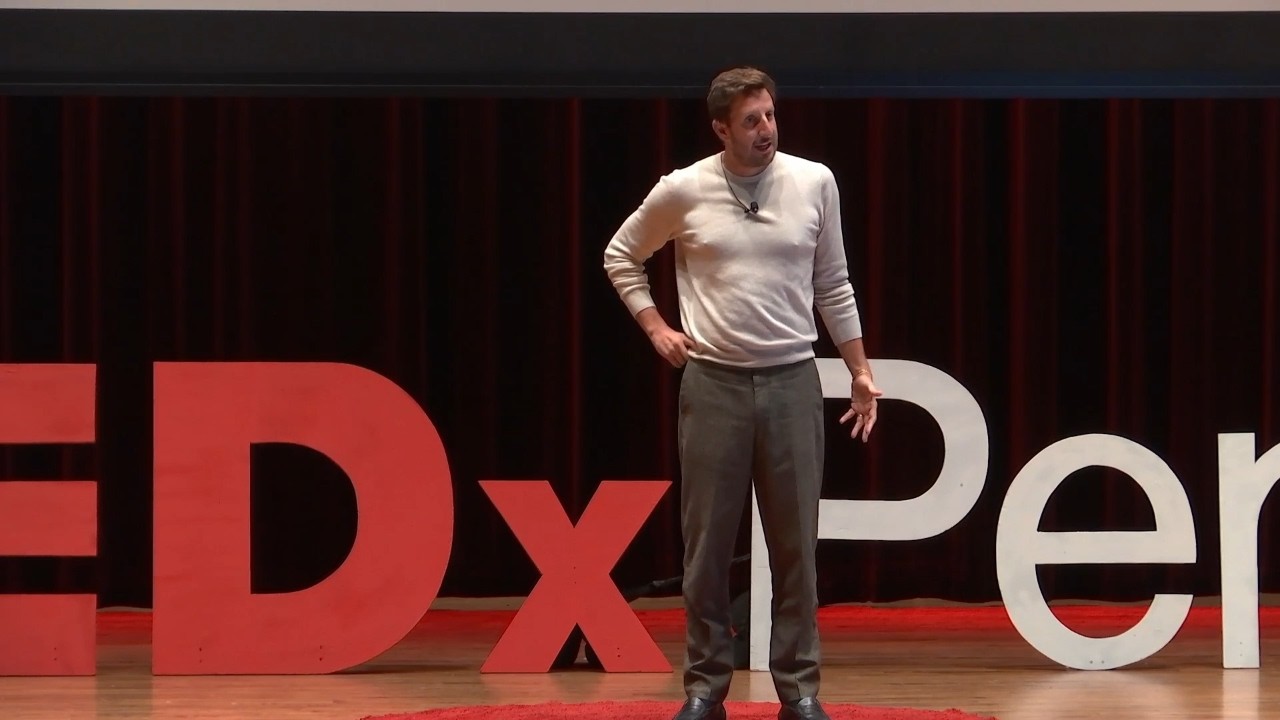
When do we stop automating? | Zack Kass | TEDxPenn
Keywords
Summary
134 words
Critical Evaluation
Value of the Information & Strength of the Argument
The talk provides a valuable perspective on AI’s societal impact, framing automation around personal choice and intrinsic human value. The argument is structured clearly, moving from the concept of an automation boundary to the internet’s future, then to friction as a lens for decision-making. Kass uses relatable examples and a light tone, making complex ideas accessible. However, the evidence is largely anecdotal—the grocery store study is informal and not peer-reviewed—and the philosophical claims about ‘virtuous friction’ are asserted rather than systematically defended. The Keynes reference is apt but brief, and the talk lacks a rigorous economic or empirical grounding. Overall, the argument is persuasive rhetorically but not scientifically rigorous, though it succeeds in provoking thought about the boundaries of automation.
Scientific Rigor, Source Quality, Title Accuracy
The talk references a book by the speaker and mentions a contributor, but no direct scientific sources are cited. The only external link provided is the general TEDx page, which does not offer additional references. The title is well-aligned with the content, posing a question that is thoroughly explored. The talk is more of an opinion piece based on personal and professional experience rather than a literature review or original study. This limits its scientific rigor, but the anecdotal approach is appropriate for a TEDx platform. No sponsorship or advertising is present, and the speaker’s credibility is enhanced by his OpenAI background. The content’s coherence and clarity support the title’s promise, though the lack of citations prevents a high reliability rating.
256 words
Title / Content Match
The title directly poses the central question of the talk and is accurately reflected in the content, which explores where to draw the line on automation.
Quality & Reliability
7/10
The talk offers a coherent, engaging argument and introduces a novel conceptual framework, but relies heavily on anecdotal evidence and lacks rigorous citation of external studies or data. The speaker's expertise as a former OpenAI executive lends credibility, but the reasoning is illustrative rather than systematic.
Key Moments
Markers derived by PSI from the transcript: the creator did not define chapters.
- Zack Kass asks the audience to consider where they would stop automating their lives, introducing the central question.
- Definition of the 'Automation Boundary' as the line between what we choose to automate and what we keep human.
- Discussion of the internet's evolution from a library to a shopping mall, predicting an agent-centric future.
- Description of the grocery store experiment, revealing that preferences are often habits and that choice overload overwhelms.
- Introduction of the distinction between vicious friction (to be eliminated) and virtuous friction (to be protected).
- Examples of virtuous friction: training, learning, conflict, discipline, and resilience.
- Reference to Keynes's essay and the final call to action: deciding what remains human.
Cited Sources
- TEDx Talks — Event page for TEDx, providing context for the talk's format and distribution.
Contribution & Novelties
The talk’s original contribution lies in its conceptual framing of the ‘Automation Boundary’ and the clear distinction between vicious and virtuous friction. It synthesizes ideas about AI, internet evolution, and human preference into a coherent narrative that challenges the audience to think intentionally about automation. While not empirically rigorous, the concepts offer a valuable framework for future discussions on AI’s societal implications.
Pour aller plus loin :
- Economic Possibilities for our Grandchildren — Keynes’ essay referenced in the talk, exploring the future of work and leisure.
- Technological unemployment — Overview of the debate on job displacement due to automation.
- Intelligent agent — Concept of AI agents likely to populate the future internet as described.
- Automation — General background on automation’s history and impacts.
123 words
Radar Profile
The radar profile shows a talk with high quantity of information and moderate quality, but lower technical depth and reliability. This indicates a engaging, idea-rich presentation suitable for a general audience, though not deeply evidence-based.