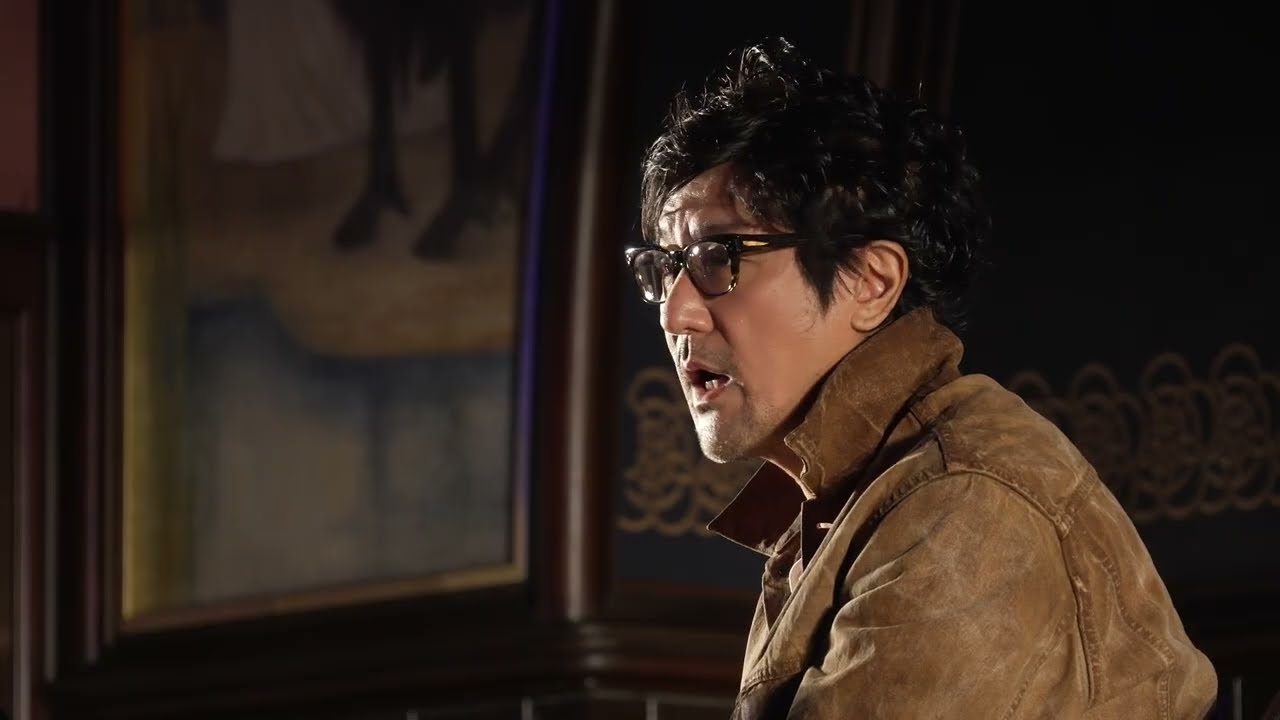
環境と認識がつくる「存在」| ‘Existence’ Created by Environment and Perception | Toshiyuki Inoko | TEDxUTokyo
'Existence' Created by Environment and Perception | Toshiyuki Inoko | TEDxUTokyo
Keywords
Summary
202 words
Critical Evaluation
Value of the Information & Strength of the Argument
The talk’s primary value lies in offering an original conceptual vocabulary for understanding digital and immersive art. The notions of ’environmental phenomena,’ ‘higher-order sculpture,’ and ‘cognitive sculpture’ provide useful analytical tools for a generation of artworks that cannot be reduced to physical objects. The argumentation follows a coherent progression: beginning with a personal memory of the whirlpool, the speaker establishes an intuitive case for formless existence, then builds a bridge to his artworks as embodied demonstrations of the hypothesis, and finally generalizes to a claim about life and perception. Each artwork serves the argument as a concrete case study rather than mere spectacle. The logical link between the whirlpool and the installations—both being phenomena sustained by environment rather than material—is consistent throughout. The strength of the argumentation is that it uses the artworks’ observable behavior as evidence; its limitation is that it remains self-referential, drawing no external validation beyond the speaker’s own practice and vocabulary.
Scientific Rigor, Source Quality, Title Accuracy
The talk does not cite external scientific or philosophical sources; all evidence is drawn from the speaker’s own artistic practice. Within an artistic-expertise framework, this is acceptable for a TEDx talk, but it limits the independent verifiability of the claims. The ’existence’ claims presented are philosophical and would benefit from engagement with academic literature on perception and phenomenology. The title faithfully reflects its content: the central thesis is precisely that existence is created by environment and perception, and the talk delivers systematically on that promise through teamLab’s installations. No advertisement or sponsorship segment was detected. The description’s single external link points to the TEDx program page, confirming the talk’s format and origins but adding no scientific corroboration.
287 words
Title / Content Match
The title accurately captures the talk's central thesis: existence is presented as something created jointly by environmental conditions and human perception, and the presentation systematically illustrates this premise.
Quality & Reliability
6/10
Coherent and original conceptual framework rooted in the speaker's artistic practice, presented without external scientific sourcing or peer-reviewed corroboration; the reasoning is internally consistent but self-referential.
Key Moments
Markers derived by PSI from the transcript: the creator did not define chapters.
- Childhood memory of whirlpools in Tokushima's sea—a formless yet powerful presence
- Introduction of teamLab Phenomena (Abu Dhabi) and teamLab Biolex (Kyoto) as new explorations of existence
- 'Levitation Void': sphere floating mid-air without strings or propulsion, sustained by energy order
- 'Variable Continuum': a 5-meter presence emerging from spatially separated spheres
- Whirlpool analogy: existence defined by environment flow, not material substance
- Introduction of 'Environmental Phenomena' and 'Higher-order Sculpture' concepts
- 'Impermanent Abstraction': interactive installation where paintings dissolve and regain order
- 'Sculpture without mass or shape': a soap-bubble sculpture floating in mid-air
- 'Fading Tree': living plants integrated into a painting, activated by viewer presence
- Dark spheres invisible to cameras—introducing the 'Cognitive Sculpture' concept
- Conclusion: existence inseparable from environment and self, humans part of the continuum
Cited Sources
- TEDx Program — TEDx Talks — The talk was delivered within the TEDx framework, independently organized by a local community, as referenced in the video description.
Concurring Sources
- teamLab — Official Website — Documents the artworks referenced in the talk, supporting the descriptions of the installations and their interactive behavior.
- Enactivism (Wikipedia) — Corroborates the thesis that perception is active and embodied, aligning with Inoko's claim that existence is shaped by the perceiver's involvement.
Dissenting Sources
- Naive realism (Wikipedia) — Represents the traditional philosophical position that objects exist independently of perception, directly challenging the talk's central claim that existence is constructed through environment and human perception.
Contribution & Novelties
The talk’s original contribution is framing artistic creation as a process of sculpting environments and perceptions rather than objects. The introduction of ‘higher-order sculpture’ and ‘cognitive sculpture’ offers a new vocabulary for understanding digital and immersive art, bridging contemporary artistic practice with philosophical questions about perception, continuity, and emergence. The whirlpool analogy—existence as a flow-dependent phenomenon rather than a substance—provides an accessible entry point into these ideas.
Pour aller plus loin :
- teamLab official website — Exhibition documentation and artwork descriptions that complement the installations discussed in the talk.
- Vortex (Wikipedia) — The physics of whirlpools and vortices, the natural phenomenon that inspired Inoko’s central thesis.
- Self-organization (Wikipedia) — Scientific foundation for the concept of ’energy order’ sustaining sculptural forms.
- Perception (Wikipedia) — Cognitive underpinnings of the claim that existence is shaped by perceptual processes.
- Phenomenology (Wikipedia) — Philosophical tradition directly relevant to the talk’s approach to embodied experience and consciousness.
151 words
Radar Profile
The profile shows a balanced but moderate profile: information quantity is limited by the 15-minute format and single-perspective focus, information quality is good for an artistic-expertise talk with coherent conceptual development, technical level is accessible to a broad audience, and reliability is moderate due to the absence of external scientific corroboration.