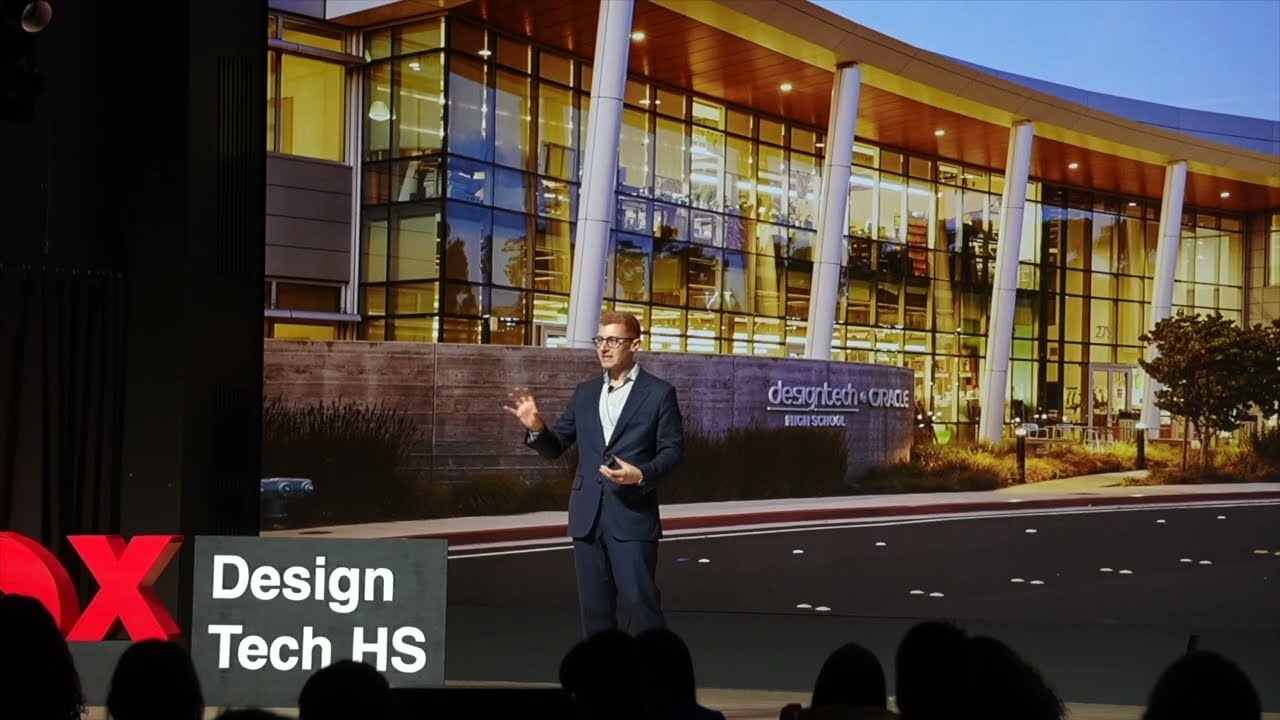
The Light of Distant Stars | Alex Kotran | TEDxDesign Tech HS
Title history
- The Light of Distant Stars | Alex Kotran | TEDxDesign Tech HS — observed on 20261114-0309 UTC (YouTube)
Keywords
Summary
180 words
Critical Evaluation
Value of the Information & Strength of the Argument
The talk provides a compelling narrative connecting historical industrial revolutions to the current AI moment, offering practical advice for young people. The argumentation is persuasive but somewhat one-sided, focusing on positive potential while acknowledging risks. The speaker uses personal anecdotes and rhetorical appeals more than rigorous empirical evidence. The advice is sound and actionable, though not backed by specific studies or frameworks.
Scientific Rigor, Source Quality, Title Accuracy
The speaker references specific examples (e.g., Block layoffs, Stanford research) but does not provide formal citations. The title is elegant and metaphorically apt. The talk lacks a systematic literature review or deep technical analysis, but it is appropriate for a TEDx audience. No competing viewpoints are addressed in depth. The description link to TEDx is generic and not a direct source.
138 words
Title / Content Match
The metaphor of distant stars (looking at the past to understand the future) is used consistently throughout the talk, aligning with the content.
Quality & Reliability
7/10
Talk combines personal experience, historical analogy, and some cited data points (e.g., layoffs at Block, research by Erik Brynjolfsson) but relies heavily on anecdotal evidence and unverifiable claims about AI impact. No formal citations or links to original studies.
Key Moments
Markers derived by PSI from the transcript: the creator did not define chapters.
- Introduction: talk aimed at young people about AI and the future.
- Explains the metaphor of light from distant stars – looking at the past.
- Introduces the fourth industrial revolution and its predecessors.
- Discusses speed of adoption: telephone vs. ChatGPT.
- Presents job market data: Block layoffs and Stanford research on young workers.
- Good news: young people have neuroplasticity, digital nativity, and optionality.
- First piece of advice: be obsessed with learning, but avoid AI shortcuts.
- Second advice: do hard things to build resilience and street smarts.
- Third advice: be human, build empathy, and deal with people.
- Conclusion: call to action for students and educators.
Cited Sources
- TEDx Talks — General TEDx platform link mentioned in the description.
Concurring Sources
- The Fourth Industrial Revolution — Historical context supporting the idea of industrial revolutions.
Dissenting Sources
- AI and the future of work — While the talk emphasizes disruption, some economists argue that AI will augment rather than replace jobs; no specific counter-source cited.
Contribution & Novelties
The talk offers a motivating perspective on AI for young people, framing it as a historical opportunity. It combines historical analysis with practical advice. While not groundbreaking, it synthesizes known ideas in an accessible way.
Pour aller plus loin :
- The Fourth Industrial Revolution — Background on the concept of successive industrial revolutions.
- Neuroplasticity — Scientific basis for the claim that young brains are more adaptable.
- Erik Brynjolfsson — Economist whose research on AI and labor is referenced in the talk.
- The AI Education Project — Organization founded by the speaker, relevant for further exploration.
95 words
Radar Profile
The radar profile shows relatively high scores in information quantity and relevance, moderate technical depth, and acceptable reliability. The talk is more persuasive than data-driven, with a strong qualitative focus.