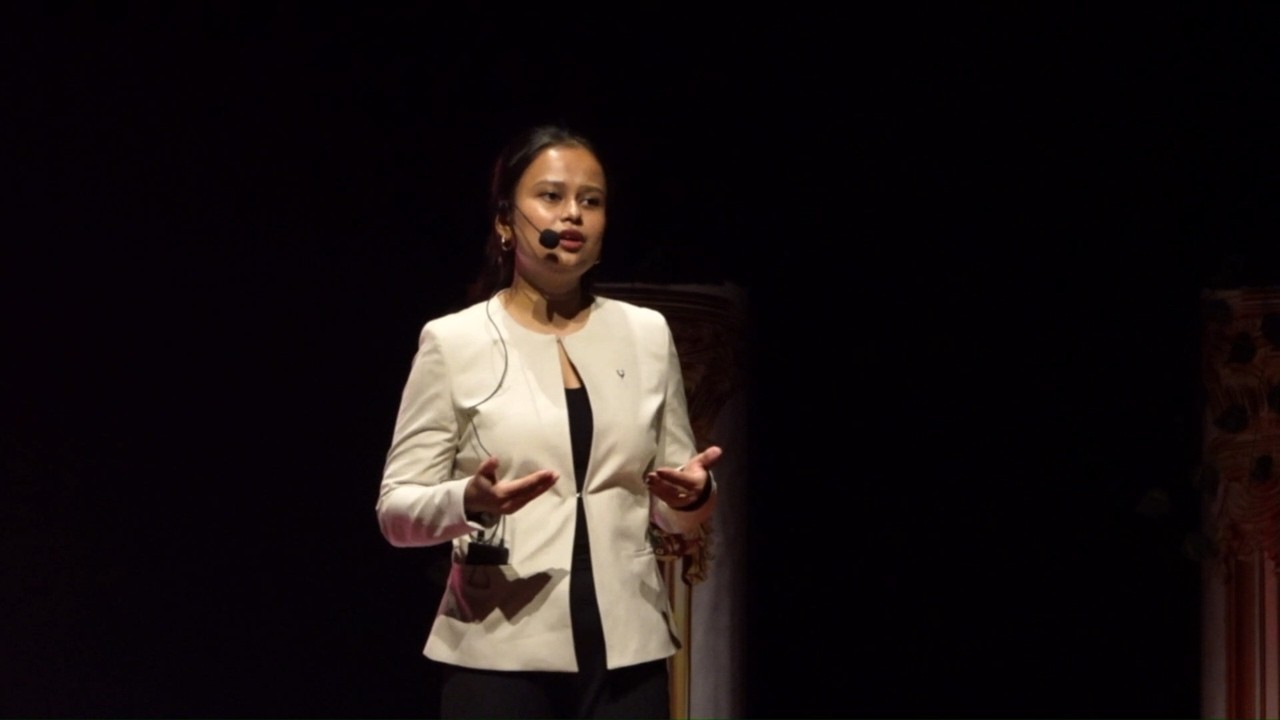
Future of Learning | Ms. Himparna Das | TEDxThe Assam Valley School Youth
Keywords
Summary
220 words
Critical Evaluation
Value of the Information & Strength of the Argument
The talk provides a compelling and emotionally resonant argument for integrating nature into learning. The value lies in its redefinition of education beyond formal structures, connecting psychological well-being with environmental health. The speaker’s use of personal and local examples (Assam, Majuli, Guwahati) adds authenticity and relatability. The argumentation is coherent, progressing from cultural narratives to a scientific concept (solastalgia) and then to practical steps. However, the evidence presented is largely anecdotal and philosophical; the master’s research is mentioned but not detailed, and no quantitative data is provided. The discussion of solastalgia is accurate and well-explained, but the talk does not delve into counterarguments or alternative viewpoints. The strength lies in its inspirational and integrative approach rather than rigorous empirical demonstration.
Scientific Rigor, Source Quality, Title Accuracy
The talk cites a few specific sources: Glenn Albrecht’s coining of solastalgia (2003), Kalidasa’s play ‘Shakuntala’, the Isha Upanishad, and the Bhagwat Purana’s story of Dattatreya. These are appropriately referenced in passing, but no academic papers or books are named. The only provided link is the general TEDx platform, which offers little specific citation. The title ‘Future of Learning’ is broad, but the content narrowly focuses on learning from nature; this is a reasonable fit, though the talk might be more precisely titled ‘Learning from Nature to Combat Solastalgia’. The speaker’s credentials (Master’s in Environmental Biology) lend some authority, yet the talk is more motivational than scholarly. The absence of empirical data or external references limits its scientific rigor, but as a TEDx talk, it fulfills its role of spreading ideas.
266 words
Title / Content Match
The title accurately reflects the central theme of redefining learning through nature, though the focus is more on environmental psychology than broad educational reform.
Quality & Reliability
6/10
The talk combines personal experience, philosophical references, and a well-defined psychological concept (solastalgia), but relies primarily on anecdotal and traditional sources rather than empirical evidence.
Key Moments
Markers derived by PSI from the transcript: the creator did not define chapters.
- Opening question about standing barefoot on soil, setting the theme of disconnection from nature.
- Story of an elder reading signs of monsoon and ants, illustrating traditional ecological knowledge.
- Story of Shakuntala from Kalidasa's play, showing a deep familial bond with nature.
- Introduction of solastalgia, the grief of losing one's home environment while still there.
- Speaker's master's research in Guwahati, interviewing 72 people about green-to-grey transitions.
- Story of Dattatreya and his 24 nature-based gurus, emphasizing attention over curriculum.
- Three practical takeaways: daily nature observation, listening to elders, and soulful curiosity.
Cited Sources
- TEDx Talks — The talk was given at a TEDx event, independently organized, as stated in the description.
Concurring Sources
- Solastalgia and the Loss of Solace — Supports the existence and validity of the concept as defined by Albrecht.
Contribution & Novelties
The talk offers a fresh synthesis of ancient Indian wisdom with modern psychological concepts like solastalgia, advocating a paradigm shift in education. Its originality lies in framing solastalgia not only as an environmental grief but as a loss of a critical teacher—nature itself. The speaker’s personal connection and local examples ground the concept in lived experience, making it accessible. The call to ‘keep the classroom never indoors’ is a memorable reframing that could inspire environmental education initiatives.
Pour aller plus loin :
- Solastalgia (Wikipedia) — Provides an overview of the term and its usage in ecological psychology.
- Biophilia hypothesis (Wikipedia) — Related concept by E.O. Wilson about humans’ innate affinity for nature.
- Nature deficit disorder (Wikipedia) — A term by Richard Louv describing the costs of alienation from nature.
129 words
Radar Profile
The radar profile shows moderate scores across all dimensions (information quantity, quality, reliability, and technical depth), reflecting a talk that is intellectually stimulating but not heavily evidence-based. The highest score is in information quality (6), aligned with its thoughtful integration of psychology and culture, while technical level remains low (4) to stay accessible. The overall balance suggests a persuasive and accessible presentation rather than a rigorous scientific exposition.