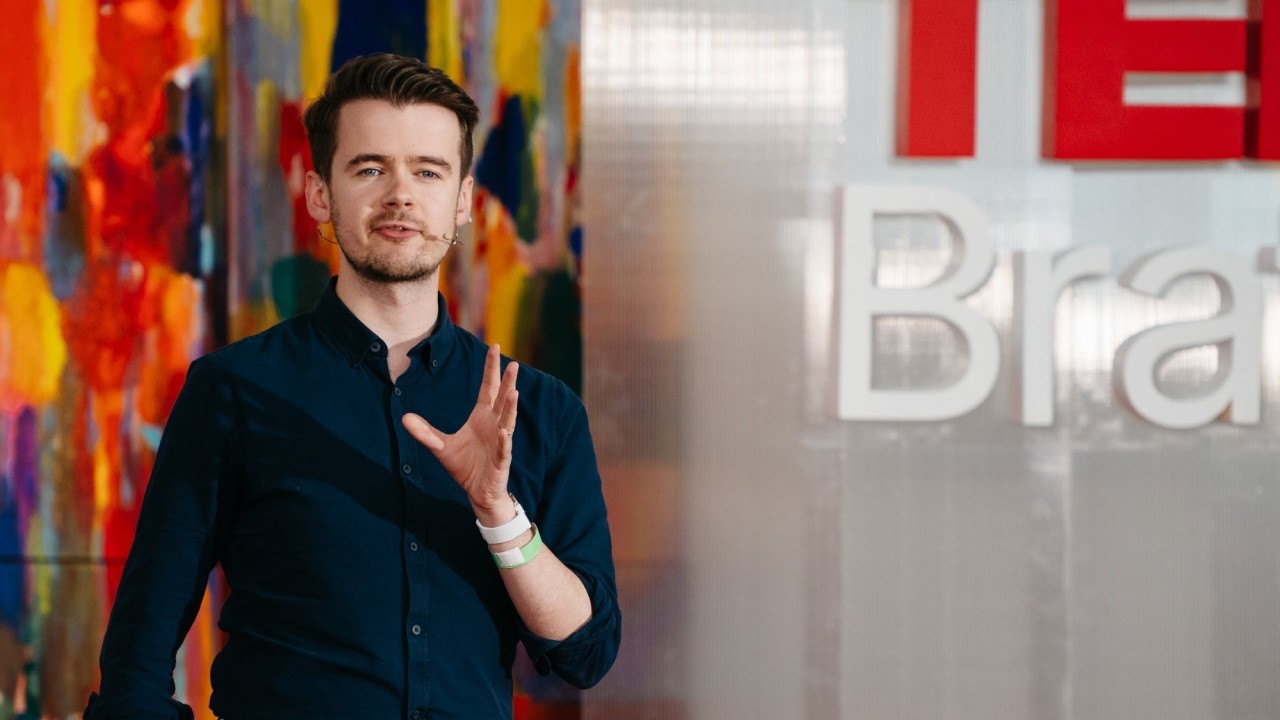
Unexpected benefits of attempting a local language | Danny Bate | TEDxBratislava
Title history
- Unexpected benefits of attempting a local language | Danny Bate | TEDxBratislava — observed on 20261112-0406 UTC (YouTube)
Keywords
Summary
144 words
Critical Evaluation
Value of the Information & Strength of the Argument
The talk offers a refreshing perspective on language learning, emphasizing practical and personal benefits rather than fluency metrics. Bate’s argument is built on vivid anecdotes that convincingly illustrate each benefit, and he grounds his approach in historical linguistics—showing how systematic sound changes and calquing make guessing possible. While some claims (e.g., Alzheimer’s prevention) are mentioned without detailed evidence, the overall message is persuasive due to his expertise and genuine passion. The structure (three benefits, clear narrative) supports his central thesis that attempting a foreign language is intrinsically valuable.
Scientific Rigor, Source Quality, Title Accuracy
Bate is a credible authority: PhD in historical linguistics from the University of Edinburgh and author of ‘Why Q Needs U’, named a top book by The Economist. The talk is not a formal scientific presentation but an expert opinion sharing principles and research-based insights. Although direct citations are sparse, he refers to well-known linguistic phenomena (sound changes, calques, language families) and mentions concrete research on multilingualism and Alzheimer’s. The title accurately reflects the content—he enumerates exactly three benefits derived from personal attempts. No significant discrepancies between title and content; the talk stays focused and grounded.
199 words
Title / Content Match
The title faithfully represents the content: the speaker enumerates three unexpected benefits (cognitive, emotional, social) of attempting a local language, illustrated with personal stories.
Quality & Reliability
7/10
The speaker is a PhD holder in historical linguistics and author of a book praised by The Economist. He presents personal anecdotes and references to linguistic research, but the talk is not a formal study; claims about cognitive benefits are supported by general references to Alzheimer's research, and examples illustrate principles of historical linguistics without rigorous citation.
Key Moments
Markers derived by PSI from the transcript: the creator did not define chapters.
- Introduction: fear of foreign languages and the proposal to try them.
- Example in Delft: guessing Dutch from German illustrates historical connections.
- First benefit: cognitive advantages, language connections as mental gym.
- Second benefit: emotional resilience through embarrassment in Czech.
- Third benefit: social openings from a church visit in Italy.
- Conclusion: three benefits and call to action.
Cited Sources
- TEDx Program — The talk was given at a TEDx event, and this link is provided in the description as general information.
Contribution & Novelties
The talk adds a personal, experiential dimension to the common cognitive benefits of multilingualism, emphasizing emotional and social gains. It popularizes historical linguistics as a practical tool for learners, showing that languages are more interconnected than assumed. The examples (e.g., guessing Albanian from Welsh, Hungarian calques) are memorable and illustrate deep historical ties.
Pour aller plus loin :
- Historical linguistics — Foundational background for Bate’s claims about language change and connections.
- Calque — Directly relates to his Hungarian examples of literal translation.
- Multilingualism and cognitive benefits — Supports the cognitive advantage claim, including research on Alzheimer’s delay.
- Language transfer — Explains how learners use known languages to guess unknown ones.
110 words
Radar Profile
The profile is balanced, with solid scores in information quantity and reliability, reflecting the speaker's expertise and structured presentation. Technique is moderate, appropriate for a general audience, while emotional and social highlights elevate the talk's practical relevance.