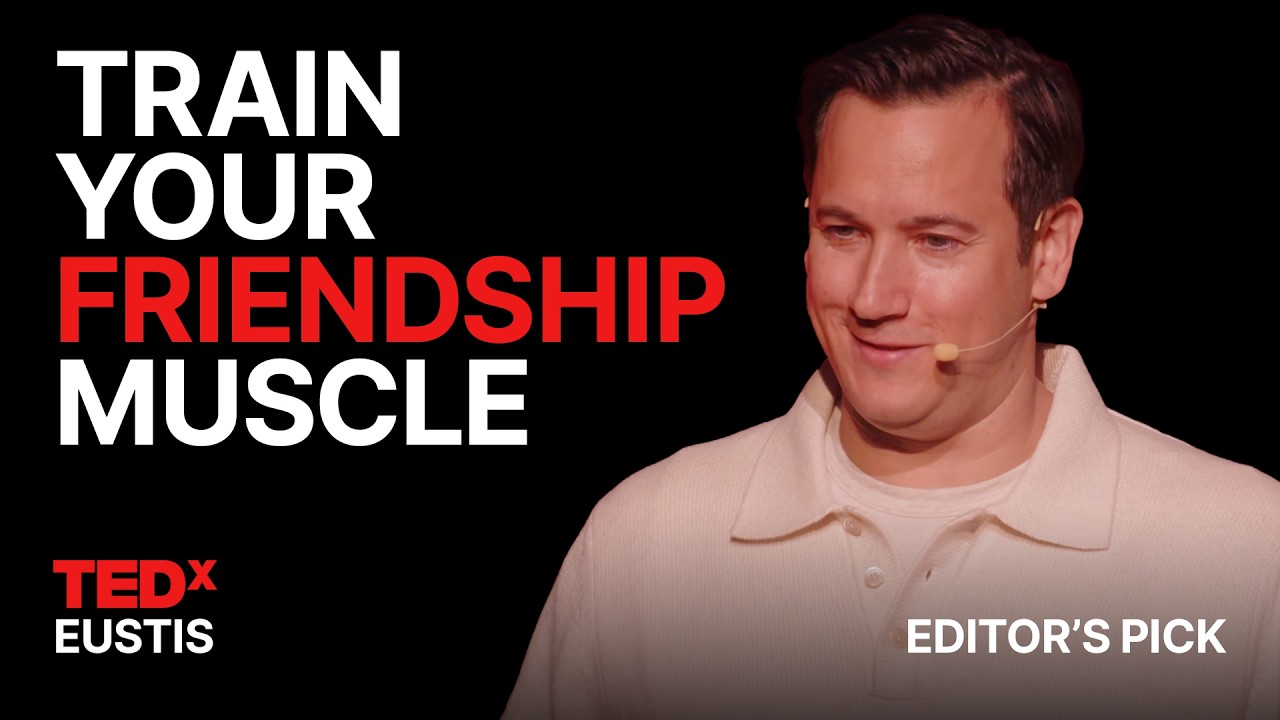
A lonely dad's guide to making new friends | Matt Ritter | TEDxEustis
Keywords
Summary
148 words
Critical Evaluation
Value of the Information & Strength of the Argument
The talk provides valuable, actionable advice for adults struggling with friendship. The value lies in reframing friendship as a measurable, practiceable skill rather than an innate trait, supported by the famous Harvard study. The argument is solid in its core premise—that consistent small actions build relationships—and is reinforced with personal success stories. However, the argumentation is primarily anecdotal, and while the Harvard study is cited, no specific data or citations are provided, weakening the scientific depth. The speaker effectively argues that modern life erodes organic social opportunities, making intentionality essential. The practical tips (e.g., scheduling the next hang, sending quick texts) are concrete and feasible. The reasoning is coherent and persuasive, though it relies more on motivational speaking than rigorous empirical evidence.
Scientific Rigor, Source Quality, Title Accuracy
The scientific rigor is moderate. The speaker references the well-known Harvard Study of Adult Development but does not provide details or links. He also mentions general studies showing workplace benefits of relationships, but again without specific sources. The quality of sources is thus limited to hearsay, though the central claim about relationships and health is widely supported in scientific literature. The title is apt and matches the content accurately. The talk does not overpromise beyond its scope, though it presents the advice from a single person’s experience. No external sources are listed in the description besides the TEDx page, so cross-verification is limited. Overall, the talk is informative but not highly rigorous in its use of evidence.
254 words
Title / Content Match
The title accurately reflects the content: a personal narrative about making friends as an adult, combined with practical advice. The focus on 'lonely dad' is reflected throughout.
Quality & Reliability
6/10
The talk references the Harvard Study of Adult Development and general research on relationships, but lacks specific citations or links. The argument relies heavily on personal anecdote and experience, yet the core message aligns with established scientific consensus on the importance of social connections for health and well-being.
Key Moments
Markers derived by PSI from the transcript: the creator did not define chapters.
- Introduction: promise that the audience will become better at friendship.
- Matt shares his personal story of loneliness during COVID and his wife telling him he needs friends.
- Critique of wellness hacks and introduction of friendship as the 'original happiness hack'.
- Reference to the Harvard Study of Adult Development: relationships are the top predictor of health and happiness.
- Friendship is a habit, not a trait. Introduces the idea of social fitness reps.
- The 'one-and-done' problem and the rule of scheduling the next hang before leaving.
- Practical habits: sending memes, voice memos, inviting friends on errands, weekly coffee.
- Personal example: meeting another dad on the street and building a friendship through playdates and weekly coffee.
- Final challenge: send a message to someone you've been meaning to connect with and set a coffee date.
Cited Sources
- TEDx official page — The talk was given at a TEDx event, and the description links to the TEDx general page as per standard TEDx format.
Contribution & Novelties
The talk’s original contribution is framing friendship as a ‘social fitness’ practice with concrete, repeatable micro-actions, making it accessible and actionable. It bridges motivational advice with a scientific hook (Harvard study) and offers a simple system that can be implemented immediately. The personal story adds credibility and relatability. However, the idea of habit-building for relationships is not entirely novel but is presented in an engaging way.
Pour aller plus loin :
- Harvard Study of Adult Development (Wikipedia) — The foundational study referenced in the talk; provides evidence for the link between relationships and health.
- Social Connection and Health (CDC) — Government resource on the importance of social connections for mental and physical well-being.
- Robert Waldinger’s TED Talk: ‘What makes a good life? Lessons from the longest study on happiness’ — Complementing the same Harvard research, this talk offers deeper insights.
- Friendship and Mental Health (Psychology Today) — Broad overview of friendship’s impact on mental health, without exact URL certainty; concept name is provided for reference.
165 words
Radar Profile
The radar profile shows low technical level but moderate quality and quantity of information, with relatively low reliability due to anecdotal emphasis. The speaker excels in making the content accessible but lacks academic depth.