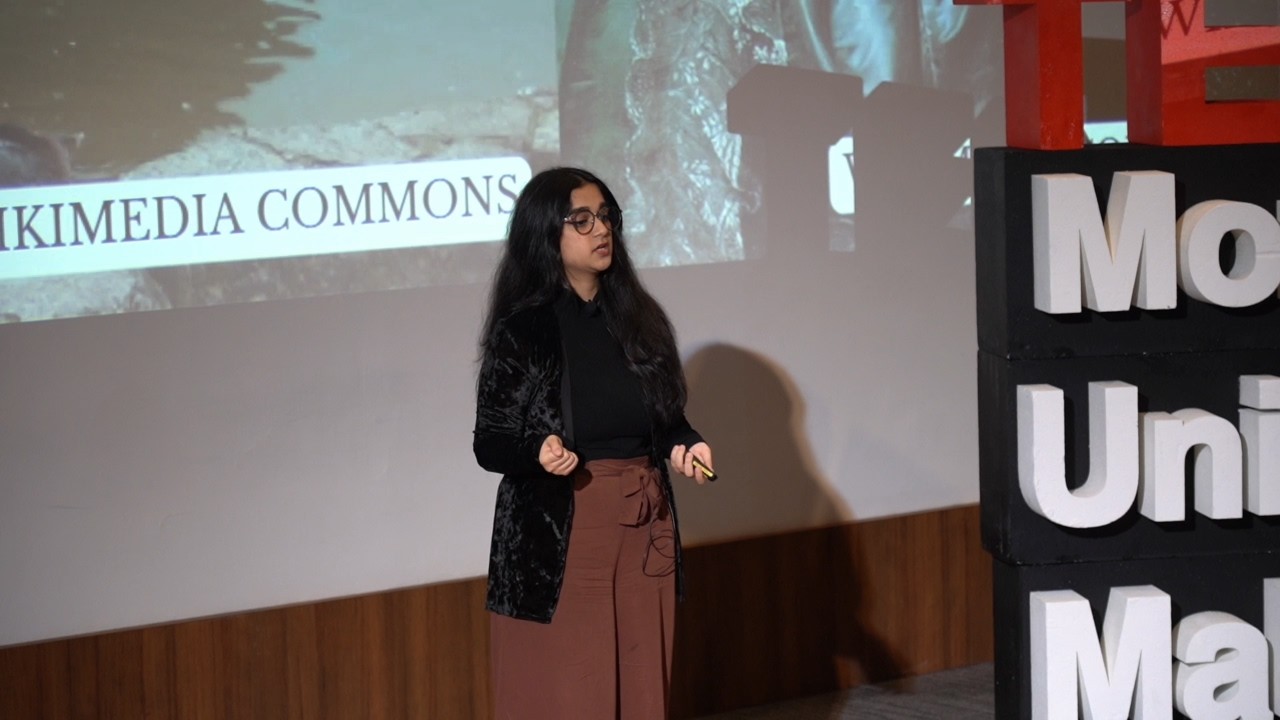
Winning the Lottery | Alishba Khan | TEDxMonash University Malaysia
Keywords
Summary
157 words
Critical Evaluation
Value of the Information & Strength of the Argument
The presentation offers a compelling and accessible argument that connects personal psychological mechanisms to structural inequality. It provides concrete statistics and historical examples that give substance to the claims. The reasoning is mostly sound, though it occasionally leans on simplified dichotomies (e.g., survivors vs. privileged) and does not deeply engage with counterarguments. The suggestion of small cumulative actions is practical and motivational, though it remains idealistic and lacks systematic evidence for its effectiveness beyond anecdotal illustration.
Scientific Rigor, Source Quality, Title Accuracy
The talk cites several well-established researchers (danah boyd, Paul Piff, Melvin Lerner, Herbert Simon) and correctly represents their core ideas in broad strokes. However, the sources are only mentioned by name without clear citations or publication details, which limit verifiability. The Title accurately reflects the main metaphor and thesis, and the content stays on topic without deviating. No public comments were available for analysis.
155 words
Title / Content Match
The title 'Winning the Lottery' effectively captures the central metaphor of structural luck developed throughout the talk.
Quality & Reliability
7/10
Clear and well-argued presentation, supported by real studies (boyd, Piff, Lerner, Simon) but with some simplifications and an emotional tone. The speaker is not a domain expert, yet the references are accurate and the argument remains coherent.
Key Moments
Markers derived by PSI from the transcript: the creator did not define chapters.
- Introduction: the paradox of scrolling past suffering.
- Lottery analogy and global odds of privilege.
- Story of Husam Alatar and the wind turbine.
- Personal Disneyland example and the value of money.
- Emotional overload and Herbert Simon's attention poverty.
- Marie-Antoinette's hamlet as a historical buffer.
- Three reactions: denial, distancing, dismantling.
- Pseudo-inefficacy and the Leipzig candle demonstration.
- Cumulative action: three concrete commitments.
- Conclusion: changing what we do with the lottery ticket.
Cited Sources
- TEDx official site — Description link referring to the TEDx program.
- danah boyd - Taken Out of Context — Reference cited for the concept of context collapse.
- Paul Piff's research page — Reference for the Monopoly study on privilege and empathy.
- Just-World Hypothesis — Reference for Melvin Lerner's theory mentioned in the talk.
- Herbert A. Simon — Source of the famous 'wealth of information creates poverty of attention' quote.
Concurring Sources
- Context collapse — Supports the idea that digital feeds flatten disparate realities, as presented by boyd.
Contribution & Novelties
This talk contributes a fresh perspective on why individuals disengage from distant suffering, framing it as a self-protective mechanism rather than a lack of empathy. It integrates diverse psychological and historical references into a coherent narrative that urges a practical, long-term commitment to action. The ’lottery win’ metaphor powerfully communicates unearned privilege.
Pour aller plus loin :
- Context collapse — danah boyd’s concept that explains how different social contexts merge on digital platforms.
- Just-world hypothesis — cognitive bias underlying the belief that the world is fair and people get what they deserve.
- Bystander effect — psychological phenomenon describing how the presence of others reduces individual action, relevant to passive scrolling.
- The concept of ‘meritocratic threat’ is discussed in social psychology, but no widely available URL is provided here.
128 words
Radar Profile
The score profile shows a strong quantity of information and moderate quality, with a relatively lower technical level and reliability. This reflects the accessible TEDx format, where illustrative examples outweigh technical depth. The talk is informative and engaging, but its scientific rigor is limited by broad simplifications and lack of detailed source citations.