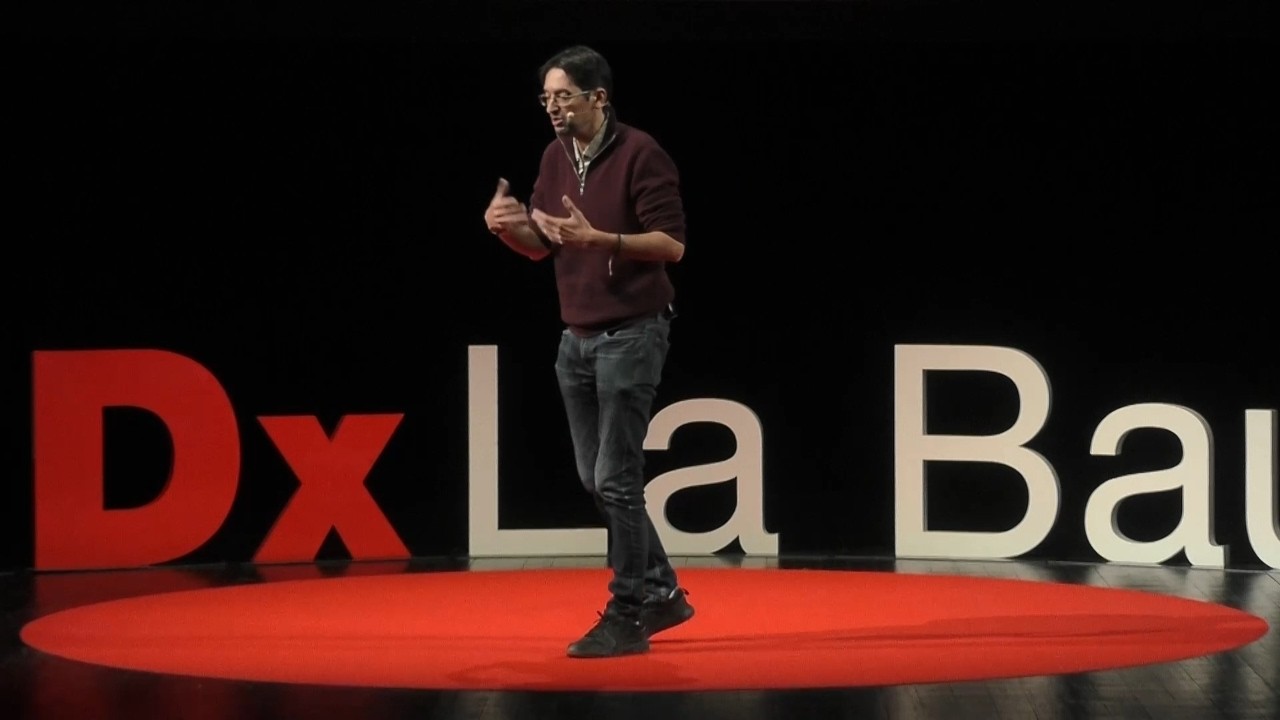
Retour vers l'infini | Fabien RAIMBAULT | TEDxLaBaule
Back to Infinity | Fabien RAIMBAULT | TEDxLaBaule
Title history
- Retour vers l'infini | Fabien RAIMBAULT | TEDxLaBaule — observed on 20261027-0213 UTC (YouTube)
Keywords
Summary
193 words
Critical Evaluation
Value of the Information & Strength of the Argument
The value of this talk lies in its accessible synthesis of AI history and its bold philosophical framing. The speaker effectively connects ancient myths to modern AI, showing that the fear of rebellious machines is not new. He also provides a clear categorization of weak AI vs. strong AI vs. consciousness, which is useful for non-experts. However, the argumentation becomes less rigorous when addressing consciousness and God. The claim that mastering the ‘infiniment complexe’ would ‘kill God’ is a speculative leap, and the speaker presents it as a logical dichotomy without addressing alternative interpretations. The distinction between strong AI and consciousness is underdeveloped, and the assertion that consciousness is ‘inéluctable’ is presented without sufficient evidence. The speaker’s personal enthusiasm is engaging, but the reasoning relies on binary thinking that oversimplifies complex philosophical and scientific debates.
Scientific Rigor, Source Quality, Title Accuracy
The scientific rigor is moderate: the historical facts are accurate, but the talk does not engage with contemporary AI research literature. No specific studies or publications are cited, and the speaker’s claims about timelines (e.g., strong AI within 15 years) are not substantiated. The title ‘Back to Infinity’ is somewhat ambiguous, but the content later clarifies it as referring to the ’third infinity’. The sources are limited to the TEDx talk itself, which is a common format for sharing ideas rather than presenting peer-reviewed research. The speaker does not provide a bibliography, and the only link provided is to TEDx as a whole, not to specific references. Overall, the title fits the philosophical conclusion but may mislead viewers expecting a purely technical talk.
273 words
Title / Content Match
The title 'Back to Infinity' refers to the concept of the 'third infinity' (the infinitely complex) explored at the end, linking AI consciousness to the question of God. The content covers this in the latter part, so the title is partially appropriate but not immediately clear from the start.
Quality & Reliability
6/10
The talk provides a well-structured historical overview of robotics and AI, with accurate references to Pygmalion, Golem, Descartes, Pascal, Čapek, Asimov, and Turing. However, the speculative categorization of AI (weak, strong, conscious) and the philosophical link to the existence of God are presented as certainty rather than hypotheses. The speaker's personal opinions on the timeline are not scientifically grounded.
Key Moments
Markers derived by PSI from the transcript: the creator did not define chapters.
- Introduction and personal motivation for AI
- Ancient myths: Pygmalion and Galatea, the Golem
- Descartes' mechanistic view and Pascal's Pascaline
- Karel Čapek's R.U.R. and Isaac Asimov's Three Laws
- Alan Turing, Enigma, and early computers
- Development of humanoid robots (Cog, Asimo) and modern capabilities
- Classification of AI: weak, strong, and artificial consciousness
- Third infinity and the philosophical link to God
Cited Sources
- TEDx Talks — The talk was given at a TEDx event; the official TEDx page is the only reliable source provided.
Contribution & Novelties
The talk offers an original perspective by framing artificial consciousness as a tool to explore the ’third infinity’—the realm of immense complexity—and linking this to the existence of God. It synthesizes historical myths, philosophy, and modern robotics in a narrative that is engaging and thought-provoking. However, the novelty is more in the presentation and speculative synthesis than in new scientific insights.
Pour aller plus loin :
- Strong AI hypothesis — Discusses the theoretical possibility of machines with general intelligence, relevant to the speaker’s ‘strong AI’ category.
- Turing test — Introduces the foundational concept for evaluating machine intelligence, referenced indirectly in the talk.
- Chinese room — John Searle’s argument against strong AI, useful for contrasting with the speaker’s optimism about artificial consciousness.
121 words
Radar Profile
The radar profile shows high scores in information quantity but moderate quality and reliability, reflecting the talk's broad historical coverage and speculative conclusions. The technical level is middling, making it accessible but not deeply rigorous.