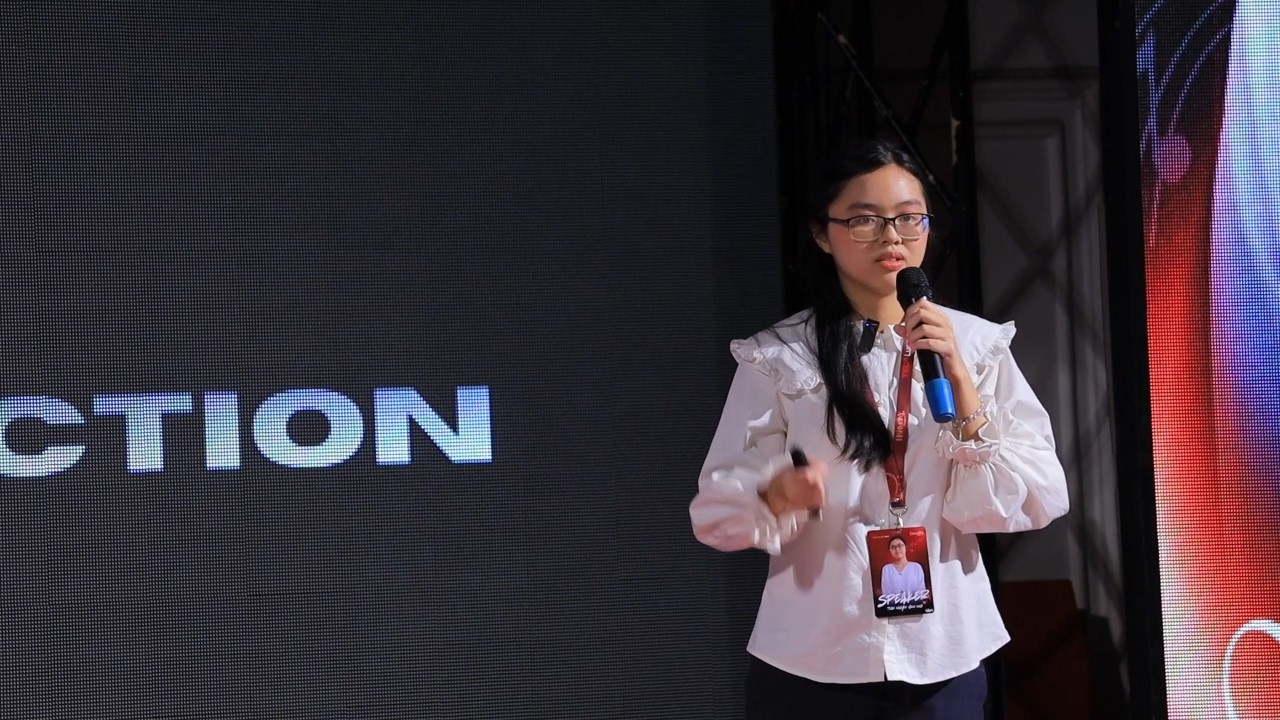
English anxiety is real? | Minh Như Trần Nguyễn | TEDxLuong The Vinh Youth
Keywords
Summary
157 words
Critical Evaluation
Value of the Information & Strength of the Argument
The talk’s value lies in its relatable personal narrative and clear articulation of a common psychological struggle. The argument is coherent: external pressures create anxiety, but intrinsic motivation derived from curiosity and personal meaning sustains long-term engagement. The speaker effectively uses her own experience as evidence, though the reasoning is anecdotal rather than empirically rigorous. She references studies without naming them, which weakens the argument’s authority, but it remains logically sound and persuasive for a general audience.
Scientific Rigor, Source Quality, Title Accuracy
The talk lacks explicit citations, relying instead on general references to ‘studies in psychology and education’. This limits its scientific rigor. The title accurately frames the content as an exploration of whether English anxiety is real, and the talk delivers a personal and psychological case for its existence. The absence of concrete sources is a notable weakness, but the talk does not overclaim; it presents a perspective rather than a definitive evidence-based claim. The speaker’s credibility stems from her personal achievements, not academic expertise, which is acknowledged implicitly.
180 words
Title / Content Match
The title poses a question that the talk directly addresses, affirming the reality of English anxiety and offering a personal perspective on overcoming it.
Quality & Reliability
5/10
The talk presents a personal narrative and mentions psychological studies without specific citations, so its reliability is moderate.
Key Moments
Markers derived by PSI from the transcript: the creator did not define chapters.
- Introduction: The speaker introduces the topic of English anxiety as a form of academic pressure often overlooked.
- Discussion of external pressures: parents, tutors, and media contribute to anxiety through comparisons and unrealistic standards.
- Personal story: Preparing for the national English competition, feeling inadequate, but finding motivation through the speaking session and curiosity.
- Conclusion: Emphasizes that the journey of learning shapes character and encourages finding personal meaning to overcome anxiety.
Cited Sources
- TEDx — General link to TEDx program, as provided in the video description.
Contribution & Novelties
The talk contributes a personal and accessible perspective on English anxiety, framing it as a result of extrinsic pressures and suggesting that intrinsic motivation is the key to sustainable learning. It bridges personal experience with psychological concepts, offering a relatable narrative for students. The novel angle is the emphasis on curiosity and voice as transformative forces, moving beyond typical advice about practice and effort.
Pour aller plus loin :
- Fear of missing out — Relevant to the speaker’s mention of FOMO as a source of anxiety in students.
- Echo chamber — The talk references ’eco chamber effect’ (echo chamber) to explain how repeated messages deepen self-doubt.
- Intrinsic motivation — Supports the central claim that meaningful engagement sustains effort better than external rewards.
122 words
Radar Profile
The radar profile shows low technical depth, moderate information quantity and quality, and moderate reliability. This is consistent with a personal narrative talk that lacks empirical rigor but communicates meaningful psychological insights.