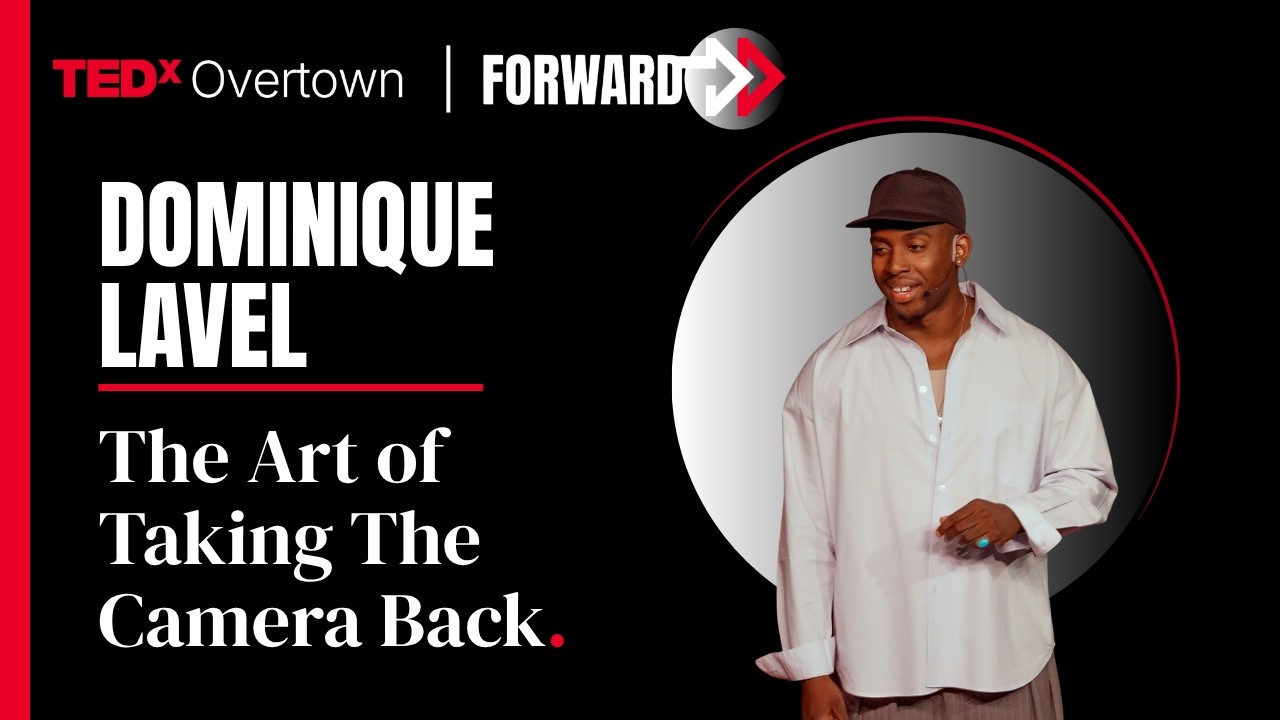
The Art of Taking The Camera Back | Dominique Lavel Burrell-Paige | TEDxOvertown
Keywords
Summary
100 words
Critical Evaluation
Value of the Information & Strength of the Argument
The talk offers a powerful personal narrative that illustrates the psychological impact of distorted self-images. It provides a practical framework (narrative audit) that attendees can apply immediately. The argument that storytelling is a form of mental health infrastructure is compelling and emotionally resonant. However, the claims are based on anecdotal experience rather than systematic research, and the connection between community narratives and individual mental health, while plausible, is not rigorously substantiated. The speaker’s use of metaphors like ‘brain’s Wi-Fi’ effectively conveys the idea of intergenerational knowledge transfer, but the logical flow relies heavily on personal testimony and rhetorical appeal.
Scientific Rigor, Source Quality, Title Accuracy
The talk does not engage with scientific literature or cite psychological research, despite the speaker’s clinical background. It references photographer Da Bay and a fictional character, but provides no external data or studies to support its central claims. The title is accurate and reflects the content, which revolves around reclaiming narrative control. The speaker’s credentials as a clinical psychologist lend some authority, but the absence of verifiable sources reduces the scientific rigor. No viewer comments were provided for analysis.
193 words
Title / Content Match
The title precisely captures the central theme of reclaiming authorship of one's own story, which the talk develops through personal and community examples.
Quality & Reliability
6/10
The talk is engaging and well-articulated but relies on personal narrative rather than empirical evidence. Psychological concepts are mentioned (e.g., self-efficacy) but not deeply explored. The speaker's professional background adds credibility, yet the lack of citations and data limits scientific robustness.
Key Moments
Markers derived by PSI from the transcript: the creator did not define chapters.
- Speaker admits his tendency to avoid direct communication and begins personal storytelling.
- Description of the finger injury incident on March 26, 2022, and subsequent flashbacks.
- Childhood memory of bullying and the formation of a distorted self-image.
- Introduction of Overtown and its narrative crisis due to gentrification and displacement.
- Reference to photographer Da Bay and the importance of intimate lens choices.
- Presentation of the three-step narrative audit: lens, light, and copyright.
- Conclusion urging audience to become culture keepers and final question: spectator or participant.
Cited Sources
- TEDx Official — Official TEDx program page; the talk was independently organized by a local community.
Contribution & Novelties
The talk introduces the concept of ’narrative audit’ as a practical tool for reclaiming personal and community stories. It frames storytelling as a form of mental health infrastructure, coining the metaphor ‘brain’s Wi-Fi’ for intergenerational narrative exchange. The emphasis on ‘identity wealth’ and ‘culture keepers’ offers a novel perspective on collective resilience. The talk underscores the importance of documenting marginalized narratives as a form of resistance and healing.
Pour aller plus loin :
- Narrative identity — Relevant psychological concept linking personal stories to self-concept.
- Collective memory — How groups share and maintain memories, central to community identity.
- Self-efficacy — Bandura’s concept, mentioned in the talk as a psychological basis.
109 words
Radar Profile
The profile shows a talk strong in narrative and emotional value but moderate in technical depth and source rigor, reflecting a personal and motivational approach rather than a data-driven or systematic one.