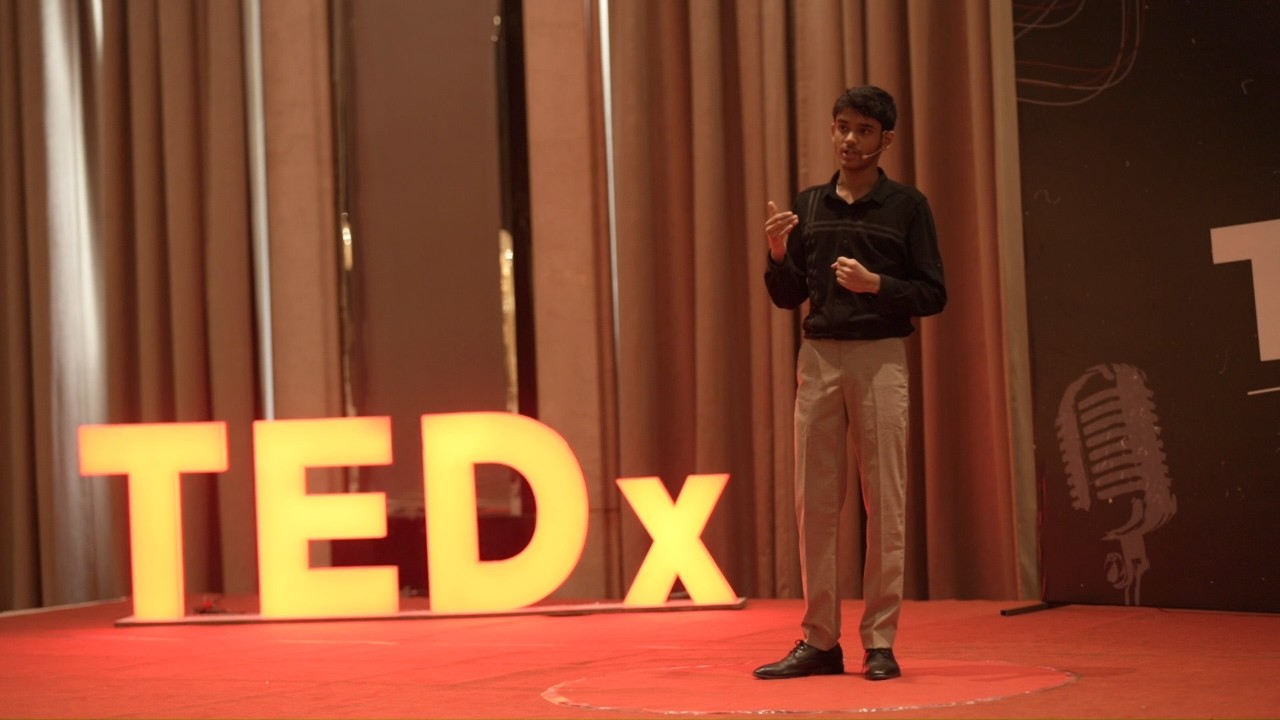
Medical AI & Why we build machines | Jaiwardhan Tyagi | TEDxSAJS Vasundhara Youth
Keywords
Summary
121 words
Critical Evaluation
Value of the Information & Strength of the Argument
The talk offers a concise overview of the current state of medical AI, accurately describing the pre-transformers limitations and the promise of large-scale models. The argument for specialization leading to fragmented tools is well articulated, and the proposed integrated approach is a plausible solution. However, the technical claims are not supported by concrete data or citations, and the philosophical segment relies on subjective reasoning without rigorous logical grounding. The distinction between human capabilities and machine strengths is compelling, but the argument that humans must remain in control lacks a robust defense against counterarguments. Overall, the talk provides a thought-provoking but somewhat speculative perspective.
Scientific Rigor, Source Quality, Title Accuracy
No specific sources are cited within the talk; the only link provided in the description is the general TEDx page, which does not substantiate the technical or statistical claims. The talk is primarily based on the speaker’s personal experience and opinions, with no reference to peer-reviewed research or FDA data sources. The title accurately mirrors the content, covering both technical and philosophical aspects. No comments were provided for analysis, so no public reaction trends are assessed.
194 words
Title / Content Match
The title accurately reflects the dual focus: first on medical AI and then on the philosophical rationale for building machines, with a clear progression between the two sections.
Quality & Reliability
6/10
The talk offers a coherent overview of medical AI evolution and challenges, but lacks precise citations, detailed technical depth, and some claims are imprecise (e.g., terminology errors). The philosophical segment is subjective and not empirically grounded, reducing overall scientific reliability.
Key Moments
Markers derived by PSI from the transcript: the creator did not define chapters.
- Introduction and self-presentation as founder of Neurapex AI.
- Description of pre-transformers era: classification, segmentation, and detection tasks.
- Shift to transformers and multimodal capabilities in medical AI.
- Discussion of data scarcity and the trend toward specialized, FDA-approved tools.
- Introduction of Centis platform integrating multiple specialized models.
- Transition to philosophical reflection on why humans build machines.
- Conclusion: build responsibly, support AI development, and remain in control.
Cited Sources
- TEDx information page — General TEDx event resource, linked in the video description.
Contribution & Novelties
The talk uniquely bridges practical medical AI challenges with existential philosophy, proposing an integrated multi-system platform (Centis) and arguing for human primacy in AI development. The perspective is original in combining technical roadmaps with a call for responsible innovation, though it remains at a conceptual level.
Pour aller plus loin :
- Artificial intelligence in healthcare — Offers a broad overview of AI applications and challenges in medical settings, relevant to the talk’s technical portion.
- Transformer (machine learning model) — Explains the architecture behind modern LM and multimodal systems discussed in the talk.
- Multimodal learning — Defines the concept of integrating multiple data types, central to the proposed Centis platform.
- Philosophy of artificial intelligence — Provides context for the ethical and existential questions raised, such as AI control and self-preservation.
129 words
Radar Profile
The radar profile shows moderately balanced scores across quantity, quality, technical level, and reliability (5-6 out of 10), indicating a talk that is informative and accessible but not deeply rigorous or technically advanced. The emphasis on opinion over evidence is reflected in the slightly lower technical and reliability scores.