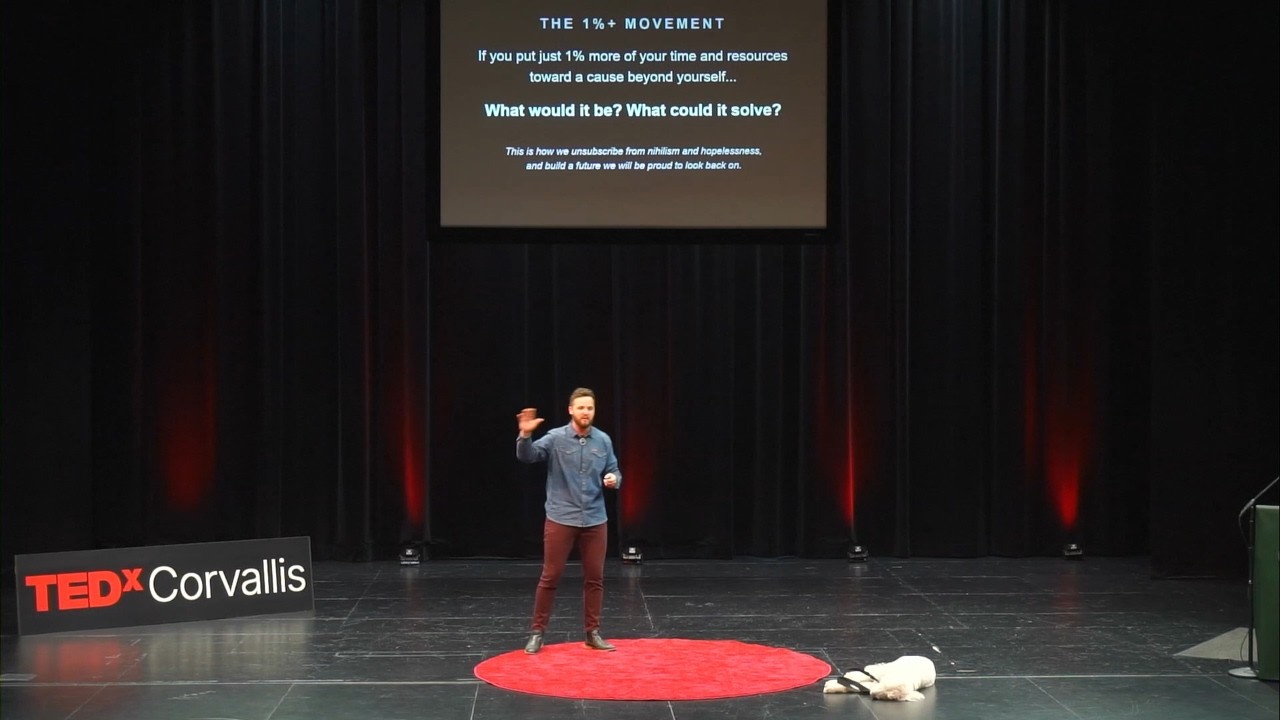
Solving Placeless-ness | Tim Rist | TEDxCorvallis
Title history
- Solving Placeless-ness | Tim Rist | TEDxCorvallis — observed on 20261112-0403 UTC (YouTube)
Keywords
Summary
138 words
Critical Evaluation
Value of the Information & Strength of the Argument
The talk’s value lies in its emotional appeal and call to action, but its argumentation is largely anecdotal. Rist uses his personal experience to illustrate the concept of placelessness, which is powerful but not systematically supported by evidence. He cites statistics without sources, and his suggestions (1% energy, intuitive compassion) are broad and not empirically grounded. The reasoning is motivational rather than analytical, with a heavy reliance on spiritual and personal belief.
Scientific Rigor, Source Quality, Title Accuracy
Scientific rigor is low; no academic sources are cited, and many claims are presented without verification. The only provided link is to the general TEDx platform, which is not a source for the statistics. The title is apt but the content does not offer a rigorous solution. Adéquation titre/contenu is good, but the scientific foundation is weak. There are no comments provided to analyze audience reception.
153 words
Title / Content Match
The title accurately reflects the talk's focus on addressing feelings of not belonging and homelessness, both literal and metaphorical.
Quality & Reliability
4/10
The talk is based primarily on personal anecdotes and unverified statistics. The speaker is a real estate entrepreneur, not a mental health researcher. Several figures (e.g., 770,000 homeless, 13.7 suicides per 100,000) are quoted without citations, weakening factual reliability.
Key Moments
Markers derived by PSI from the transcript: the creator did not define chapters.
- Personal story: at age 12, feelings of isolation, living in a tent, depression, and a suicide attempt with a gun that fails to fire.
- Statistics on homelessness (770,000 Americans), loneliness (1 in 2 adults), and declining face-to-face time among youth.
- Discussion of suicide rates (13.7 per 100,000 in U.S., Oregon leading) and the concept of passive suicide and nihilism, with an example of graffiti.
- Introduction of the '1% energy' movement and three avenues: sow hope, invest in community belonging, and contend for home ownership.
- Avenue 1: Sowing hope—Stephen Covey's first creation, connecting to divine love, adopting a dog, and the importance of optimism.
- Avenue 2: Intuitive compassion—pausing to think of a 'placeless' person and taking action, such as sending a text message.
- Avenue 3: Home ownership—affordability crisis, NIMBYism, 'place energy', and the financial gap between renters and owners.
Cited Sources
- TEDx Official Website — General TEDx program page, mentioned for event format and background.
Contribution & Novelties
The talk offers a personal, emotionally charged perspective on the interconnected issues of homelessness, loneliness, and hopelessness, proposing a simple 1% energy commitment. However, it lacks novel scientific contributions, relying instead on existing concepts. Its originality lies in the speaker’s personal narrative and the blending of spiritual and community-driven solutions.
Pour aller plus loin :
- Maslow’s hierarchy of needs — Relevant to the idea of belonging and self-actualization as human needs.
- Social isolation and health — Discusses the health impacts of loneliness, supporting Rist’s claims about its harmful effects.
- Place attachment — Emotional bond between people and places, directly related to the concept of ‘placeness’.
- Suicide prevention — Provides context on suicide statistics and prevention strategies, relevant to the talk’s central problem.
122 words
Radar Profile
The radar profile shows moderate scores in information quantity and quality, a low technical level, and moderate reliability. This reflects a talk that is emotionally engaging but technically thin, with unverified statistics and personal anecdotes dominating over rigorous evidence.