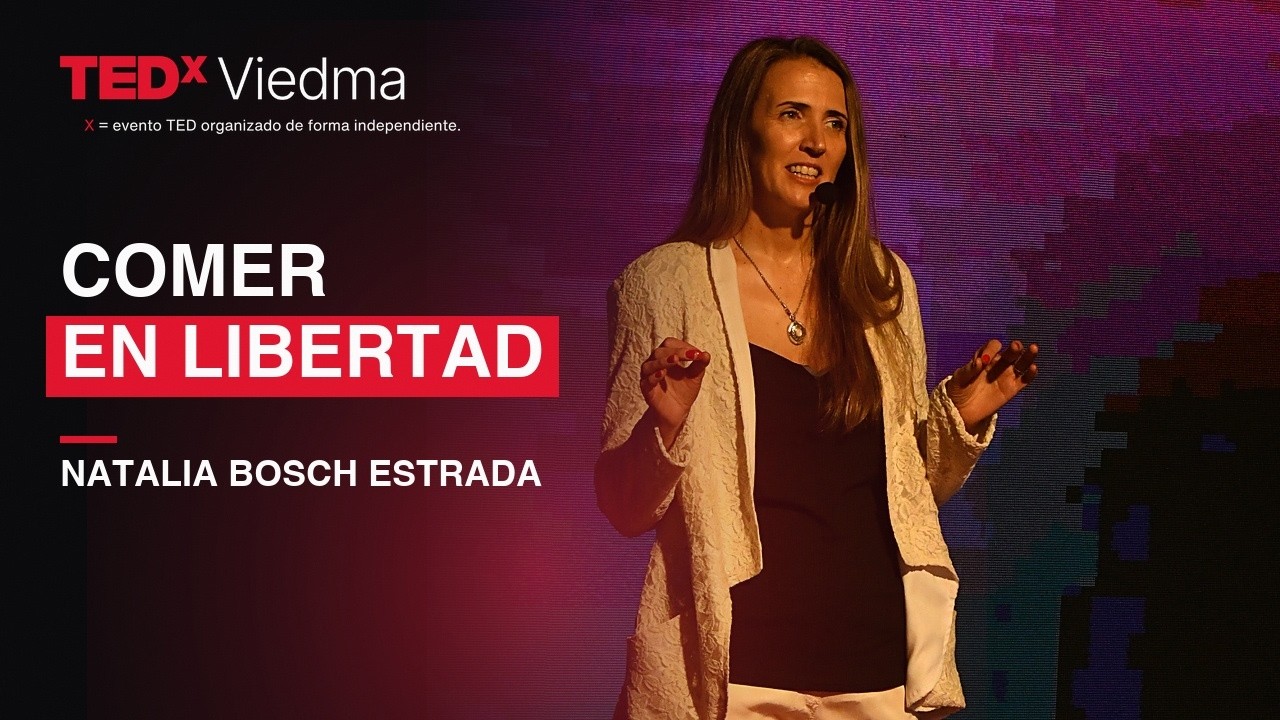
Comer en libertad | Natalia Bosch Estrada | TEDxViedma
Eating in Freedom | Natalia Bosch Estrada | TEDxViedma
Keywords
Summary
202 words
Critical Evaluation
Value of the Information & Strength of the Argument
The value of the information lies in its accessible reframing of a common problem: instead of blaming individual willpower, it highlights the role of early learning and emotional regulation. The argumentation is coherent and builds on relatable clinical observations, though it relies more on narrative than on robust evidence. The speaker’s background as a nutritionist and specialist in conscious eating adds credibility, but she does not cite specific studies or data to support her claims. The talk effectively illustrates how emotional eating is a learned behavior and suggests practical directions for change, but it remains an expert opinion rather than a systematic review or original research.
Scientific Rigor, Source Quality, Title Accuracy
The scientific rigor is moderate: the talk references personal clinical experience and general statements that ‘science says the same’, but no explicit citations or specific studies are mentioned. The only source provided in the description is the generic TEDx link, which does not offer additional references. Regarding the title, ‘Eating in Freedom’ accurately captures the central message of moving beyond restrictive diets and understanding emotional underpinnings. The content aligns well with the title, though the title could also suggest a more practical guide than the conceptual talk presented. Overall, the sourcing is weak but not misleading, and the title is appropriate.
222 words
Title / Content Match
The title accurately reflects the focus on freeing oneself from restrictive diets and understanding the emotional roots of eating behaviors.
Quality & Reliability
5/10
The talk presents a coherent perspective on emotional eating based on clinical experience and references to research, but lacks concrete citations and empirical data.
Key Moments
Markers derived by PSI from the transcript: the creator did not define chapters.
- Natalia introduces her background as a nutritionist and the typical patient interaction, noting initial success followed by relapse.
- She poses questions about diets and audience experiences, revealing that most people have struggled with repeated dieting.
- She explains that the problem is often not in the plate but in learned emotional associations from childhood, giving examples of comfort food.
- She references scientific research that supports the idea that eating behavior is influenced by early learning and emotions, not just knowledge.
- She emphasizes that emotional eating is a learned response that can be unlearned and highlights the need to train emotional regulation skills.
- She poses the key question: 'What am I trying to calm?' and distinguishes between seeking food for nourishment versus for emotional relief.
- She concludes with an invitation to observe our habits and learn new ways to respond, shifting the focus from the plate to the person.
Cited Sources
- TEDx Talks at TED.com — The talk was given at a TEDx event and this is the general TEDx information page.
Contribution & Novelties
The talk contributes a pragmatic yet holistic view of emotional eating, moving beyond diet-centric advice to highlight the role of early learning and emotional skills. It reframes the ‘failure’ of diets as a collective misunderstanding, focusing on the need to develop emotional awareness and regulation. While not revolutionary, it offers a clear invitation for professionals and individuals to shift their attention from food to underlying emotional needs.
Pour aller plus loin :
- Emotional eating — This concept directly relates to the core theme of the talk, providing an overview of the psychological mechanisms behind eating triggered by emotions.
- Mindful eating — The talk’s emphasis on observation and awareness aligns with mindful eating practices, which are often recommended for addressing emotional eating.
- Neuroplasticity — The idea that we can ‘unlearn’ learned behaviors is supported by the brain’s capacity to rewire itself, relevant to the talk’s message about training new responses.
149 words
Radar Profile
The radar profile shows a talk that is moderately rich in information and quality, with a low technical level and moderate reliability. This pattern indicates an accessible, opinion-based presentation that succeeds in raising awareness but lacks deep scientific backing. The balance suggests a valuable conceptual introduction to emotional eating rather than a data-driven analysis.