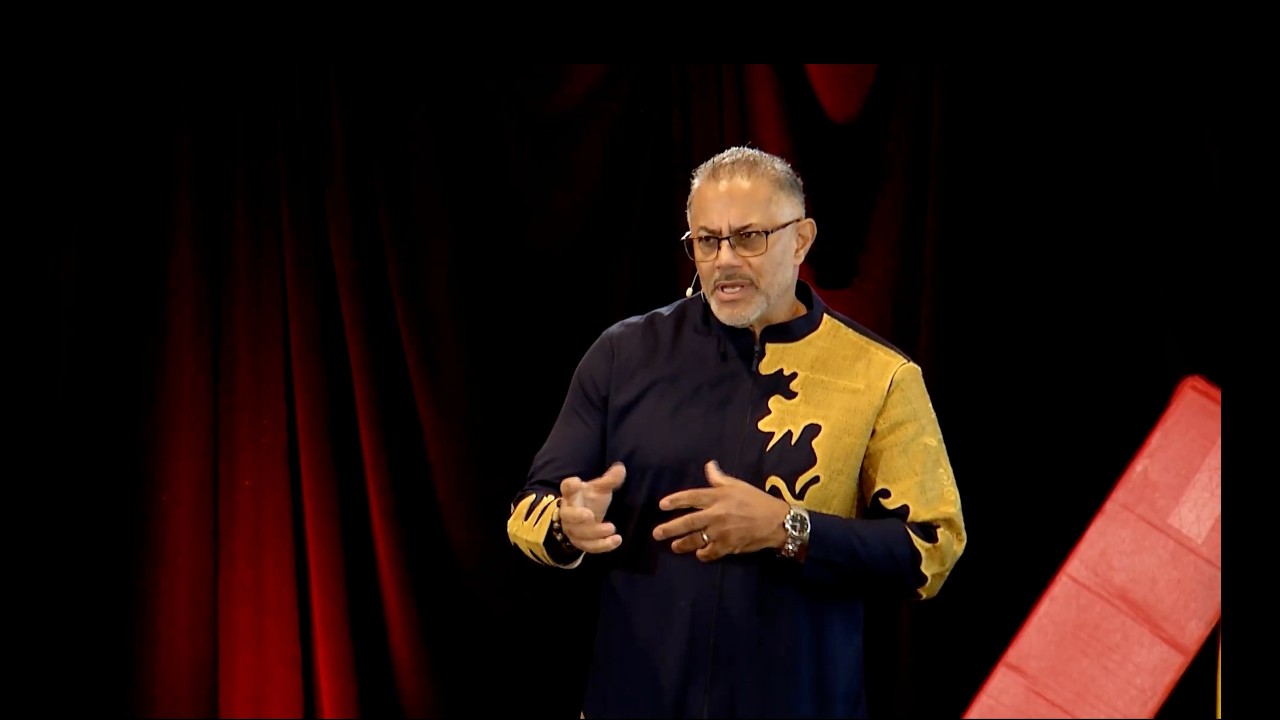
Can art help you find yourself again? | Phil Jackson | TEDxArlington Heights
Title history
- Can art help you find yourself again? | Phil Jackson | TEDxArlington Heights — observed on 20261119-1754 UTC (YouTube)
Keywords
Summary
167 words
Critical Evaluation
Value of the Information & Strength of the Argument
The value of the information lies in its inspirational and anecdotal nature, offering a compelling narrative that art can transform identities, particularly for marginalized youth. The argument is built on two detailed personal stories, illustrating the transformative power of art in real-life contexts. Jackson’s argument is emotionally persuasive, using vivid storytelling to convey the idea that art provides a space for vulnerability and reconstruction. However, it lacks systematic evidence or empirical data, relying instead on the authority of his long experience. The reasoning is coherent, but it does not address potential counterarguments or limitations, such as why art helps only some individuals or how generalizable these cases are.
Scientific Rigor, Source Quality, Title Accuracy
The talk is a personal testimony rather than a scientific presentation. Jackson references the theologian Howard Thurman’s quote and mentions artist Sonia Boyce, but no formal sources or studies are cited. The only external link provided in the description is the general TEDx page, which does not list specific references. The title accurately reflects the content, as the talk directly addresses how art can help one find oneself again. While the speaker’s background lends some credibility, the lack of citations and reliance on anecdotes weakens the scientific rigor. The title is appropriate and not misleading.
218 words
Title / Content Match
The title accurately reflects the content: the speaker argues that art can help individuals reconstruct their identity after trauma, illustrated with two personal stories.
Quality & Reliability
6/10
The talk is based on personal experience and anecdotal evidence rather than systematic research, but the speaker is a practitioner with decades of experience. The claims are not empirically validated but offer a coherent framework for art as identity reconstruction.
Key Moments
Markers derived by PSI from the transcript: the creator did not define chapters.
- Introduction of Mickey, a 14-year-old from a disinvested Chicago neighborhood, joining the visual arts class.
- Jackson discovers Mickey is homeless and was abused, leading to his question about why she keeps returning.
- He explains his work with youth carrying weapons and trading them for art supplies, introducing 'art munition'.
- Story of DJ, his love for dance, and the trauma of witnessing a murder that changed his path.
- DJ's transformation through creative writing, weeping as he heard his voice again.
- DJ's death and the Howard Thurman quote about being alive.
- Introduction of the concept 'juice' as reclaiming one's power and authority through art.
- Call to action for listeners to use art as their weapon of choice to restore identity.
Cited Sources
- TEDx official page — The talk is part of the TEDx program; this link provides further information about TEDx events and the independent organization behind this talk.
Contribution & Novelties
The talk’s original contribution is the framing of art as ‘art munition’ and ‘juice’—a weapon for identity reconstruction, illustrated with powerful personal narratives. It challenges the conventional view of art as a passive activity for children or hobbyists, positioning it as a vital tool for trauma recovery and self-reclamation. The anecdotal evidence underscores the potential of community-based arts programs in underserved areas.
Pour aller plus loin :
- Art therapy — Discusses the therapeutic use of art for mental health, related to Jackson’s claims about art’s restorative power.
- Trauma-informed care — An approach that recognizes the impact of trauma, relevant to how Jackson’s art programs integrate understanding of trauma.
- Resilience (psychology) — The concept of psychological resilience aligns with the idea of art fostering identity reconstruction after adversity.
127 words
Radar Profile
The radar profile shows low scores in technical depth and information quantity, reflecting the talk's qualitative and anecdotal nature. High scores in information quality (relative to its purpose) and a moderate score in overall reliability indicate it is inspiring but not empirically rigorous. The profile suggests a content that excels in human interest rather than scientific evidence.