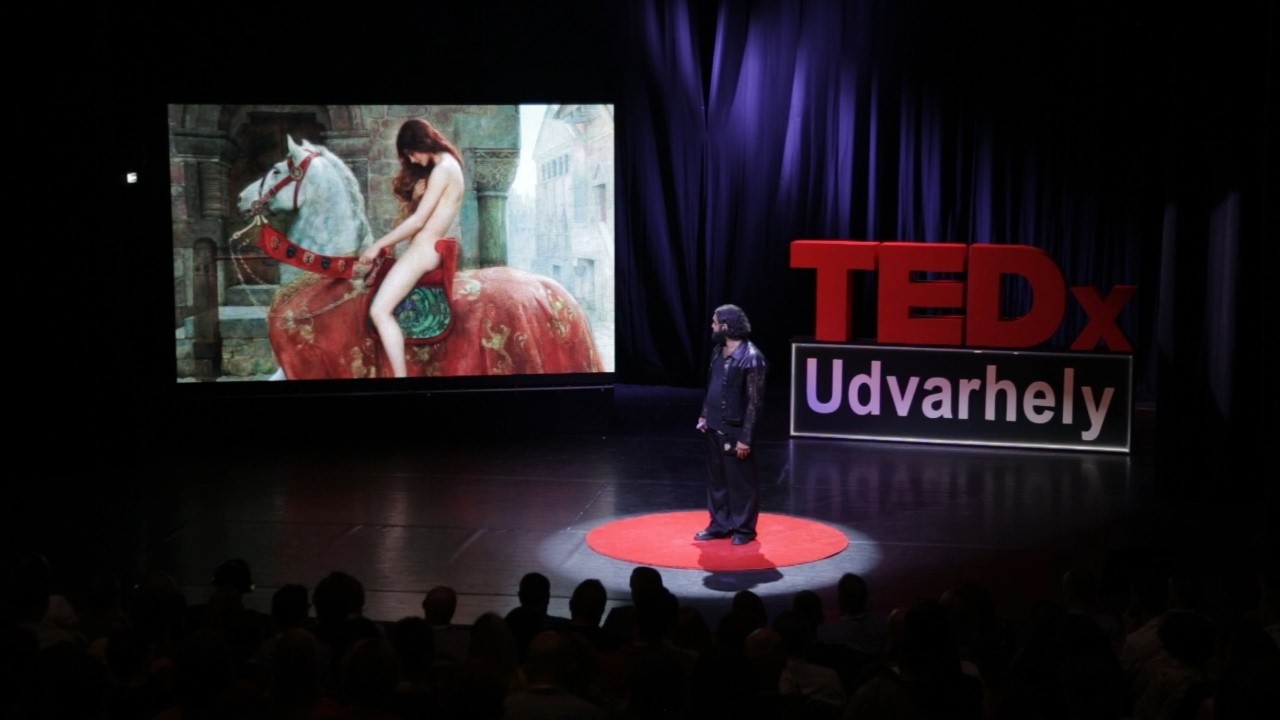
Három próbatétel | Levente András Farkas | TEDxUdvarhely
Three trials | Levente András Farkas | TEDxUdvarhely
Title history
- Három próbatétel | Levente András Farkas | TEDxUdvarhely — observed on 20261110-1619 UTC (YouTube)
Keywords
Summary
176 words
Critical Evaluation
Value of the Information & Strength of the Argument
The talk’s value lies in its authentic, heartfelt exploration of universal human emotions—fear, ambition, and letting go. The speaker uses vivid personal experiences and classic artworks (Napoleon, Lady Godiva, Gethsemane) to illustrate his points, making abstract ideas tangible. The argumentation is largely anecdotal and persuasive rather than evidence-based, relying on emotional resonance and cultural references. While not scientifically rigorous, it offers a coherent philosophical narrative that encourages introspection and self-compassion. The structure is logical, moving from personal crisis to broader lessons, but the logic is not empirical; it’s a subjective worldview shared with authenticity.
Scientific Rigor, Source Quality, Title Accuracy
The speaker references several well-known cultural and religious sources: Percy Bysshe Shelley’s poem ‘Ozymandias’, the legend of Lady Godiva, Giovanni Bellini’s paintings, and the biblical story of Gethsemane. These are used accurately and contextually, though they serve as illustrative metaphors rather than rigorous evidence. No scientific studies or data are cited, and the talk is not presented as research. The title ‘Three Trials’ hints at a tripartite structure, which is reflected in the talk’s sections, but the connection is subtle and not explicitly stated. Overall, the intellectual foundation is sound within a humanities framing, but it lacks empirical verification.
208 words
Title / Content Match
The title 'Three Trials' is loosely reflected in the talk's narrative structure (ambition, altruism, acceptance), though the connection is not explicit.
Quality & Reliability
4/10
The talk is a personal and philosophical reflection on fear, ambition, and acceptance, supported by references to art and literature. While insightful, it is subjective and lacks empirical evidence or rigorous analysis, resulting in low factual reliability.
Key Moments
Markers derived by PSI from the transcript: the creator did not define chapters.
- Recounting a dark period in New York, standing on a 62nd-floor balcony with suicidal thoughts.
- Introduces Napoleon as a symbol of ambition and discusses the emptiness of conquest.
- Cites Shelley's 'Ozymandias' to illustrate the transience of power and the fate of tyrants.
- Tells the story of Lady Godiva, emphasizing selfless sacrifice for others.
- Reflects on the necessity of letting go, using Gethsemane as a metaphor for facing mortality.
- Concludes with the advice 'Don't be afraid' and reminds the audience that most fears never come true.
Cited Sources
- Ozymandias by Percy Bysshe Shelley — The speaker quotes and analyses this poem to illustrate the fall of powerful leaders.
- Lady Godiva — Retells the legend as an example of selfless altruism.
- Gethsemane — Uses the biblical scene to discuss acceptance of death and letting go.
- Giovanni Bellini — Mentions the painter as inspiration for one of the images shown.
Contribution & Novelties
The talk offers a personal and artistic reinterpretation of fear and ambition, presenting them as stages of a transformative journey. It combines literary, religious, and visual art references to argue that genuine strength lies in vulnerability and acceptance. While not scientifically novel, its originality lies in the candid confession and the integration of high culture into personal growth discourse.
Pour aller plus loin :
- Stoicism — A philosophical approach to managing fear and focusing on what is within our control.
- Memento mori — The practice of contemplating mortality to enhance life meaning.
- Acceptance and Commitment Therapy — A psychological framework that uses mindfulness and acceptance to deal with difficult thoughts and feelings.
112 words
Radar Profile
The radar profile shows low scores across factual information and technical depth, with slightly higher qualitative value in personal insight. This reflects a talk that is emotionally rich but empirically weak, fitting a humanities-oriented personal narrative.