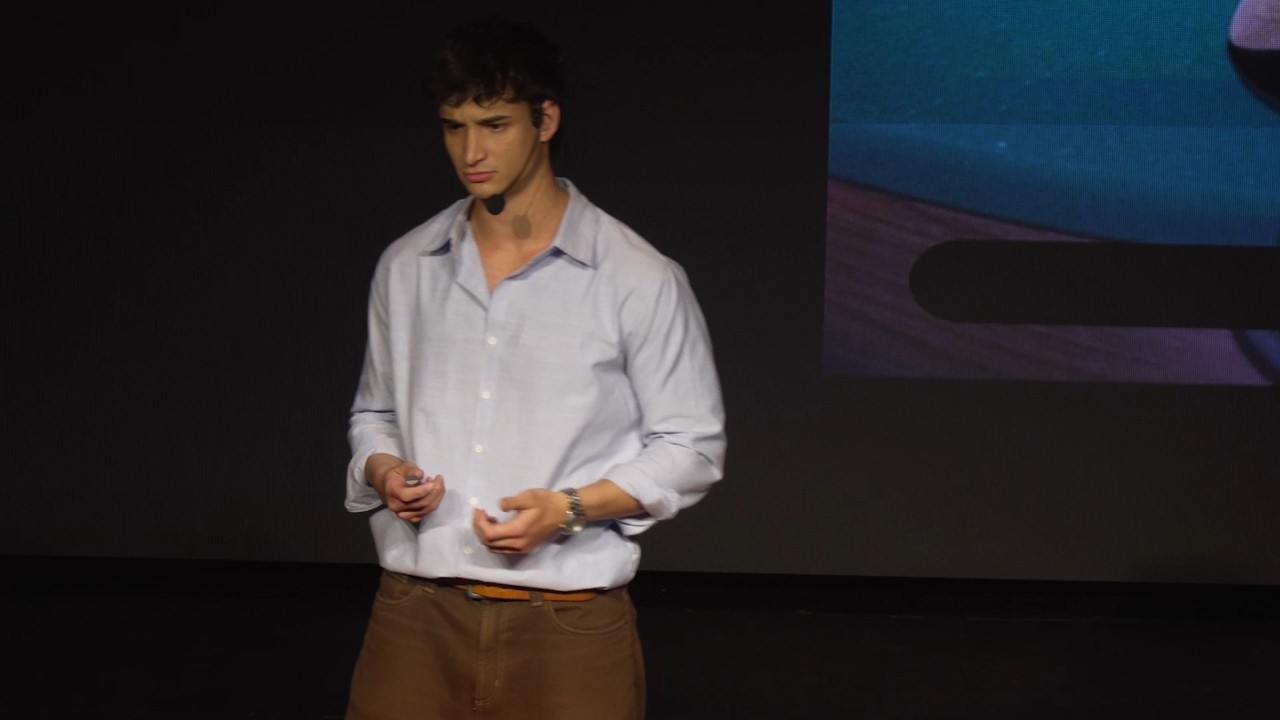
¿La IA nos va a reemplazar? | Thomas Tripodi | TEDxSan Isidro
Title history
- ¿La IA nos va a reemplazar? | Thomas Tripodi | TEDxSan Isidro (PSI archive)
- ¿La IA nos va a reemplazar? | Thomas Tripodi | TEDxSan Isidro — observed on 20261105-1852 UTC (YouTube)
Keywords
Summary
190 words
Critical Evaluation
Value of the Information & Strength of the Argument
The talk provides a valuable perspective on AI’s role in the workplace, emphasizing the importance of human skills such as empathy, communication, and leadership. However, the argumentation is largely based on personal experience and a single historical analogy, lacking robust empirical evidence or systematic research. While the 70/30 rule is compelling, its statistical basis is not clearly sourced. The presentation is persuasive and emotionally engaging, but it would benefit from more rigorous data to support its claims.
Scientific Rigor, Source Quality, Title Accuracy
The scientific rigor is moderate; the speaker references a study on 80 million new jobs without specific citation or source. The main source linked in the description is the generic TEDx page, which does not provide direct access to the claimed studies. The title ‘¿La IA nos va a reemplazar?’ is well-matched with the content, as the talk directly addresses this question and offers a nuanced conclusion. The overall reliability is limited by the anecdotal nature of the evidence, but the message aligns with common discourse on human-AI collaboration.
181 words
Title / Content Match
The title poses a direct question, and the talk answers it with a nuanced perspective, concluding that AI will not replace humans but transform roles.
Quality & Reliability
6/10
Personal testimony and anecdotal evidence rather than peer-reviewed research. The argument is coherent but relies on a single case study and a commonly cited statistic that is not fully referenced.
Key Moments
Markers derived by PSI from the transcript: the creator did not define chapters.
- Introduction: the late-night debate with friends about AI and job replacement.
- Comparison of images from 2020 and 2026, showing how AI now enables a 13-year-old to create professional images quickly.
- The historical story of the warrior and gunpowder, illustrating the obsolescence of certain skills.
- Mention of a study predicting 80 million new jobs, while 40% of current tasks will disappear in 4 years.
- Personal failure: forced AI integration in his company, leading to a demotivated team.
- Introduction of the 70/30 rule: 70% automatable, 30% human skills that differentiate.
- Learning to listen and foster team relationships, leading to unexpected benefits.
- Client retention improved from 3 to 9 months by simply visiting them in person.
- The story of Gonzalo Fernández de Córdoba and the 'Gran Capitán' as a model of human leadership.
- Conclusion: Use AI as infrastructure, not identity; choose to be the warrior who redefines his value.
Cited Sources
- TEDx Program — Official description of the TEDx event, confirming the talk was given under TEDx license.
Concurring Sources
- TEDx Talks — The official TEDx program where this talk was published.
Contribution & Novelties
The talk offers a practical and personal approach to integrating AI into professional life, centered on the ‘70/30 rule’ and ‘skills of the heart’. It adds to the existing discourse by emphasizing that human connection is a strategic advantage, supported by his own experience of increased client retention through face-to-face meetings. While not groundbreaking, it provides a compelling anecdotal framework for individuals and companies adapting to AI.
Pour aller plus loin :
- Soft skills — Overview of the non-technical skills emphasized in the talk.
- Humanistic psychology — Relevant to the focus on human needs and emotions in professional settings.
- AI and employment — Context on the broader debate about job displacement and creation.
113 words
Radar Profile
The radar profile shows moderate scores in information quantity (6) and quality (5), a low technical level (3), and moderate reliability (5). This suggests the talk is more motivationally oriented than data-driven, with strong emotional appeal but limited scientific depth.