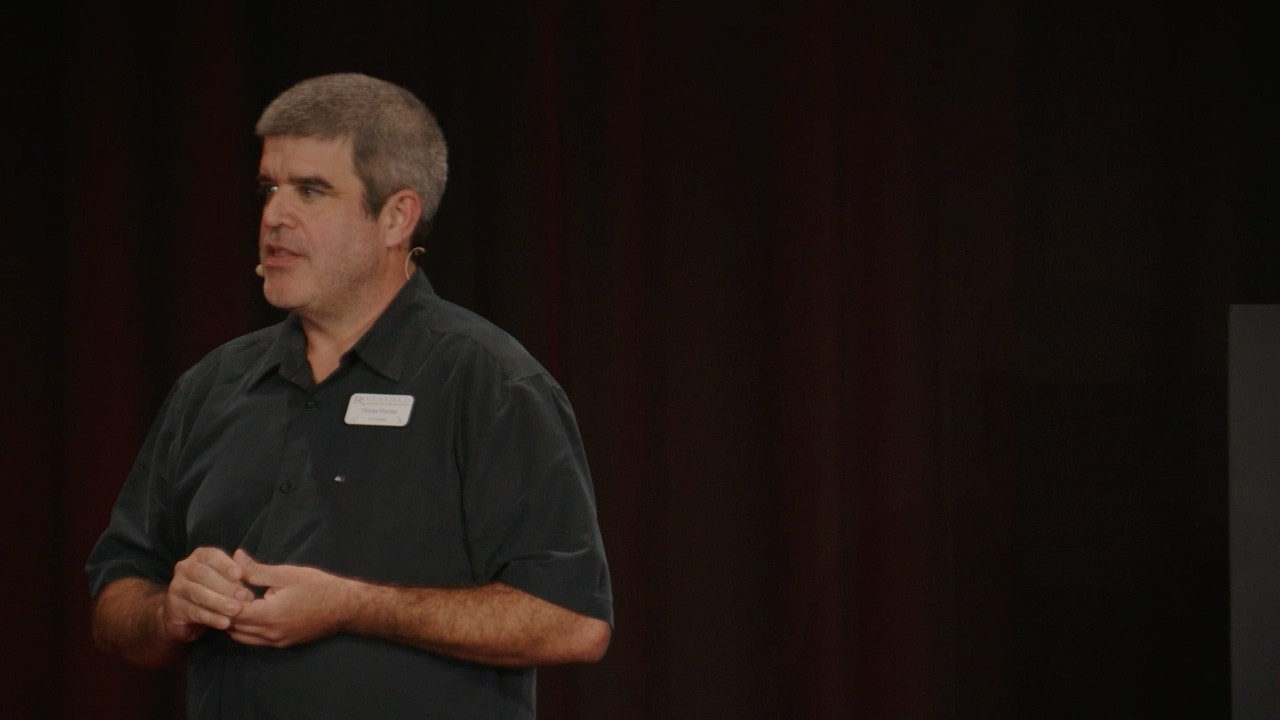
Cooperating Opposites in Mathematics | Thomas Priestley | TEDxRiverfield Country Day School
Title history
- Cooperating Opposites in Mathematics | Thomas Priestley | TEDxRiverfield Country Day School — observed on 20261104-2220 UTC (YouTube)
Keywords
Summary
141 words
Critical Evaluation
Value of the Information & Strength of the Argument
The talk offers a meaningful perspective on the philosophy of mathematics, emphasizing the essential tension between intuitive insight and formal proof. The argumentation is built on classic historical examples and a personal narrative, making it accessible and persuasive. However, it lacks depth in explaining how this dichotomy manifests in current research or educational practices, and the claims are not supported by empirical data or scholarly references. The value lies in its inspirational and reflective nature, encouraging educators and learners to embrace a broader view of mathematical thinking.
Scientific Rigor, Source Quality, Title Accuracy
The scientific rigor is moderate; the speaker draws on well-known historical events and concepts but does not provide citations or verifiable sources. The talk is a personal interpretation rather than a systematic review. The title accurately reflects the content, and the use of the seer-sage metaphor is consistent throughout. The lack of external references limits the academic reliability, though the historical facts mentioned are generally accurate. The talk is more philosophical than strictly mathematical, and it may not satisfy specialists seeking technical depth.
185 words
Title / Content Match
The title accurately captures the central theme of the seer and sage as cooperating opposites in mathematical thinking, aligning well with the content presented.
Quality & Reliability
6/10
The talk presents a philosophical perspective on mathematics supported by historical anecdotes and personal experience, but lacks formal citations or empirical evidence. The argument is coherent and thought-provoking, yet relies on the speaker's interpretation rather than rigorous academic sources.
Key Moments
Markers derived by PSI from the transcript: the creator did not define chapters.
- Introduction to calculus as a pebble, connecting its Latin root to play.
- Reference to Raphael's School of Athens and the seer (Plato) and sage (Aristotle) archetypes.
- Historical example: Democritus as seer and Eudoxus as sage in proving the volume of a cone.
- Georg Cantor's discovery of multiple infinities and the development of set theory, leading to faceted analysis.
- Personal story of learning mathematics with his father using pebbles, illustrating the shift from seer to sage.
- Critique of math education for ignoring the seer perspective and equation of students to computers.
- Conclusion: need to balance seer and sage, stay barefoot and curious.
Cited Sources
- TEDx official site — Platform for this talk, providing general information about the TEDx program.
Contribution & Novelties
The talk frames mathematical thinking as a dynamic interplay between intuitive insight and formal rigor, emphasizing the necessity of both. It offers a fresh perspective on math education by criticizing the overemphasis on algorithmic skills and advocating for a more balanced pedagogy. The narrative is personal and engaging, making it relatable to a broad audience.
Pour aller plus loin :
- Philosophy of mathematics — An overview of different philosophical approaches to the nature of mathematics.
- Calculus — The branch of mathematics discussed in the talk, defined as the study of change.
- Set theory — Developed by Georg Cantor, foundational to modern mathematics.
- Plato and Aristotle on mathematics — The historical roots of the seer-sage distinction.
115 words
Radar Profile
The radar profile shows moderate scores across all dimensions, with a slightly higher quality of information relative to quantity and technical depth. This suggests a balanced but not highly detailed talk, appropriate for a general audience.