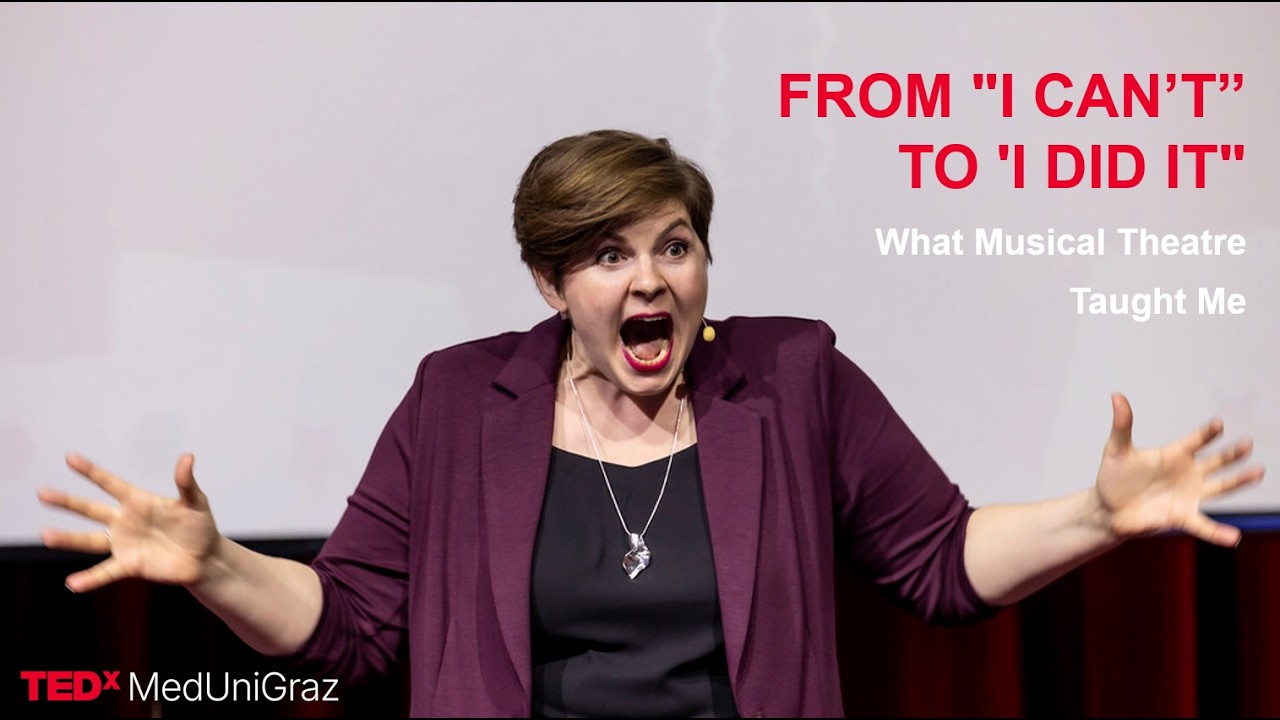
From "I Can´t" To "I Did It" – What Musical Theatre Taught Me | Isabella Ošaben | TEDxMedUniGraz
Title history
- From "I Can´t" To "I Did It" – What Musical Theatre Taught Me | Isabella Ošaben | TEDxMedUniGraz — observed on 20261118-1632 UTC (YouTube)
Keywords
Summary
182 words
Critical Evaluation
Value of the Information & Strength of the Argument
The talk’s value lies in its relatable personal anecdotes and clear, actionable takeaways. Isabella’s storytelling is engaging and vivid, using humour and vulnerability to illustrate universal truths about self-belief and persistence. The argumentation is solid for a motivational talk: each lesson is anchored in a concrete experience, making the advice feel authentic and applicable. However, it remains anecdotal and does not reference any psychological research or broader evidence, which limits its scientific weight. The structure is coherent, with a natural progression from personal struggle to empowerment, and the call to action is compelling.
Scientific Rigor, Source Quality, Title Accuracy
The talk is a first-person narrative, so the primary source is the speaker’s own experience. No external sources or studies are cited. The only link provided in the description is the official TEDx program page, which confirms the talk’s format but does not add scientific credibility. The title is very accurate and aligns perfectly with the content, as the entire talk revolves around moving from a mindset of incapability to accomplishment. The content is presented with emotional sincerity, but from a scientific standpoint, it is not rigorous; it relies entirely on personal testimony. There are no comments analysed, so no public reception data is available.
213 words
Title / Content Match
The title accurately reflects the content: the speaker shares key lessons from her musical theatre career about overcoming self-doubt and failure.
Quality & Reliability
5/10
Personal testimony and motivational advice based on anecdotal experience; lacks empirical evidence but is coherent and well-delivered.
Key Moments
Markers derived by PSI from the transcript: the creator did not define chapters.
- Isabella shares her childhood dream of being on stage and her first 'I can't' moment when her cousin suggested applying to musical school.
- She describes her diploma show and the devastating feedback that led her to quit, but then she reassesses her performance and realises she was good, introducing the first lesson: believing in yourself is a choice.
- The vocal coach tells her she will never belt; she finds a new coach and achieves it in 45 minutes, leading to the second lesson: don't believe others' limits.
- Isabella recounts landing a leading role and losing all her contracts due to the pandemic, emphasising the feeling of losing everything.
- She shares the theatre principle 'the show must go on' and tells the story of a disastrous murder mystery performance that earned her the biggest applause, illustrating the third lesson about resilience.
- She concludes by urging the audience to change their script from 'I can't' to 'I can' and to believe in themselves, highlighting that you don't need all answers today.
Cited Sources
- TEDx Program — Official TEDx program page, confirming the talk's format and origin.
Contribution & Novelties
The talk offers a fresh perspective on self-belief by framing it as a conscious choice rather than a trait earned through achievement. Its originality lies in using musical theatre metaphors—such as belt technique, stage mishaps, and ’the show must go on’—to illustrate psychological resilience. While the message is not new, the storytelling and specific examples from a performing arts career provide a unique angle. The talk is motivational rather than scientific, but it can serve as a springboard for exploring related psychological concepts.
Pour aller plus loin :
- Growth mindset — This concept by Carol Dweck contrasts fixed and growth mindsets, directly relevant to the idea that ‘I can’t’ is a limiting belief.
- Self-efficacy — Bandura’s theory about belief in one’s ability to succeed, which aligns with the speaker’s emphasis on self-belief as a choice.
- Impostor syndrome — A psychological pattern where individuals doubt their accomplishments, similar to Isabella’s initial reaction to her teacher’s feedback.
155 words
Radar Profile
The radar profile shows low scores in technical depth (2) and overall reliability (4), reflecting the anecdotal nature of the talk. Quantity and quality of information are moderate (both 5), indicating a well-structured but not information-dense content. This profile is typical of a motivational personal narrative rather than an evidence-based presentation.