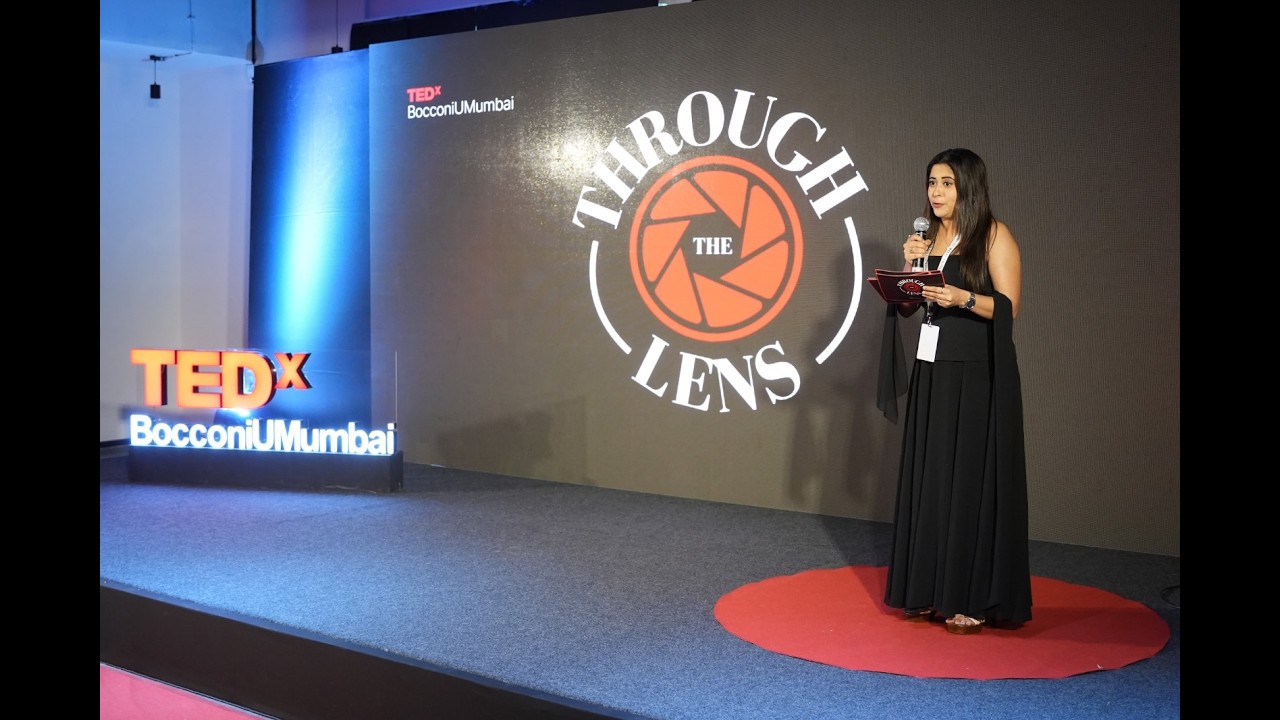
Fame Isn't the Finish Line | Gayatri Datar | TEDxBocconiUMumbai
Keywords
Summary
190 words
Critical Evaluation
Value of the Information & Strength of the Argument
The value of this talk lies in its raw and honest portrayal of the entertainment industry’s psychological toll, a topic often glamorized. Datar argues effectively that ambition without boundaries can become a trap, and that self-worth should not be tied to productivity. Her narrative is compelling because it is firsthand, and she supports her points with specific details—like earning ₹2,500 for a 12-hour shift, living on ₹100 per day for travel, and functioning on 2 hours of sleep. She traces a clear evolution from naïveté to burnout to self-awareness, culminating in the realization that vulnerability and self-respect are key to personal freedom. While the argument is anecdotal rather than empirical, its authenticity and emotional resonance make it persuasive.
Scientific Rigor, Source Quality, Title Accuracy
This is an opinion-led personal testimony, not a scientific study. No external references or data are cited; the only source mentioned is the TEDx platform itself, via the description link. The title ‘Fame Isn’t the Finish Line’ accurately reflects the content, as Datar’s story illustrates that fame alone does not bring satisfaction. The talk does not claim to be rigorous research but rather shares lived experience, which is acceptable for a TEDx talk. However, for a scientific evaluation, the lack of verifiable sources and reliance on subjective experience limit its rigor.
224 words
Title / Content Match
The title suggests that fame is not the ultimate goal, which aligns with the talk's central message about finding self-worth beyond recognition and work.
Quality & Reliability
6/10
Personal testimony without external sources or data, but the narrative is authentic and consistent with known challenges in the entertainment industry.
Key Moments
Markers derived by PSI from the transcript: the creator did not define chapters.
- Introduction: Gayatri Datar introduces herself as an actress in the Marathi industry.
- Describes her privileged upbringing and early decision to become an actress.
- Recounts the harsh realities of first job: long hours, low pay, and lack of support in Mumbai.
- Discusses her slide into depression and questioning her choices.
- Becomes a workaholic, running on little sleep and neglecting personal life; realization that self-worth was tied to work.
- Decision to do Bigg Boss for money; the experience of being vulnerable and standing up for herself.
- After Bigg Boss, personal growth, finding love, and final reflections on mountains and evolving.
Cited Sources
- TEDx Talks - TEDx program — Mentioned in the description as the organizing platform for this TEDx event.
Contribution & Novelties
The talk offers an insider’s perspective on the Marathi entertainment industry, which is less represented in mainstream media. Its novelty lies in the candid discussion of mental health struggles and the societal pressure to equate success with fame. The speaker’s journey from burnout to self-acceptance provides a relatable narrative for many professionals.
Pour aller plus loin :
- Burnout (Wikipedia) — Relevant to the concept of work-related exhaustion described in the talk.
- Workaholism (Wikipedia) — Directly addresses the speaker’s compulsive overwork behavior.
- Self-compassion (Wikipedia) — Useful for understanding the shift from self-criticism to self-worth.
- Vulnerability concept by Brené Brown (no link) — The talk’s emphasis on vulnerability aligns with Brown’s research on courage and connection.
114 words
Radar Profile
The scores show a moderate amount of information with high relevance but low technical depth. The talk is heavy on personal experience, which makes it relatable but not scientifically rigorous. The profile reflects a balanced but not extreme performance, typical of inspirational TEDx talks.