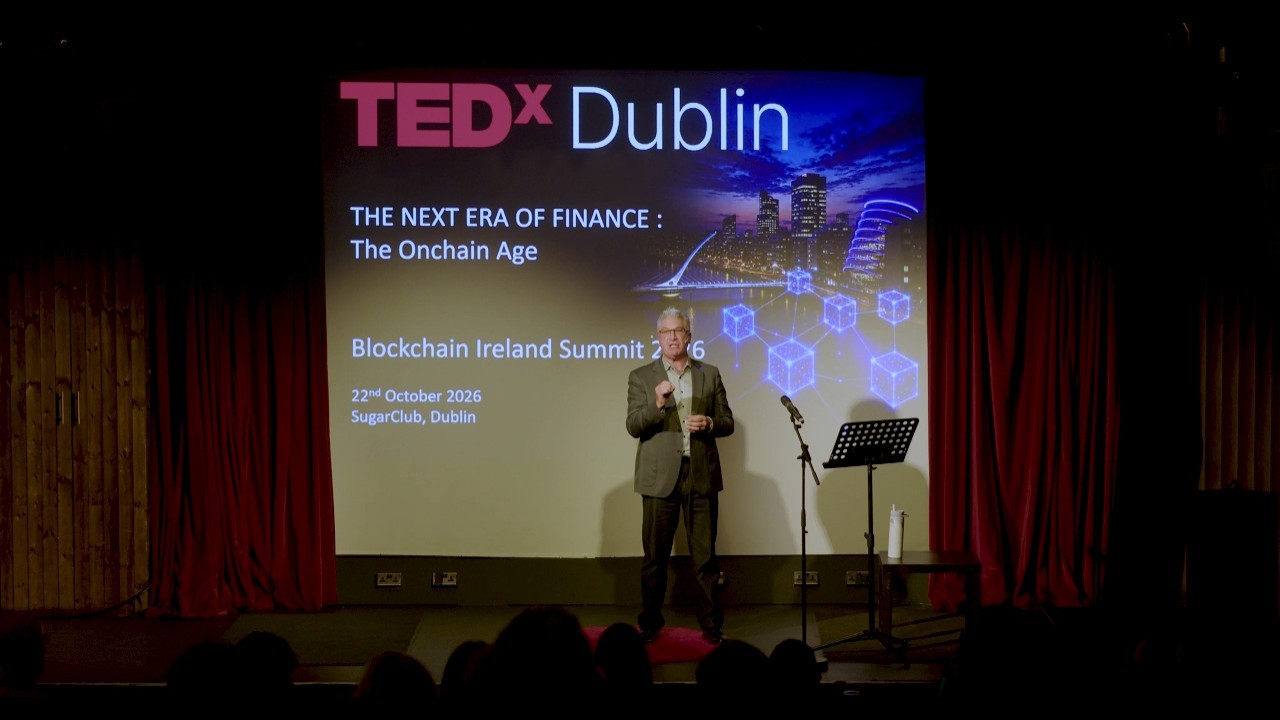
The Hidden Architecture of Trust: Rewiring Global Finance | Sean Penrith | TEDxDublin Salon
Keywords
Summary
152 words
Critical Evaluation
Value of the Information & Strength of the Argument
The talk provides a clear and persuasive argument for rethinking financial systems through a trust lens. Penrith effectively uses a concrete example to illustrate systemic failure, then presents his own frameworks as a plausible solution. The logic is internally consistent, though it rests heavily on the speaker’s authority and experience. He fails to acknowledge potential critiques or alternative approaches, which weakens the argumentative depth. The call for ’trust by design’ is compelling but the practical implementation remains vague, especially regarding scalability and independence of these tools.
Scientific Rigor, Source Quality, Title Accuracy
The talk cites no external studies or academic sources; it relies on anecdotal evidence and personal frameworks. The only link provided is the general TEDx page, offering no direct references to the claimed phenomena. The title aligns with content, but the content’s scientific rigour is limited. The speaker’s expertise is evident, but the proprietary nature of the frameworks—TRARO, KIMAZO, SEFA—raises questions about transparency and validation. No public comments were provided for analysis.
173 words
Title / Content Match
The title accurately reflects the talk's focus on trust as a design element in global finance, and the content delivers on that promise.
Quality & Reliability
6/10
The talk offers a coherent argument with personal frameworks but lacks independent verification or external data. Claims about mobilizing billions rely on anecdotal evidence. The speaker's proprietary models are presented without peer review.
Key Moments
Markers derived by PSI from the transcript: the creator did not define chapters.
- Introduction of Kenyan project: community enthusiasm but investor absence.
- Thesis: root cause of collapses is erosion of trust.
- Introduction of TRARO scoring framework.
- Explanation of KIMAZO for transparency and SEFA for risk.
- Critique of blockchain and tokenized carbon credits; emphasis on judgment over ledger.
- Call to build trust architecture and concluding remarks.
Cited Sources
- TEDx Program — General reference to the TEDx event format and platform.
Contribution & Novelties
The talk introduces a conceptual framework for incorporating trust as a tangible, designable element in climate finance. Penrith’s proprietary tools (TRARO, KIMAZO, SEFA) are novel in emphasis, though similar concepts exist in ESG scoring and due diligence. The key contribution is framing trust as infrastructure rather than sentiment, and linking it to capital flow. However, the lack of published data or independent evaluation limits the novelty’s credibility.
Pour aller plus loin :
- Climate Finance — Overview of financial mechanisms for climate action, relevant to the talk’s core theme.
- Carbon Credit — Explanation of carbon credits, including the concept of additionality and verification issues.
- Blockchain for Climate Change — Discusses potential uses and limitations of blockchain in environmental finance, directly addressing the talk’s critique.
123 words
Radar Profile
The profile shows moderate scores across all dimensions, with slight emphasis on information quality and reliability relative to technical depth. This reflects a talk that is persuasive but lacks quantitative rigor, suitable for a broad audience but not for specialists seeking data-backed claims.