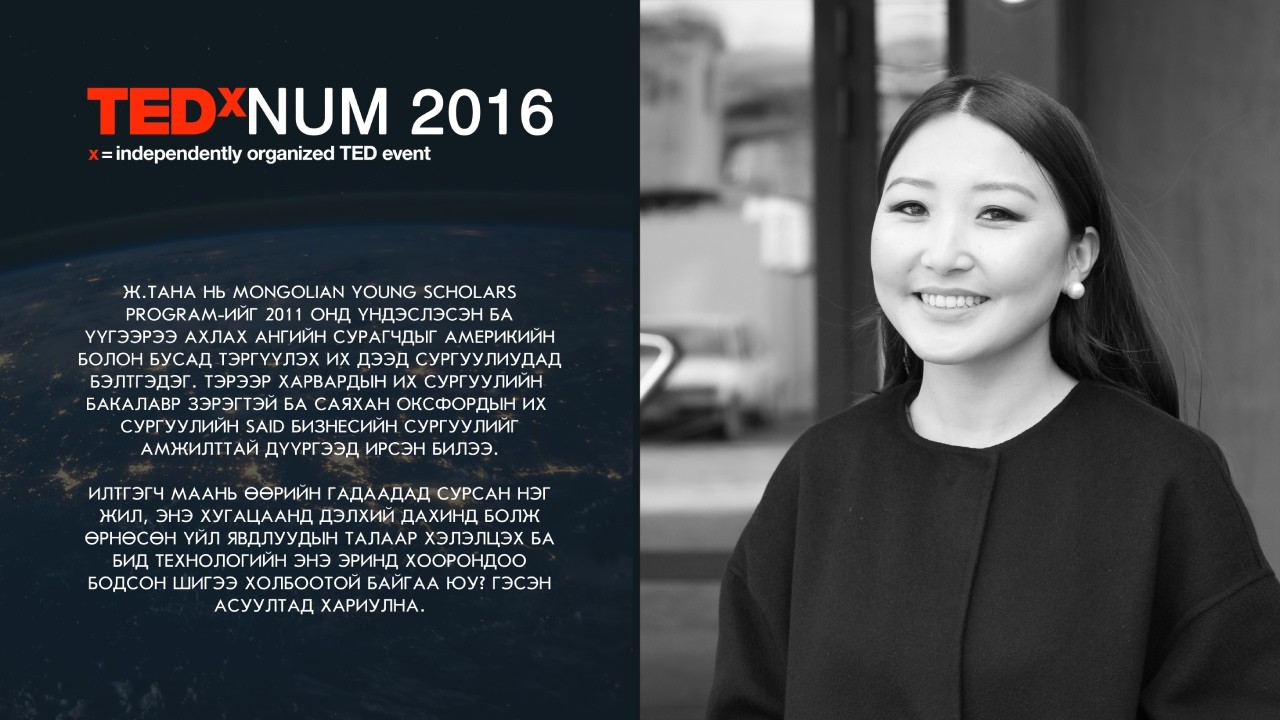
Are we as connected to one another as we think we are? | Tana Jambaldorj | TEDxNUM
Keywords
Summary
218 words
Critical Evaluation
Value of the Information & Strength of the Argument
The value of the information lies in its integration of timely real-world geopolitical examples with a personal, first-hand account of elite academic and policy environments. The speaker’s argumentation is logically structured: she begins with concrete political paradoxes (Brexit, Trump, etc.) to establish a problem, then diagnoses the cause (algorithmic echo chambers and information overload), and finally proposes a solution (real human interaction and collaboration). While the reasoning is clear and persuasive on a rhetorical level, it relies heavily on subjective experience rather than empirical data. The claim about data volume is a powerful illustrative example but is sourced from a general stat commonly cited in tech circles, lacking precise scholarly citation in the talk. The progression from political events to technological influence to the Fourth Industrial Revolution is coherent, and her focus on human values as the ultimate differentiator from machines is compelling. However, the argumentation would be strengthened by including evidence from social psychology or media studies on filter bubbles, which she only touches upon anecdotally.
Scientific Rigor, Source Quality, Title Accuracy
The talk demonstrates a moderate level of scientific rigor. It is a classic TEDx personal narrative, blending personal observation with references to broad public events (Brexit, WEF Davos). The speaker does not cite specific academic papers, peer-reviewed studies, or statistical sources beyond the famous ‘5 exabytes’ statistic. The only description link is to the general TEDx platform, which provides no direct primary sources. The title precisely matches the central theme of the talk, and the content consistently addresses the question of perceived versus actual human connectivity. While the anecdotes are engaging, the lack of cited authoritative sources (such as studies on echo chambers or the impact of social media on polarization) limits its use as a strictly scientific reference. The adequacy between title and content is excellent, but the analytical depth relies more on emotional appeal and personal credibility than on verifiable external evidence.
326 words
Title / Content Match
Perfectly aligned with the content: the speaker reflects on the paradox of modern technological hyper-connectivity versus deep social fragmentation and isolation.
Quality & Reliability
6/10
The talk is a personal reflection and expert opinion rather than a peer-reviewed or systematic analysis. It cites several major world events (Brexit, Colombian peace referendum, Duterte's drug war, US election) and uses one specific statistic (5 exabytes of data created since 2003, now generated every two days) without precise attribution to original research. The reasoning is coherent and intellectually honest, but the scientific rigor is limited to anecdotal evidence and widely discussed socio-political observations.
Key Moments
Markers derived by PSI from the transcript: the creator did not define chapters.
- Introduction to the theme of a 'strange year' marked by major global political events.
- Analysis of the Brexit referendum as a surprising and counter-intuitive popular decision.
- Discussion on the US election and the speaker's realization that her social circle excluded Trump supporters, highlighting ideological bubbles.
- Explanation of information overload and how social media algorithms create personalized 'filter bubbles' based on past behavior.
- Description of the Fourth Industrial Revolution (WEF Davos), covering AI, autonomous vehicles, and robotics.
- Anecdote about the Oxford cohort's teamwork and mutual support during stressful exams, illustrating the power of human collaboration.
- Final call to action: encourage real conversations with strangers to counter social fragmentation and strengthen community.
Cited Sources
- TEDx Talks — Official platform describing the TEDx event format, referenced at the end of the video's description.
Contribution & Novelties
The original contribution of this talk lies in the speaker’s unique dual perspective as a Mongolian Harvard/Oxford graduate who bridges elite academic institutions and the developing world. She synthesizes major geopolitical shocks (Brexit, Duterte) with the technological driver of algorithmic curation, effectively framing social division as a design flaw of our information ecosystem. The novelty is not in the concepts themselves, which are well-trodden in tech circles, but in the personal narrative that connects them: her experience at Davos and the collective exam solidarity. It serves as an accessible entry point to the debate about AI and human relevance, emphasizing empathy and cross-cultural collaboration as the ultimate answer to technological displacement.
Pour aller plus loin :
- Filter bubble — Directly central to the speaker’s argument about personalized algorithms isolating users.
- Confirmation bias — Psychological mechanism underlying the echo chamber effect which relates to the observed social bubbles.
- Fourth Industrial Revolution — The conceptual framework of the socio-technical shift she discusses and attributes to the WEF.
165 words
Radar Profile
The radar profile shows a balanced but moderate set of scores, with 'quantite_information' and 'qualite_information' slightly higher than the 'niveau_technique' and 'fiabilite_globale'. This reflects a talk that is rich in narrative examples and general references, but lacking in technical depth and verifiable scientific citations, positioning it as a convincing opinion piece rather than a rigorous scientific study.