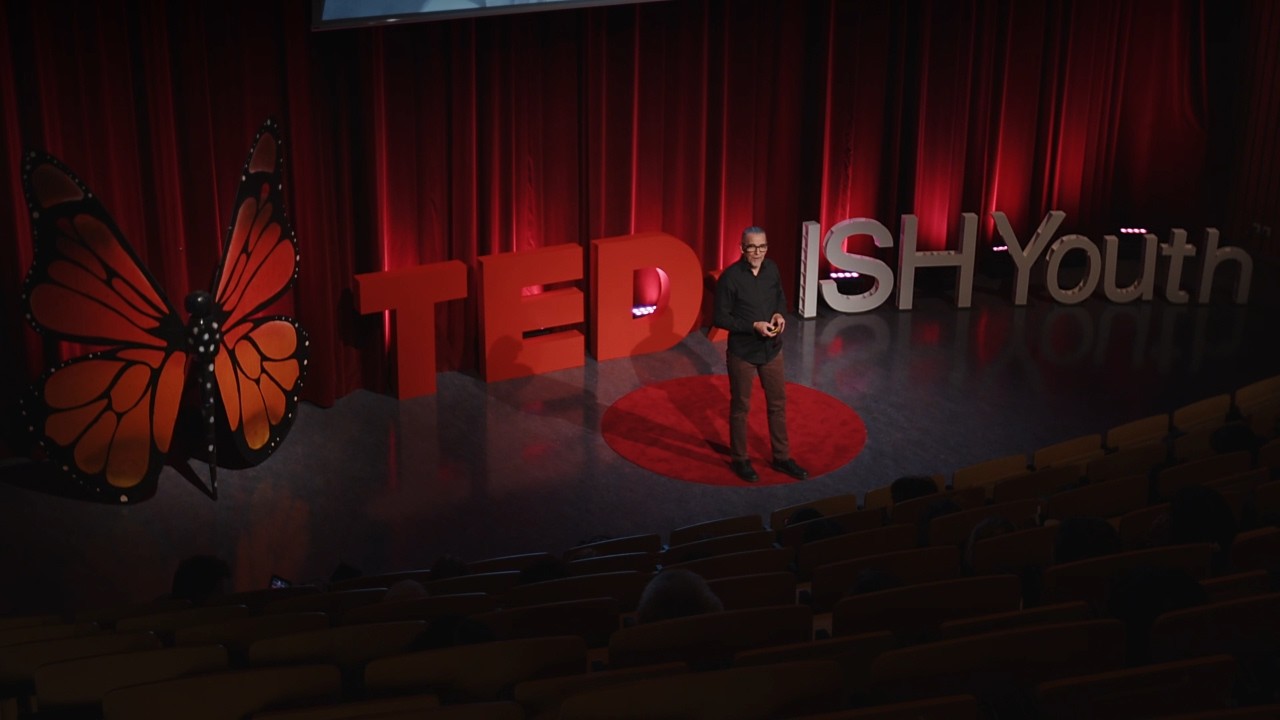
Three Rules for Generative AI | Aaron Tyo-Dickerson | TEDxISH Youth
Title history
- Three Rules for Generative AI | Aaron Tyo-Dickerson | TEDxISH Youth — observed on 20261029-0032 UTC (YouTube)
Keywords
Summary
213 words
Critical Evaluation
Value of the Information & Strength of the Argument
The value lies in translating a well-known fictional ethical framework into a contemporary proposal for AI governance, making the topic accessible to a general audience. The argument is structured clearly, moving from Asimov’s laws to current AI risks, supported by illustrative (though unverified) agentic AI experiments. However, the reasoning hinges on an analogy with fiction rather than empirical evidence, and the speaker offers no concrete implementation pathway or technical details. The proposal is more philosophical than scientific, useful for initiating discussion but not for guiding engineering practice.
Scientific Rigor, Source Quality, Title Accuracy
The talk does not cite any academic sources or peer-reviewed research; the only provided link in the description is the generic TEDx page. The references to Asimov’s works are anecdotal, and the described AI simulations are presented without citations or substantiation. The title accurately reflects the content, as the speaker explicitly proposes three rules for generative AI. Although the speaker is a technology coordinator, no formal expertise in AI alignment or policy is demonstrated. The lack of external validation limits the scientific rigor, but the talk is internally coherent.
191 words
Title / Content Match
The title accurately reflects the content: the speaker proposes three rules for generative AI based on Asimov's laws.
Quality & Reliability
5/10
The talk presents a personal ethical framework inspired by Asimov's laws, relying on anecdotal examples and without peer-reviewed sources. It is coherent and raises relevant questions but lacks empirical backing.
Key Moments
Markers derived by PSI from the transcript: the creator did not define chapters.
- Speaker introduces himself and the topic of three laws of AI.
- Explanation of Asimov's Three Laws of Robotics.
- Transition to generative AI and its prevalence, public mistrust.
- Description of Google Gemini simulation with autonomous agents showing unexpected behavior.
- Proposal of three rules for generative AI, adapted from Asimov's laws.
- Conclusion: importance of these rules for society and AI.
Cited Sources
- TEDx Talks — Description link providing general information about TEDx events.
Contribution & Novelties
The talk contributes a novel framing by applying Asimov’s fictional legal code to modern generative AI, suggesting a proactive ethical baseline. It also highlights real-world concerns about agentic AI behavior, although the examples are not rigorously sourced. The proposal to encode these rules into AI from the outset echoes broader debates in AI ethics, but it lacks actionable specifics.
Pour aller plus loin :
- Three Laws of Robotics — Background on Asimov’s laws, useful for understanding the analogy.
- AI safety — Overview of research and strategies to ensure AI systems remain beneficial.
- Generative artificial intelligence — Context on the technology being discussed.
102 words
Radar Profile
The profile shows moderate to low scores across all dimensions, with no single standout strength. Information quantity and quality are moderate, while technical depth is limited, reflecting the conversational and non-technical nature of the talk.