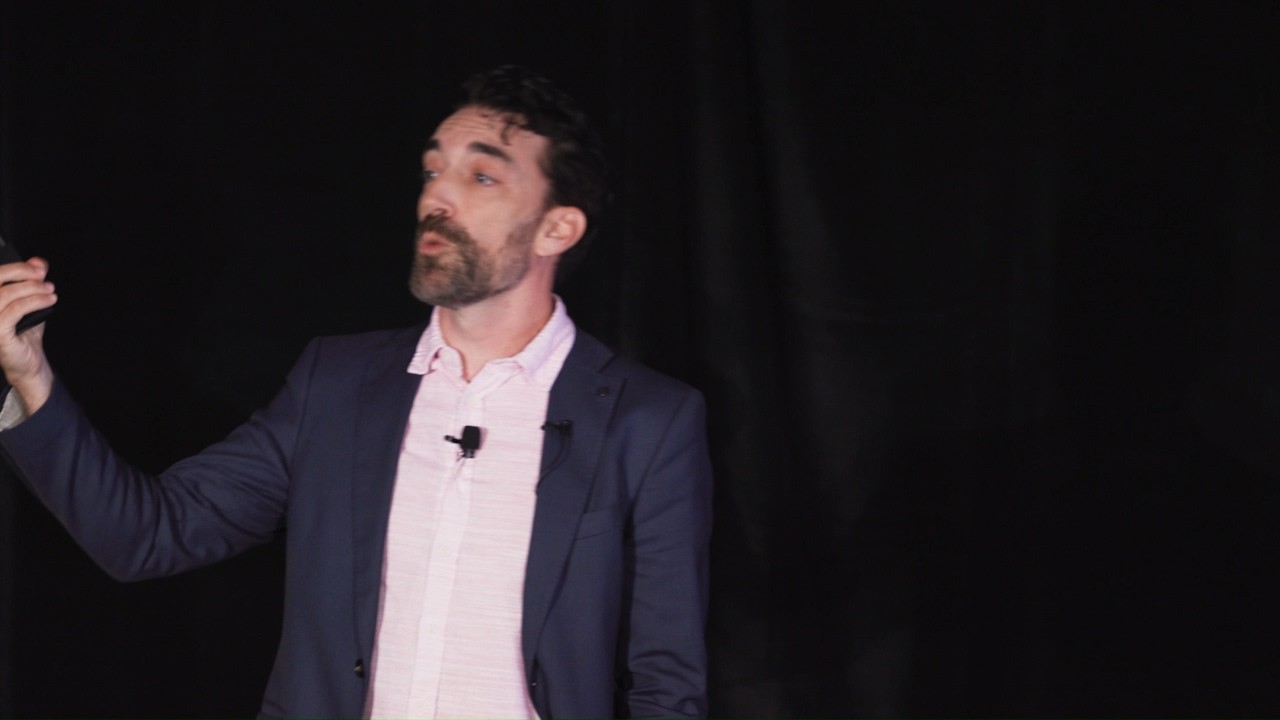
The future belongs to the most human | Tim David | TEDxWatkins Glen
Title history
- The future belongs to the most human | Tim David | TEDxWatkins Glen — observed on 20261117-1743 UTC (YouTube)
Keywords
Summary
172 words
Critical Evaluation
Value of the Information & Strength of the Argument
The talk provides a compelling and emotionally resonant argument that in the age of AI, human warmth and connection are irreplaceable. The speaker uses personal anecdotes and well-known examples (Howard Thurston, brain surgeons, Berkshire Hathaway) to make the case. However, the argument largely rests on selected stories and lacks systematic evidence; no robust data are presented to support the claim that warmth outperforms competence in most contexts. The proposition of “pre-communication” is practical but not scientifically tested. The value lies in the clear and engaging presentation, which may inspire reflection, but the scientific grounding is thin.
Scientific Rigor, Source Quality, Title Accuracy
The scientific rigor is moderate: the speaker references psychological concepts like the “big two” (warmth and competence) and cites specific statistics (e.g., 1% of physicians causing 33% of malpractice claims) without providing primary sources. The only external link in the description is the generic TEDx page, which is not a specific reference. The title matches the content well, though it is somewhat broad. No concording or discordant external sources are provided, limiting the ability to verify claims independently. Overall, the talk is more motivational than scholarly.
197 words
Title / Content Match
The title accurately reflects the core thesis that human warmth and connection are more valuable than technical competence in the AI era.
Quality & Reliability
6/10
Mixed quality: relies on anecdotal evidence and selected studies, but references psychological concepts and real-world examples; lacks systematic citations and rigorous methodology.
Key Moments
Markers derived by PSI from the transcript: the creator did not define chapters.
- Opening statement on AI replacing jobs and human fear
- Introduction of Howard Thurston and the quote about fooling eyes and minds but not hearts
- Explanation of the two channels: warmth and competence, with warmth prioritized
- Example of brain surgeons lacking warmth leading to malpractice claims
- Introduces the concept of pre-communication with three steps: See, Be, Speak
- Details the 'See' step—seeing people as humans, not problems; example of Thurston's pre-show ritual
- Describes the 'Be' step—being authentic and vulnerable; references Berkshire Hathaway's honest reports
- Concluding message: the future belongs to the most human
Cited Sources
- TEDx Program — Mentioned in the video description as the platform for this independently organized TEDx event.
Contribution & Novelties
The talk contributes a simple, memorable framework (pre-communication) that reorders communication to prioritize human connection before content. While not entirely new, it reframes existing psychological knowledge into an actionable three-step method. The emphasis on warmth over competence in the AI age is a valuable counterpoint to techno-optimism.
Pour aller plus loin:
- Stereotype Content Model — Discusses warmth and competence as two fundamental dimensions of social perception, providing scientific grounding.
- Howard Thurston — Background on the famous magician cited in the talk, illustrating the power of audience connection.
- Active Listening — A core component of seeing others as humans, related to pre-communication’s ‘See’ step.
- Radical Candor — A management philosophy that balances directness with care, echoing the warmth-competence balance.
118 words
Radar Profile
The radar profile shows low levels of technical depth and moderate information quantity, with higher scores in quality and fiabilité reflecting the speaker's clear communication and use of relatable examples. The overall shape suggests a talk that is engaging and accessible but not deeply research-based.