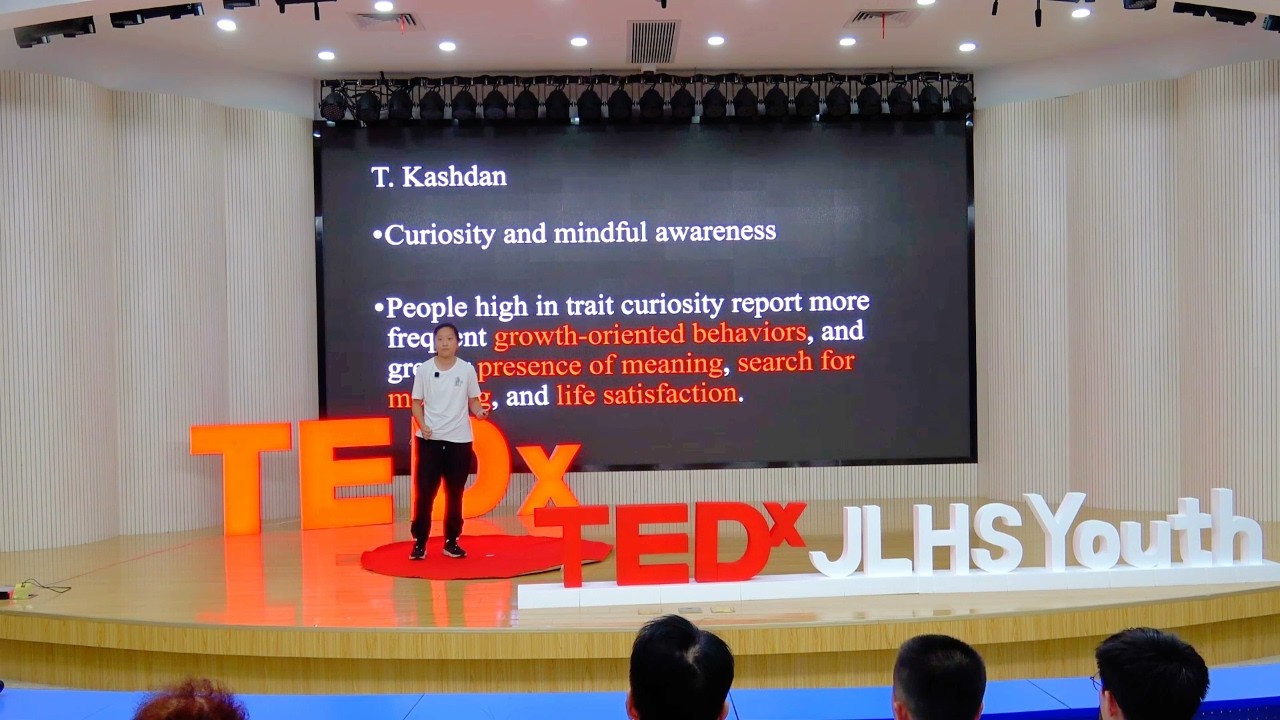
Is Traveling the Best Way to Broaden Our Horizons? | Shiman Fang | TEDxJLHS Youth
Title history
- Is Traveling the Best Way to Broaden Our Horizons? | Shiman Fang | TEDxJLHS Youth — observed on 20261117-1743 UTC (YouTube)
Keywords
Summary
174 words
Critical Evaluation
Value of the Information & Strength of the Argument
The talk provides a clear and coherent argument against the overemphasis on travel for personal growth. The value lies in reframing the concept of broadening horizons as an internal cognitive process rather than an external experience. The argumentation is solid in its logical structure: it uses examples, addresses potential counterarguments (e.g., questioning the need to broaden horizons), and offers practical applications. The inclusion of psychological references and a museum initiative adds some credibility, though the evidence is largely anecdotal. The speaker also connects the argument to critical thinking and education, which strengthens the practical relevance. However, the reliance on personal stories and a vague psychological citation limits the robustness of the argument.
Scientific Rigor, Source Quality, Title Accuracy
The title accurately reflects the content, as the talk directly addresses the question of whether travel is the best way to broaden horizons. The scientific rigor is moderate: the speaker mentions research on curiosity and a museum program but provides no direct citations or data. The only external source provided in the description is the generic TEDx page, which does not substantiate specific claims. The argument is structured logically but is based on personal reflection and selected examples. The talk would benefit from more rigorous sourcing to support its claims. Nonetheless, the title-content alignment is excellent, and the talk is internally consistent.
229 words
Title / Content Match
The title poses a direct question and the talk provides a clear answer, arguing for daily observation over travel. The content matches the title well.
Quality & Reliability
6/10
The talk presents a coherent personal argument with anecdotal evidence and a few references, but lacks rigorous source citations. The psychological reference is vague and the Singapore arts museum program is mentioned without a direct source. The reasoning is logically structured but relies heavily on personal reflection rather than systematic research.
Key Moments
Markers derived by PSI from the transcript: the creator did not define chapters.
- She questions the phrase 'broaden our horizons' and checks dictionaries.
- She realizes she learned about the Aztecs at school, not on a trip.
- She presents the 'depth' argument: daily observation yields deeper knowledge.
- She uses Sherlock Holmes to illustrate the importance of practically useful knowledge.
- She cites psychologist Tashen on curiosity and life satisfaction.
- She mentions Singapore Arts Museum's 'Unwind with Sam' program on sustained attention.
- She suggests asking 'what' and 'why' in daily life as a practical tool.
- She advises talking with others for fresh perspectives.
- She concludes with Tolkien's hobbits as an example of wisdom in ordinary life.
Cited Sources
- TEDx Talks — Platform where the talk was presented, providing context on the TEDx event format.
Contribution & Novelties
The talk offers a fresh perspective by shifting the focus from external experiences (travel) to internal practices (daily observation and critical thinking). It synthesizes ideas from psychology, education, and literature to argue that broadening horizons is about depth and utility rather than novelty. The practical advice at the end is actionable and relatable.
Pour aller plus loin :
- Curiosity — The psychological trait central to the talk’s argument; research links it to well-being.
- Critical thinking — The cognitive skill emphasized as essential for broadening horizons.
- Mindfulness — Related to the museum program and the idea of sustained attention.
- TEDx Talks — Platform for sharing ideas like this one.
108 words
Radar Profile
The radar profile shows a talk with moderate information quantity and quality, low technical difficulty, and moderate reliability. This suggests an accessible, thought-provoking talk that prioritizes engagement over depth of evidence.