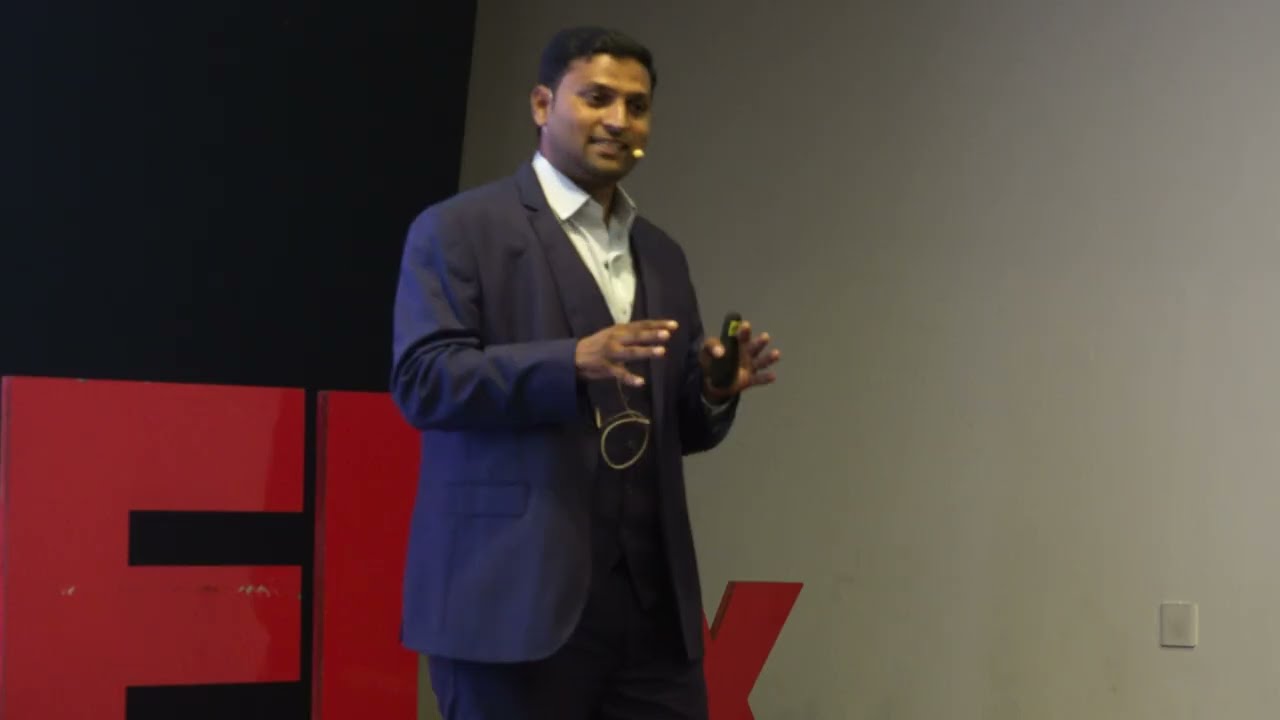
TEENAGE IS COMPLEX.TEENAGERS ARE NOT | Kiran Sidde | TEDxKharadi
Keywords
Summary
127 words
Critical Evaluation
Value of the Information & Strength of the Argument
The talk provides a valuable reframing of adolescent behavior, offering concrete insights from listening to teenagers themselves. The argumentation is coherent and empathetic, building from specific anecdotes to broader developmental principles. He effectively uses the ‘why’ question to explain how questioning is a sign of emerging critical thinking. The emphasis on understanding before addressing behavior is practical and well-supported by developmental psychology. However, the argumentation relies heavily on personal experience and lacks rigorous empirical evidence beyond a single statistic, which weakens the scientific foundation.
Scientific Rigor, Source Quality, Title Accuracy
Scientific rigor is moderate. The speaker references ‘developmental psychology’ and ’neuroscience’ generally without citing specific studies. He uses one statistic from the NCRB (student suicides) to underscore consequences, but no detailed source is given. The only external link in the description is to TEDx’s general page. The title accurately reflects the content, and the talk adheres to its thesis. Comments are not provided, so no public reception analysis is possible.
169 words
Title / Content Match
The title accurately captures the central thesis: adolescent behavior is complex due to developmental changes, but teenagers themselves are not intrinsically problematic. The content directly supports this distinction.
Quality & Reliability
6/10
The talk draws on the speaker's extensive experience and his own research project (The Teenage Insight Project), but relies largely on anecdotal evidence and general developmental psychology. It cites one statistic from India's NCRB, but does not provide peer-reviewed references. The message aligns with established psychological concepts, but the scientific rigor is moderate.
Key Moments
Markers derived by PSI from the transcript: the creator did not define chapters.
- Introduction with a question to the audience about observing teenage behavior.
- Anecdote about a girl anxious about a friendship during exam season.
- Introduction of The Teenage Insight Project and its methodology of asking teenagers directly.
- First key finding: teenagers most want understanding, not freedom.
- Teen responses about friendships and emotions, highlighting the importance of being heard.
- Explanation of adolescent brain development and the need for autonomy.
- Central message: support the developmental need before addressing behavior.
- Warning about the consequences of misinterpreting teenagers, citing rising suicide rates.
Cited Sources
- TEDx Talks - About TEDx — The talk is hosted by TEDx and this link provides information about the TEDx format.
Concurring Sources
- Adolescence - Wikipedia — Provides scientific background on adolescent development aligning with the talk's central message.
Contribution & Novelties
The talk’s original contribution lies in directly giving voice to teenagers via the Teenage Insight Project, which collected thousands of responses. It provides a practical framework for parents and educators to shift from discipline to understanding. The reframing of ‘rebellion’ as ‘identity formation’ is a useful perspective. However, the ideas align with existing developmental psychology, so the novelty is in the accessible presentation and the specific project data.
Pour aller plus loin :
- Adolescence — Overview of the developmental stage, supporting the talk’s claims about change.
- Erikson’s stages of psychosocial development — Identity vs. role confusion during adolescence, directly relevant to the talk’s themes.
- National Crime Records Bureau — Source of the suicide statistics cited in the talk.
- Executive functions — Cognitive processes developing during adolescence, explaining why teens question more.
131 words
Radar Profile
The radar chart would likely show moderate scores across all dimensions, with slightly lower technical level and reliability, balanced by good information quality and comprehensiveness. The talk is strong on accessibility and message, but lacks the depth of a formal study.