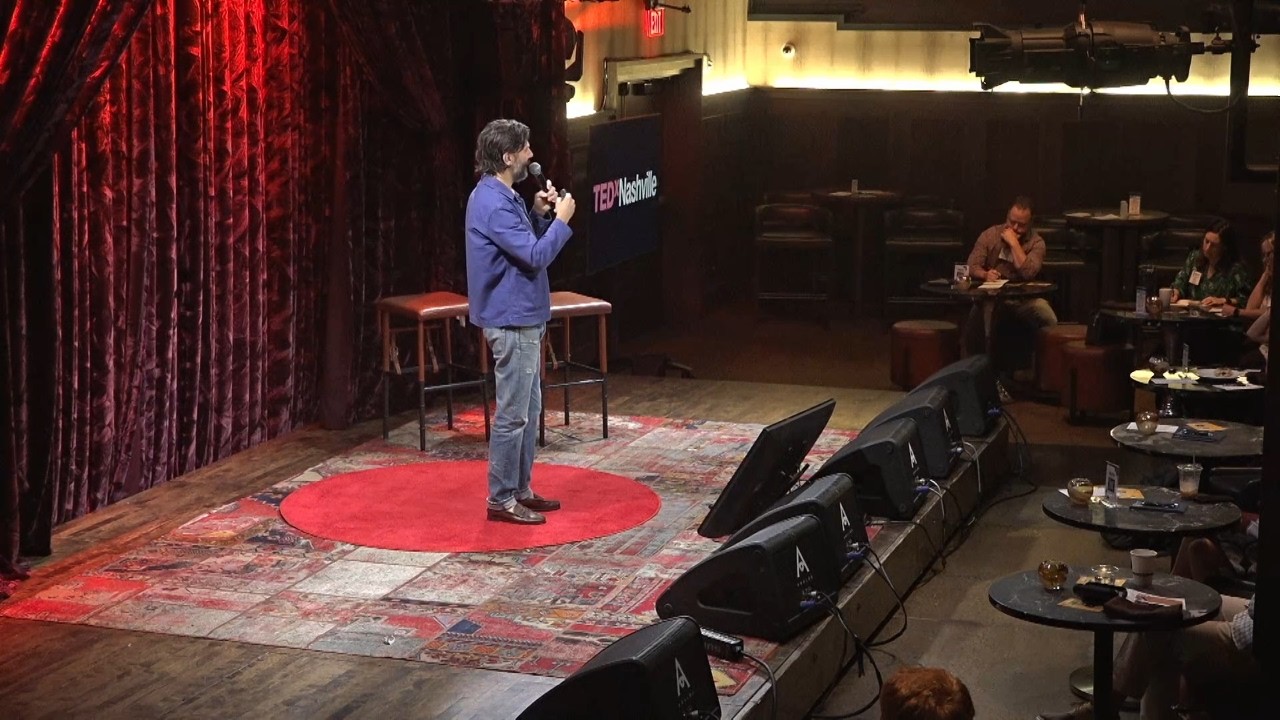
Your skill might be ruining your ability to lead | Jeremy Lutito | TEDxNashville Salon
Title history
- Your skill might be ruining your ability to lead | Jeremy Lutito | TEDxNashville Salon — observed on 20261112-1730 UTC (YouTube)
Keywords
Summary
150 words
Critical Evaluation
Value of the Information & Strength of the Argument
The talk’s value lies in its actionable, experience-based insights on leadership in creative fields. Lutito’s argument is compelling because it challenges common assumptions about how mastery translates into leadership. He builds a clear logical progression: identifying the problem (skill overemphasis), offering a reframing (skill vs. influence), and providing concrete strategies. The use of a personal anecdote for illustration is effective, but the argumentation is entirely anecdotal and does not reference supporting research or broader frameworks. It is persuasive for a practitioner audience but lacks scientific rigor. The speaker’s credibility in the music industry lends weight to his observations, yet the absence of data or external references weakens the argument’s generalizability.
Scientific Rigor, Source Quality, Title Accuracy
The talk is a personal narrative rather than a researched analysis. No external sources are cited; the only link in the description is the general TEDx page. This limits the scientific rigor. The title is catchy and accurately reflects the core message, but the content is more of an opinion piece than a systematic study. The speaker’s expertise is relevant, but without citations or references to leadership theories (e.g., transformational leadership, emotional intelligence), the treatment remains superficial. The title’s promise of ‘ruining your ability to lead’ is somewhat exaggerated but does align with the central thesis that overvaluing skill can impair leadership.
227 words
Title / Content Match
The title accurately reflects the main thesis: that over-reliance on technical skill can hinder leadership effectiveness, and influence matters more. Slightly sensationalized but largely faithful to the content.
Quality & Reliability
6/10
The talk is based on the speaker's extensive professional experience as a Grammy-nominated producer and drummer, providing high practical credibility. However, it is entirely anecdotal and lacks empirical evidence or citations to research, so scientific reliability is moderate.
Key Moments
Markers derived by PSI from the transcript: the creator did not define chapters.
- Introduction: speaker admits being out of comfort zone, as a drummer, and sets the stage for discussing leadership and collaboration.
- Mentor's comment about 'chameleon style of leadership' and initial negative reaction, leading to years of reflection.
- Introduction of the three principles: generous curiosity, holding a vision loosely, and chasing interesting over good.
- Personal studio story: singer expresses dissatisfaction, speaker resists defense, pivots by trying different approaches, and ultimately influences a positive outcome.
- Conclusion: reiterates that skill gets you in the door, but influence is what matters; encourages viewers to reconsider perceived weaknesses.
Cited Sources
- TEDx Talk Directory — General TEDx page mentioned in the video description as the platform for the talk.
Contribution & Novelties
The talk offers a fresh perspective on leadership by distinguishing between skill and influence, and by presenting a personal ‘chameleon’ approach as a strength. It provides practical heuristics (e.g., the 80/20 rule for trying bad ideas, holding a vision loosely) that are memorable and applicable in collaborative settings. The speaker’s background in music production adds a unique lens.
Pour aller plus loin :
- Psychological safety — Relevant to the idea of creating conditions for others to contribute openly.
- Transformational leadership — Connects to influencing others through vision and inspiration.
- Dunning–Kruger effect — Related to the danger of overconfidence from skill, which the talk indirectly addresses.
- Active listening — Underpins the principle of generous curiosity.
114 words
Radar Profile
The radar profile shows moderate scores across all dimensions, with slightly higher quality and fiabilite reflecting the speaker's practical expertise but lower technical level and quantity of information. This indicates a balanced but not deeply scientific presentation.