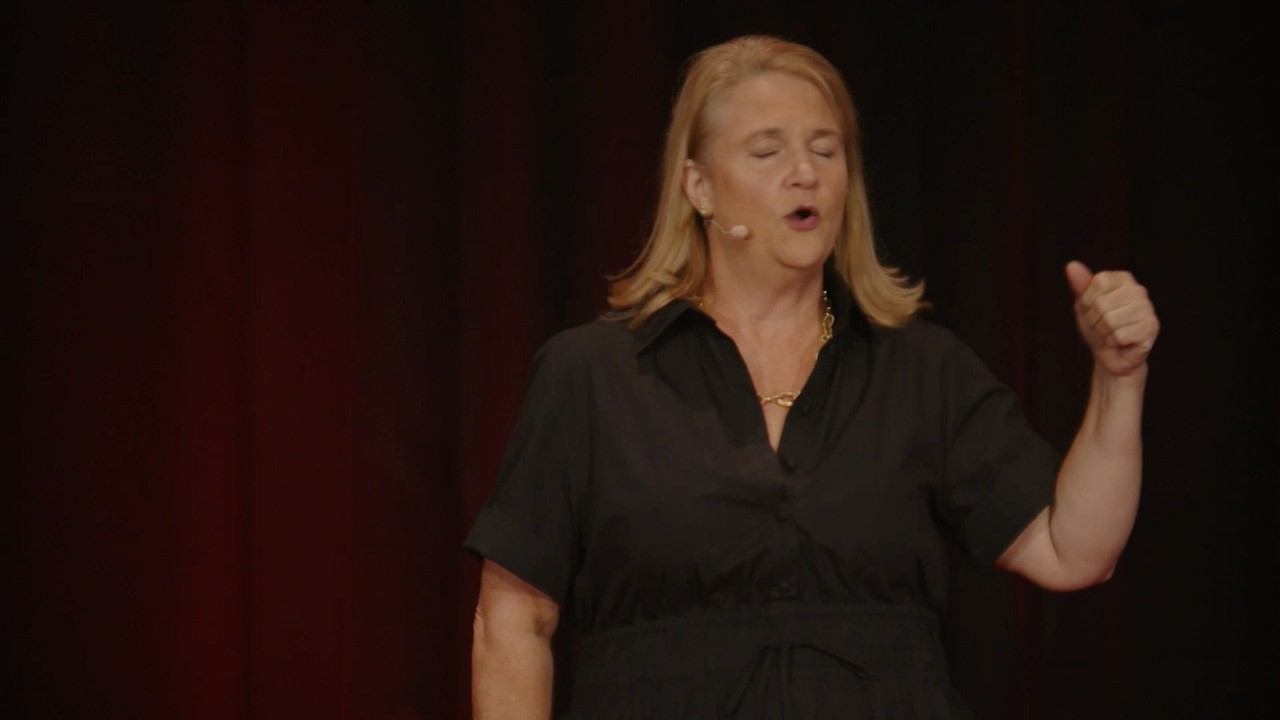
Internal Sparks that Make Excellence an Adventure | Katie Musick | TEDxRiverfield Country Day School
Title history
- Internal Sparks that Make Excellence an Adventure | Katie Musick | TEDxRiverfield Country Day School — observed on 20261104-2228 UTC (YouTube)
Keywords
Summary
152 words
Critical Evaluation
Value of the Information & Strength of the Argument
The talk offers practical insights into fostering intrinsic motivation in educational settings, drawing on well-known frameworks like Pink’s Drive and Responsive Classroom. The argument is built on a relatable narrative rather than rigorous empirical evidence, but it effectively communicates the importance of shifting from extrinsic to intrinsic motivators. The speaker’s personal experience adds authenticity, and the strategic advice (e.g., shared classroom goals, student autonomy) is actionable. However, the argumentation could be strengthened by referencing specific studies or quantitative outcomes, making it more persuasive for a critical audience.
Scientific Rigor, Source Quality, Title Accuracy
The speaker cites several influential titles—Drive, A Whole New Mind, Spark, and the Love and Logic series—without providing specific citations or data. She also mentions Responsive Classroom as a source of protocols. The rigour is moderate: the ideas align with established educational psychology (e.g., Self-Determination Theory), but the lack of formal references and reliance on anecdote weakens the scientific grounding. The title adequately captures the theme of intrinsic motivation leading to excellence as an adventure, and the content stays on-topic throughout, with no significant deviation.
187 words
Title / Content Match
The title accurately reflects the content: focusing on internal motivation ('internal sparks') that makes excellence an adventure, matching the speaker's central theme.
Quality & Reliability
7/10
The talk references established researchers and frameworks (Daniel Pink, Peter Benson, Responsive Classroom) but relies heavily on anecdotal evidence from teaching experience. The claims are plausible and supported by existing educational psychology literature, though not rigorously cited with specific studies.
Key Moments
Markers derived by PSI from the transcript: the creator did not define chapters.
- Introduction of the treasure box scenario and its negative impact on learning.
- Speaker introduces herself and her background, then begins the story about Rebecca.
- Discussion of the three pillars of intrinsic motivation (autonomy, mastery, purpose) as per Daniel Pink.
- Presentation of specific classroom strategies to build autonomy, such as shared goals and class jobs.
- Explanation of how purpose builds community and the conclusion of Rebecca's story.
Cited Sources
- TEDx Talks — Official TEDx page for the event and talk.
- Drive: The Surprising Truth About What Motivates Us — Referenced by the speaker for the three pillars of intrinsic motivation (autonomy, mastery, purpose).
- A Whole New Mind — Mentioned alongside Drive as a book by Daniel Pink supporting intrinsic motivation concepts.
- Spark: How to Ignite Your Child's Potential — Cited as Peter Benson's work on building thriving lives and fostering intrinsic spark.
- Building a Life That Thrives — Referenced as another title by Peter Benson on positive development.
- Responsive Classroom — Mentioned as a source of protocols for building community and autonomy in classrooms.
- Love and Logic — Cited as a series providing guidance on maintaining intrinsic motivation and respectful classroom management.
Concurring Sources
- Self-Determination Theory — Provides the theoretical basis for the importance of autonomy, competence, and relatedness in fostering intrinsic motivation, aligning with the speaker's arguments.
Contribution & Novelties
The talk contributes a practitioner’s perspective on applying intrinsic motivation research in early education, illustrated through a compelling case study. It synthesizes known frameworks into practical classroom strategies, emphasizing the role of autonomy, mastery, and purpose. The novel angle is the explicit linking of these concepts to the metaphor of ‘adventure’ to reframe excellence as an internal pursuit rather than a reward-based system.
Pour aller plus loin :
- Self-Determination Theory — Foundational theory by Deci and Ryan underpinning intrinsic motivation and autonomy.
- Intrinsic Motivation — Overview of the concept and its determinants, with references to key studies.
- Responsive Classroom Online Learning — Official site offering practical strategies for building positive classroom communities and intrinsic motivation.
115 words
Radar Profile
The scores show a moderate evaluation: information quantity and quality are balanced but not exceptional, while the technical level is relatively low, indicating that the talk is accessible to a general audience. Reliability is moderate, reflecting the mix of research references and personal anecdote.