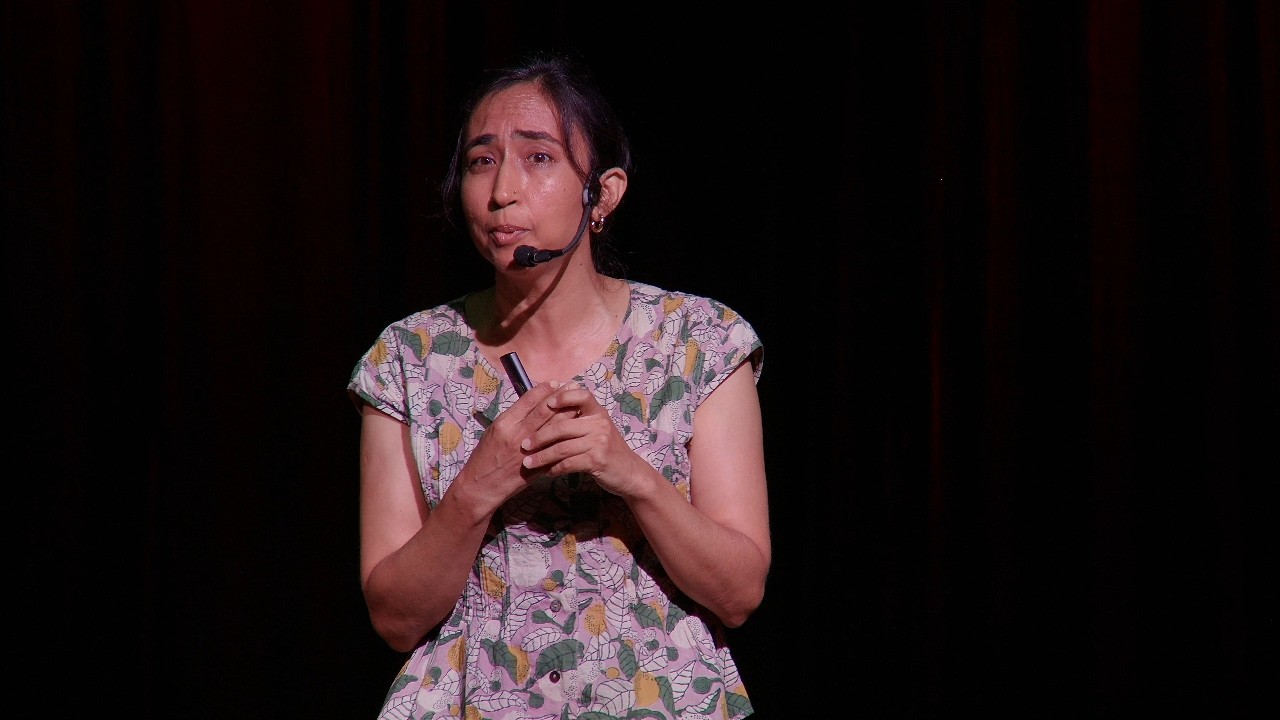
Creative Spaces | Sharareh Bajracharya | TEDxPremier Intl School
Keywords
Summary
152 words
Critical Evaluation
Value of the Information & Strength of the Argument
The value of the information lies in its vivid, first-hand account of how art can function as a life-affirming force in oppressive or turbulent contexts. The speaker’s personal narrative provides concrete examples—closing curtains to dance, reading coffee grounds—that illustrate abstract concepts like inherited creativity and emotional resilience. The argumentation is coherent and persuasive, built on a series of evocative anecdotes rather than statistical or empirical evidence. While it may lack scientific rigor, it effectively makes a case for integrating art into education and community life. The call to action is clear and actionable, urging educators and parents to create ‘creative spaces’ and to honor the artistic traditions already present in homes. The talk’s strength is its emotional authenticity and the credibility of the speaker’s role as an arts educator, though a skeptic might note the absence of broader research or counterarguments.
Scientific Rigor, Source Quality, Title Accuracy
The talk does not cite academic sources or external references; it is based on personal experience and expertise. The only link in the description is the generic TEDx page, which provides context for the talk format but no substantive sources. This limits the scientific rigor, though the content is presented as a personal testimony rather than a scholarly review. The title ‘Creative Spaces’ is apt, as the talk consistently returns to the idea of creating physical and emotional spaces for creativity. The speaker’s credibility is bolstered by her role as Director of Srijanalaya, an arts education organization, though the audience must rely on her narrative rather than verifiable data. The talk would benefit from references to key studies on arts and well-being, but its lack of sources is consistent with the TEDx format.
289 words
Title / Content Match
The title accurately reflects the content: the speaker explores how creative spaces—both physical and emotional—nurture individuality and connection.
Quality & Reliability
7/10
The talk offers a deeply personal and sincere reflection on art's role in fostering courage, empathy, and social connection. While anecdotal and emotionally driven, it stems from the speaker's extensive experience as an arts educator and director of an arts organization, lending practical credibility. The argument is coherent and well-structured, though it lacks empirical evidence or citation of research.
Key Moments
Markers derived by PSI from the transcript: the creator did not define chapters.
- Introduction: speaker's dual Iranian-Nepali heritage and childhood memories
- Description of family gatherings with music, dancing, and singing during the Iran-Iraq war
- The ritual of reading Turkish coffee (tasseography) and its symbolic significance for personal agency
- Reflection on art as broader than visual arts, encompassing rituals and inherited traditions
- Call to action for creating creative spaces in schools and communities, and for adults to immerse children in art
- Closing song by Batu Kash from 1965, celebrating Nepali cultural heritage
Cited Sources
- TEDx Program — The talk is part of a TEDx event, and this link provides information about the TEDx program and its independent organization.
Contribution & Novelties
The talk contributes a fresh, personal perspective on art’s role in fostering courage and connection, emphasizing non-traditional art forms like family rituals and inherited practices. It bridges personal memory with broader calls for educational reform, encouraging individuals to revisit their own cultural traditions. The speaker’s dual heritage offers a unique window into how art can transcend political and geographic boundaries.
Pour aller plus loin :
- Tasseography (coffee reading) — Relevant to the speaker’s description of reading coffee grounds; provides historical and cultural context.
- Arts in education — Discusses the role of arts education in schools, aligning with the speaker’s advocacy.
- Narrative empathy (concept without URL) — The idea that reading literature or engaging with stories enhances empathy, which underpins the speaker’s argument about novels broadening perspective.
126 words
Radar Profile
The radar profile shows moderate scores in information quantity and quality, with a very low technical level, reflecting the talk's personal and non-technical nature. The reliability score is relatively high due to the speaker's professional background, but the overall shape indicates a narrative-driven, emotional presentation rather than a data-heavy or technical one.