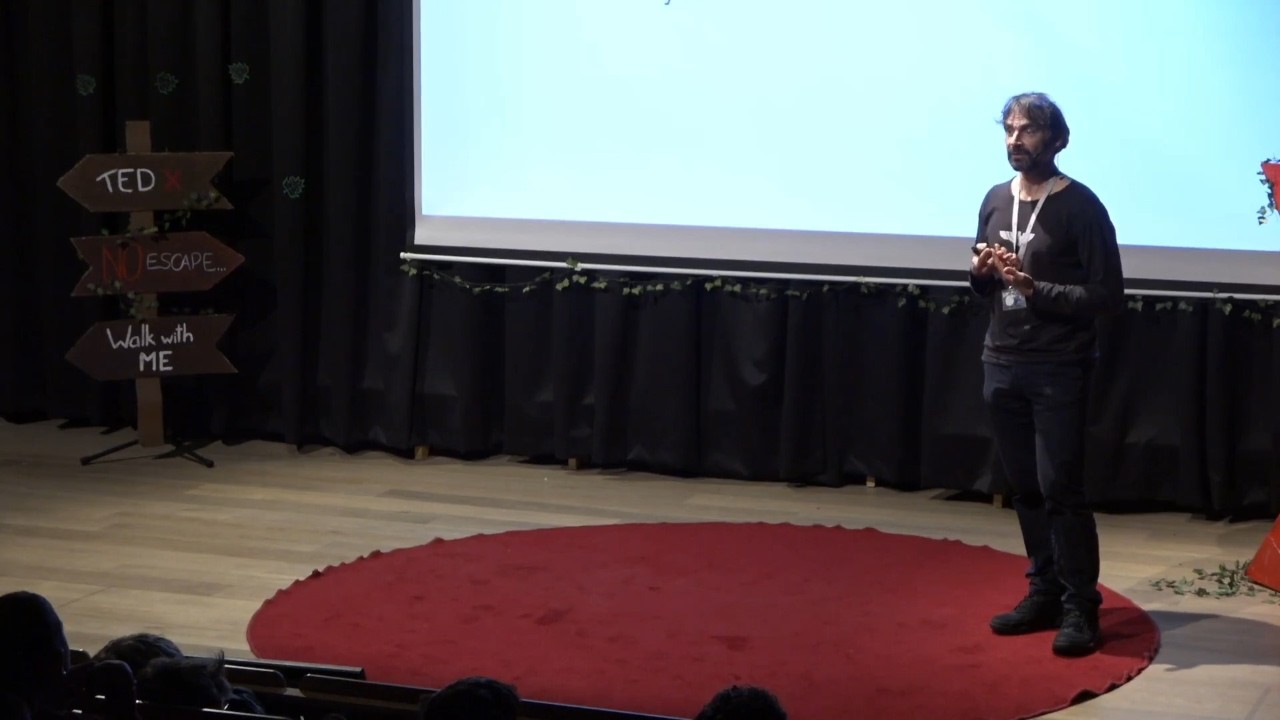
Walk with me? | Petr Koubek | TEDxEEB3 Youth
Title history
- Walk with me? | Petr Koubek | TEDxEEB3 Youth — observed on 20261114-0303 UTC (YouTube)
Keywords
Summary
142 words
Critical Evaluation
Value of the Information & Strength of the Argument
The talk provides a thoughtful perspective on the subtle pressures of conformity and the importance of personal responsibility. The argumentation is structured through illustrative examples from Monty Python, which make complex philosophical ideas accessible and engaging. The speaker builds a coherent case by linking diverse thinkers—Montaigne, existentialists, Jung—and applying them to everyday decisions like choosing study subjects. However, the argument is primarily anecdotal and lacks empirical evidence or scientific backing. It is more of a personal and philosophical reflection than a rigorous scientific analysis.
Scientific Rigor, Source Quality, Title Accuracy
The speaker cites several authorities (Montaigne, Jung, Wenceslas IV) and references Monty Python sketches, but does not provide precise citations or external sources. The title accurately reflects the content, and the talk stays on topic. The lack of verifiable sources and the subjective nature of the arguments reduce its scientific rigor, though it remains a coherent philosophical essay.
157 words
Title / Content Match
The title directly matches the content: a critical examination of the phrase 'walk with me' as an invitation to conformity.
Quality & Reliability
6/10
The talk offers a coherent philosophical argument, drawing on Monty Python, Montaigne, existentialism, Jung, and Wenceslas IV. However, it lacks empirical grounding and relies on personal reflection, which limits its scientific reliability.
Key Moments
Markers derived by PSI from the transcript: the creator did not define chapters.
- Introduction: speaker presents himself and the topic 'Walk with me'.
- Criticism of following authority and devices; introducing Monty Python as inspiration.
- Ministry of Silly Walks: authority makes absurdity appear normal.
- Holy Grail coconut imitation: humans imitate quests without real substance.
- Montaigne's 'belong to oneself' and the question of psychological ownership.
- Existentialist freedom and the danger of surrendering responsibility.
- Jung's collective shadow and how groups can dissolve individual responsibility.
- Life of Brian: 'follow no one' and the need to question all invitations.
- Conclusions: own yourself, question invitations, and walk alone responsibly.
Cited Sources
- TEDx Talks - Official Page — The video is a TEDx event, and this link is provided in the description as the official TEDx information page.
Contribution & Novelties
The talk offers a creative reframing of a common phrase (‘walk with me’) as a warning against blind conformity and a call for self-ownership. It integrates humor (Monty Python) with philosophical arguments to make the point memorable. The novelty lies in the combination of existentialist responsibility with pop culture references to critique modern distractions like smartphones.
Pour aller plus loin :
- Michel de Montaigne — His essay on solitude and self-knowledge directly supports the idea of belonging to oneself.
- Collective unconscious — Jung’s concept of the collective shadow is referenced in the talk.
- Existentialism — The theme of freedom and responsibility is central to existentialist philosophy.
106 words
Radar Profile
The radar profile shows moderate scores, with quality of information and technical level being relatively higher than quantity and reliability. This reflects a philosophically insightful but subjective presentation with limited empirical backing.