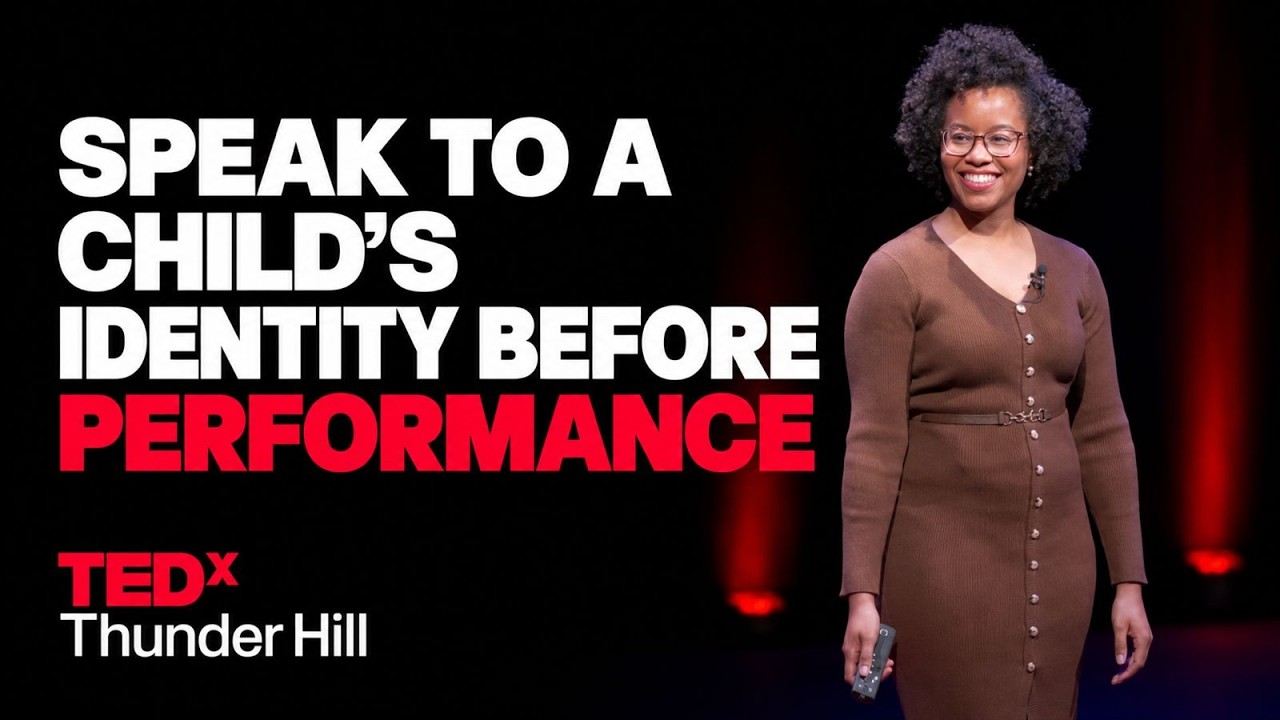
Speak To A Child's Identity Before Performance | Erikka Smith | TEDxThunder Hill
Title history
- Speak To A Child's Identity Before Performance | Erikka Smith | TEDxThunder Hill — observed on 20261114-0310 UTC (YouTube)
Keywords
Summary
171 words
Critical Evaluation
Value of the Information & Strength of the Argument
The value of this talk lies primarily in its authenticity and relatable personal anecdotes, which can resonate with audiences on an emotional level. The speaker’s argument is built on a clear logical structure: negative words in childhood lead to self-doubt, which manifests as perfectionism and procrastination, and only through affirming inner identity can individuals thrive. However, the argumentation is based entirely on anecdote and subjective experience; it lacks empirical evidence, and no psychological or educational research is cited to support the claims. The speaker’s role as a school bus driver lends practical credibility, but it is not a substitute for scientific rigor. The talk is persuasive due to its sincerity but does not offer a balanced examination of counterarguments or alternative perspectives.
Scientific Rigor, Source Quality, Title Accuracy
Scientifically, the talk has minimal rigor: no citations, no references to studies, and no verifiable data. The only source provided is the TEDx organization itself, which does not lend scientific weight. The title is well-aligned with the content, and the talk clearly addresses the stated theme. However, the lack of supporting evidence and reliance on personal narrative limits its scientific reliability. The speaker’s observations, while valuable, are not systematically collected or analyzed, so the claims should be viewed as motivational rather than evidence-based. The title’s promise of a principled approach is only partially fulfilled, as no specific strategies or evidence-based interventions are offered beyond general encouragement.
243 words
Title / Content Match
The title accurately encapsulates the talk's central message—prioritizing a child's identity and sense of self before focusing on performance and achievements.
Quality & Reliability
4/10
The talk is a personal testimony relying on anecdotal evidence rather than scientific studies or systematic research. The speaker's observations as a school bus driver provide practical insight but lack methodological rigor.
Key Moments
Markers derived by PSI from the transcript: the creator did not define chapters.
- Introduction and grandmother's answering machine story.
- Recount of high school professor calling her 'dumb'.
- Explains how negative words led to perfectionism and procrastination.
- College years, finding faith, and joining community service.
- Taking public speaking class and becoming an RA.
- Call to action: speak to identity before performance.
Cited Sources
- TEDx Program — The talk was given at a TEDx event organized under TED's license.
Contribution & Novelties
The talk offers a personal and accessible perspective on the importance of affirmations in childhood, drawing from the speaker’s unique role as a school bus driver. While not scientifically novel, it translates a recognized psychological principle—that words shape self-concept—into everyday practice. Its originality lies in the setting (the bus as a safe space) and the actionable plea to prioritize identity over performance.
Pour aller plus loin :
- Self-fulfilling prophecy — The concept that negative beliefs about a child can lead to behaviors that confirm those beliefs, directly relevant to the speaker’s message.
- Growth mindset — A psychological framework about believing in one’s ability to develop, which complements the idea of building confidence from within.
- Affirmation (psychology) — The use of positive statements to build self-esteem, a practical tool implied in the talk.
132 words
Radar Profile
The radar profile shows moderate to low scores across all dimensions, reflecting the talk's anecdotal nature and lack of technical depth. It is not a data-driven or research-backed presentation, but rather a personal testimony with motivational value.