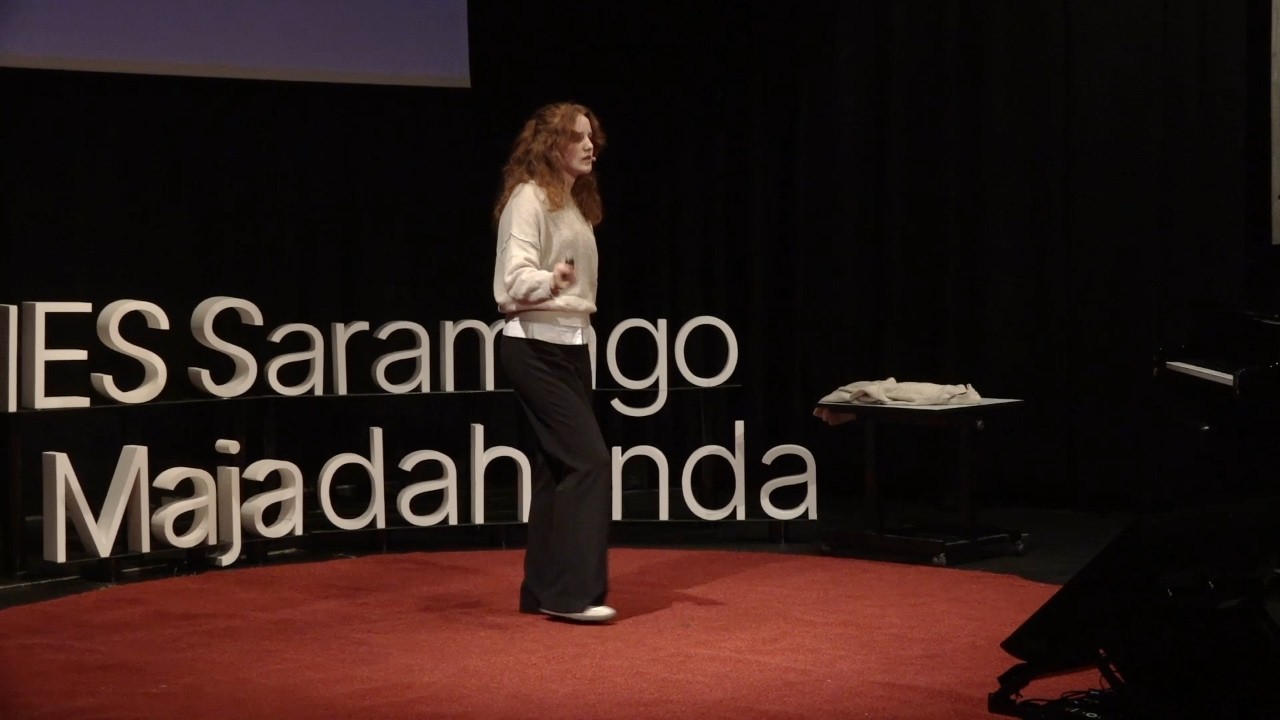
Handle with Care: When Labels Become Limits | Paula Alonso | TEDxIES Saramago Majadahonda Youth
Title history
- Handle with Care: When Labels Become Limits | Paula Alonso | TEDxIES Saramago Majadahonda Youth — observed on 20261112-0406 UTC (YouTube)
Keywords
Summary
167 words
Critical Evaluation
Value of the Information & Strength of the Argument
The talk provides a balanced perspective: it clearly distinguishes between harmful and beneficial uses of expectations. The argumentation is solid, built on established research (Dweck, Curran & Hill) and a relatable anecdote that makes the concept tangible. The progression from problem to solution is logical, and the proposed actions are practical and evidence-informed. However, the anecdote is not accompanied by data and could be seen as cherry-picked, though it serves as an illustration rather than proof.
Scientific Rigor, Source Quality, Title Accuracy
The talk cites specific studies and researchers (Carol Dweck, Claudia Mueller, Andrew Hill, Thomas Curran) and mentions a case study of 52 experiments. These are credible academic sources. No URLs are given beyond the general TEDx link, but the references are recognizable. The title is apt and the content matches the title closely. The description provides context about the speaker and the TEDx format.
155 words
Title / Content Match
The title accurately reflects the content: the metaphor of laundry labels is used to discuss how identity labels constrain children's development.
Quality & Reliability
8/10
Well-referenced talk citing Dweck's experiments and Curran & Hill's perfectionism meta-analysis; anecdotal evidence is clearly separated from research findings.
Key Moments
Markers derived by PSI from the transcript: the creator did not define chapters.
- Introduction: labels on clothes vs. labels on children.
- Mention of Carol Dweck's experiments on praise.
- Explanation of the difference between praising effort and praising intelligence.
- Anecdote about a friend labeled 'gifted' and the impact on his identity.
- Discussion of positive expectations research from a study of 9,000 adolescents.
- Three practical changes: praise the process, make failure safe, allow growth.
- Conclusion: handle children with care, not labels.
Cited Sources
- TEDx Program — General source for the TEDx event format and related information.
Contribution & Novelties
The talk synthesizes known research on mindset and perfectionism into a clear, accessible message for parents and educators. Its original contribution is the extended metaphor of clothing labels, which makes the abstract concept of identity labels tangible. It also emphasizes a nuanced take: not all expectations are harmful, and the key is the focus on process vs. person.
Pour aller plus loin :
- Carol Dweck — Psychologist known for mindset research; her work on fixed vs. growth mindset is central to the talk.
- Perfectionism (psychology) — Overview of perfectionism, including research by Curran and Hill on rising perfectionism among young people.
- Pygmalion effect — Related concept: higher expectations lead to better performance, but can also cause negative pressure when applied rigidly.
121 words
Radar Profile
The profile shows high quality and reliability scores with moderate quantity, reflecting a concise talk that prioritizes depth over breadth. Technical level is deliberately low to suit a general audience, which aligns with the accessible tone.