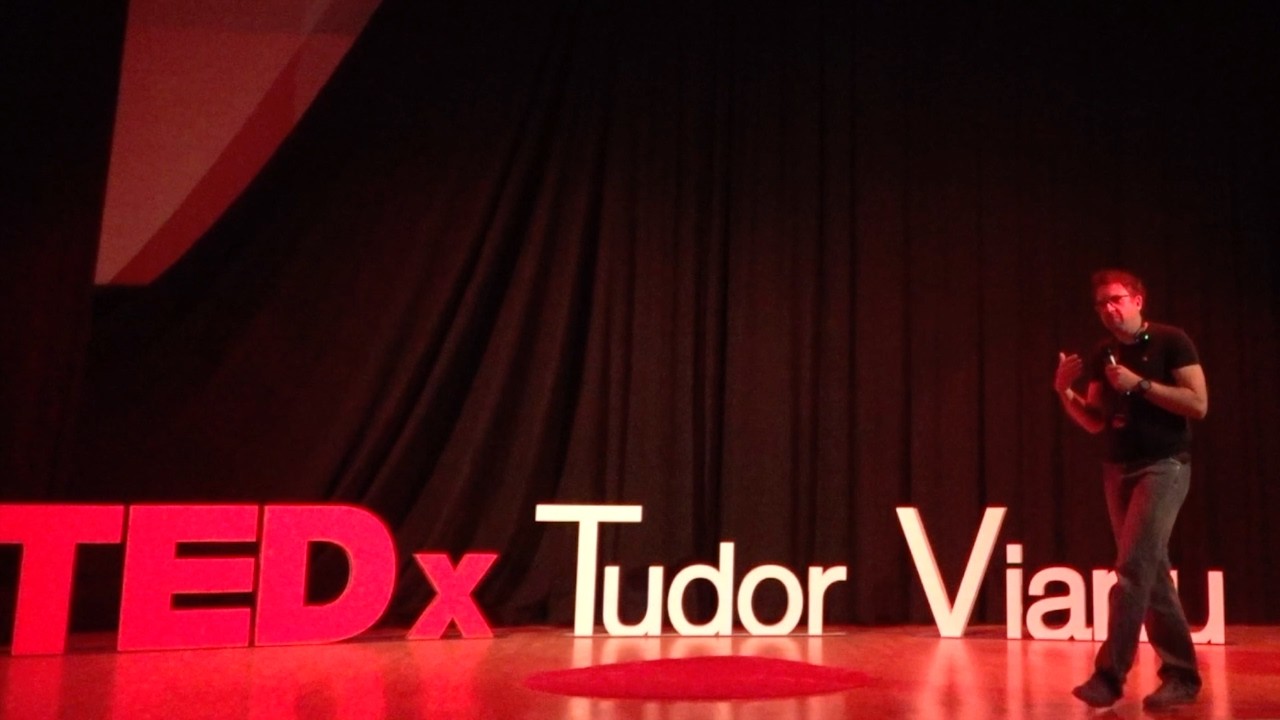
Mai merită să învățăm programare? | Vlad Posea | TEDxTudor Vianu Youth
Is it still worth learning programming? | Vlad Posea | TEDxTudor Vianu Youth
Keywords
Summary
223 words
Critical Evaluation
Value of the Information & Strength of the Argument
The talk provides valuable insights into the ongoing debate about programming education in the AI age. Posea’s argumentation is well-structured, moving from a personal dilemma to broader analogies and practical advice. He effectively uses the compiler and aviation analogies to illustrate the point that automation does not eliminate the need for human expertise but rather shifts its focus. The claim that AI is simultaneously the best and worst learning tool is thought-provoking, and his distinction between using AI to learn versus using it to complete tasks is particularly relevant. While the argumentation relies on anecdotal experience rather than empirical evidence, it is logically sound and grounded in a realistic assessment of industry trends.
Scientific Rigor, Source Quality, Title Accuracy
The talk does not cite specific scientific sources, but it references the speaker’s own 20-year experience in the IT industry and his role as a professor, which lends practical credibility. The only external link provided is the general TEDx page, offering no additional references. The title accurately captures the core question, and the content directly addresses it without drifting. The speaker’s authority in the field adds some weight, but the lack of verifiable citations limits the talk’s scientific rigor. The adéquation between the title and content is strong, with no mismatch.
219 words
Title / Content Match
The title accurately reflects the central question addressed throughout the talk, with the content directly exploring whether programming education remains relevant.
Quality & Reliability
7/10
The talk offers a coherent, experience-based perspective on learning programming in the AI era, but relies on anecdotal evidence and personal opinion rather than empirical data, which limits its scientific certainty.
Key Moments
Markers derived by PSI from the transcript: the creator did not define chapters.
- Introduction: Posea frames the question about learning programming, mentioning his first-year students.
- Posea discusses the rapid change in IT, citing examples like Flash and blockchain.
- Compilers vs. AI analogy: explaining the transition period where humans can still review generated code.
- Aviation autopilot analogy: despite automation, pilots are still essential, comparing to programmers.
- Advice for students: focus on learning, develop algorithmic thinking, and pursue passion.
- Conclusion: learning programming is valuable for understanding AI and problem-solving, even if jobs evolve.
Cited Sources
- TEDx Program — General reference for the TEDx event format, mentioned in the video description.
Contribution & Novelties
Posea adds a nuanced perspective to the debate on programming education by framing AI as a tool that, when used appropriately, can enhance learning rather than replace it. His analogy to the evolution of compilers and the parallel to aviation autopilot provide a fresh angle that helps bridge the gap between technological change and educational practice.
Pour aller plus loin :
- Algorithmic thinking — Foundational concept emphasized in the talk as a key skill developed through programming.
- Autopilot — Historical example used to illustrate how automation increases rather than decreases the need for skilled human oversight.
- Impact of artificial intelligence on employment — Directly relevant to the talk’s central question about the future of programming jobs.
116 words
Radar Profile
The profile shows moderate scores across all dimensions, with higher quality of information compared to quantity, reflecting a well-argued but not highly technical or extensively sourced talk.