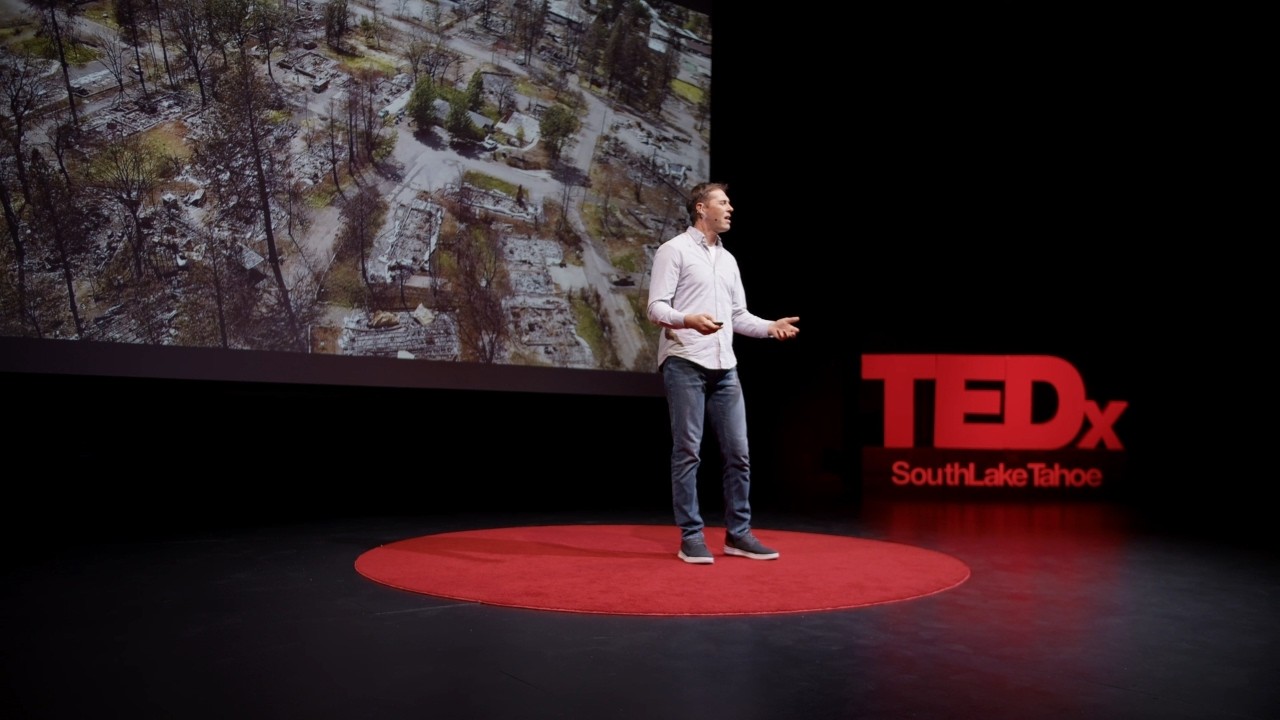
From Trauma to a Future Beyond Wildfires | Maxwell Brodie | TEDxSouthLakeTahoe
Title history
- From Trauma to a Future Beyond Wildfires | Maxwell Brodie | TEDxSouthLakeTahoe — observed on 20261120-1642 UTC (YouTube)
Keywords
Summary
202 words
Critical Evaluation
Value of the Information & Strength of the Argument
The value of the information lies in reframing wildfire response from a reactive to a proactive minute-scale intervention. The speaker presents a compelling logical chain: every large fire starts small, therefore rapid response is key, and autonomous aircraft can achieve that. However, the argument is largely anecdotal and lacks quantitative data or peer-reviewed references. The emotional hook is strong, but the technical feasibility is presented without detailed evidence. The speaker does not address regulatory, cost, or operational challenges in depth, but the overall reasoning is coherent and optimistic.
Scientific Rigor, Source Quality, Title Accuracy
The scientific rigor is moderate; the talk is a personal story combined with technological speculation. No formal sources are cited beyond referencing the TEDx standard. The title accurately reflects the content, and the description provides background on the speaker’s company. The lack of citations and the absence of specific technical details limit the scientific depth, but the information is consistent with known wildfire management challenges. No external sources are provided in the description besides the generic TEDx link.
181 words
Title / Content Match
The title accurately reflects the content: a personal trauma from wildfires leading to a future-oriented vision of autonomous firefighting.
Quality & Reliability
7/10
Personal narrative and technological vision, but lacks formal citations. The speaker is an entrepreneur in climate tech, but the talk is mostly anecdotal and conceptual. The scientific basis is plausible but not rigorously sourced.
Key Moments
Markers derived by PSI from the transcript: the creator did not define chapters.
- Introduction to the 2003 Okanagan fire and personal story.
- Description of the fire progression and the family's response.
- The questions that arose: why not respond in minutes?
- The window of opportunity: thousands of gallons in under 10 minutes.
- Introduction of Rain and autonomous Black Hawk capabilities.
- The role of prescribed burns and how autonomous aircraft enable them.
- Vision for the future and conclusion.
Cited Sources
- TEDx Program — Official TEDx page; the talk was given at a TEDx event.
Concurring Sources
- National Interagency Fire Center — General resource on wildfire management and suppression.
Contribution & Novelties
The talk contributes a personal and entrepreneurial perspective on integrating autonomous aircraft into wildfire early response. It emphasizes the concept of pre-positioning aircraft based on predictive risk, which is a forward-looking approach. The speaker connects emotional trauma to a technological mission, offering a novel narrative.
Pour aller plus loin :
- Wildfire — Background on wildfire behavior and suppression.
- Prescribed burn — Context on planned low-intensity fires.
- Unmanned aerial vehicle — Overview of autonomous aircraft technology.
- 2003 Okanagan Mountain Park fire — Specific historical event referenced in the talk.
88 words
Radar Profile
The radar chart shows moderate to high scores across quality and information, but lower technical depth and reliability. This is consistent with an inspiring TEDx talk that is more narrative than rigorous research.