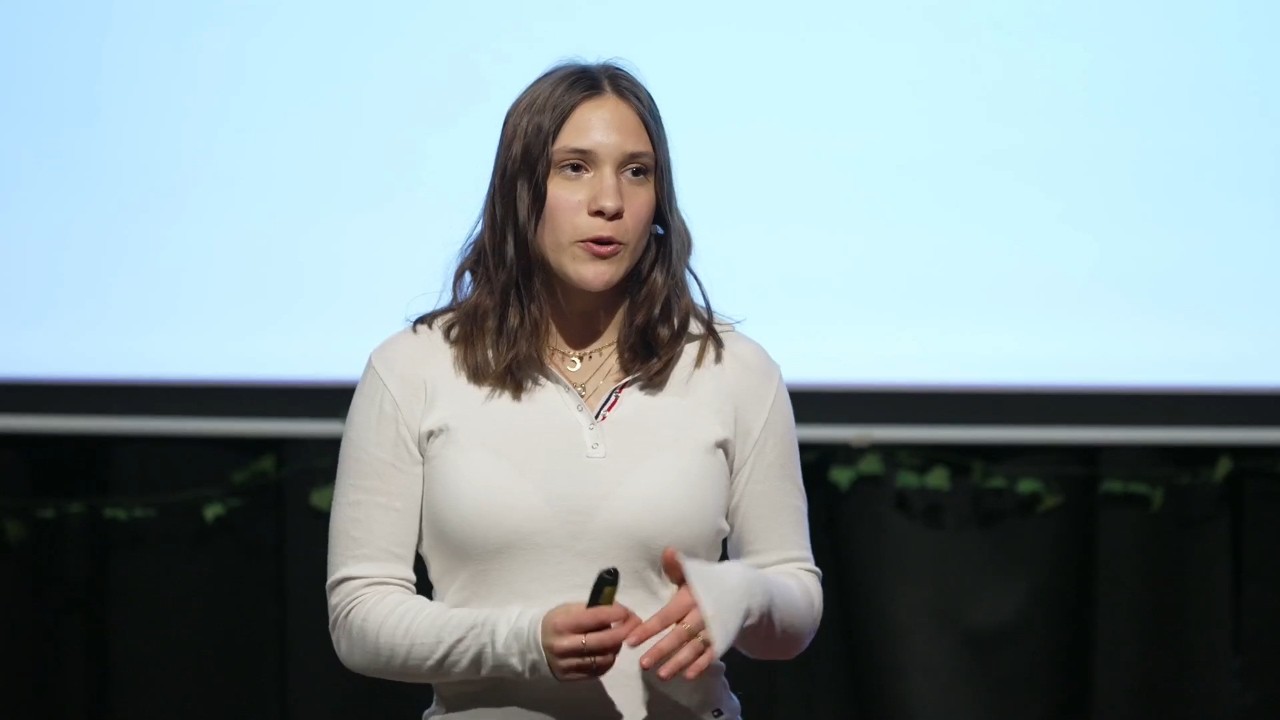
Is fashion an art of the privileged? | Celina Gluza Czyczerska | TEDxEEB3 Youth
Title history
- Is fashion an art of the privileged? | Celina Gluza Czyczerska | TEDxEEB3 Youth — observed on 20261114-0309 UTC (YouTube)
Keywords
Summary
185 words
Critical Evaluation
Value of the Information & Strength of the Argument
The value lies in the speaker’s ability to synthesize diverse examples—historical, socio-political, and commercial—into a coherent personal argument about fashion’s dual nature as both exclusive and democratized. The argumentation is logical in structure, moving from definition to historical context to contemporary examples, while openly acknowledging that her views are subjective. She effectively presents counterpoints (e.g., mass production vs. art) and uses specific cases like Louis Vuitton x Supreme to illustrate the illusion of closeness. The strength is the accessibility of the reasoning, though it lacks rigorous evidence and relies heavily on personal interpretation, which limits its persuasive force.
Scientific Rigor, Source Quality, Title Accuracy
The talk does not cite external sources beyond the TEDx platform, relying on general knowledge and personal anecdotes. The historical claims about fashion in the Middle Ages and 18th–19th centuries are presented without references, and the discussion of contemporary brands is based on popular perception rather than documented research. The title matches the content precisely, framing the central question that the speaker addresses from multiple angles, and this alignment is its greatest asset. No comments were provided, so public reception could not be assessed.
197 words
Title / Content Match
The title directly poses the central question addressed throughout the talk, making it highly appropriate and accurately reflective of the content.
Quality & Reliability
5/10
Personal opinion essay with anecdotal references to historical and contemporary fashion phenomena, but no verifiable citations or data beyond the speaker's own claims.
Key Moments
Markers derived by PSI from the transcript: the creator did not define chapters.
- Introduction: fashion as an essential part of human life and the speaker's interest in the topic.
- Definition of art and fashion, distinguishing high fashion as art intended for exhibition.
- Historical perspective: fashion as a privilege of royalty and nobles from the Middle Ages to 19th century.
- Discussion of modern accessibility: mass-produced clothing inspired by haute couture, questioning if it can be called art.
- Examples of fashion as protest: Banksy, hippies, punk subculture, and Black Lives Matter t-shirts.
- Conclusion: traditional clothing as art, subjectivity of beauty, and the idea that individuals define art.
Cited Sources
- TEDx Program — General reference to the TEDx platform that hosts this talk.
Contribution & Novelties
The talk presents a coherent personal thesis on fashion’s relationship to privilege, synthesizing common arguments without introducing original research. Its originality lies in the speaker’s youthful perspective and the accessible way she links historical precedents to contemporary streetwear and protest fashion. It does not break new ground academically but offers a thought-provoking reflection for a general audience.
Pour aller plus loin :
- Banksy — Political street artist whose work the speaker cites as an example of art communicating social issues.
- Vivienne Westwood — Designer who drew from punk subculture; referenced in the talk for blurring boundaries between rebellion and high fashion.
- Punk fashion — Subculture style characterized by leather, safety pins, and slogans, used in the talk to illustrate anti-establishment expression.
- Haute couture — The high fashion system discussed as both art and exclusive privilege.
135 words
Radar Profile
The radar profile shows moderate scores across most dimensions, with slight strengths in the quantity and quality of information (6 and 5 out of 10) and lower technical level (3) and reliability (4), reflecting a personal, accessible but not deeply rigorous presentation.