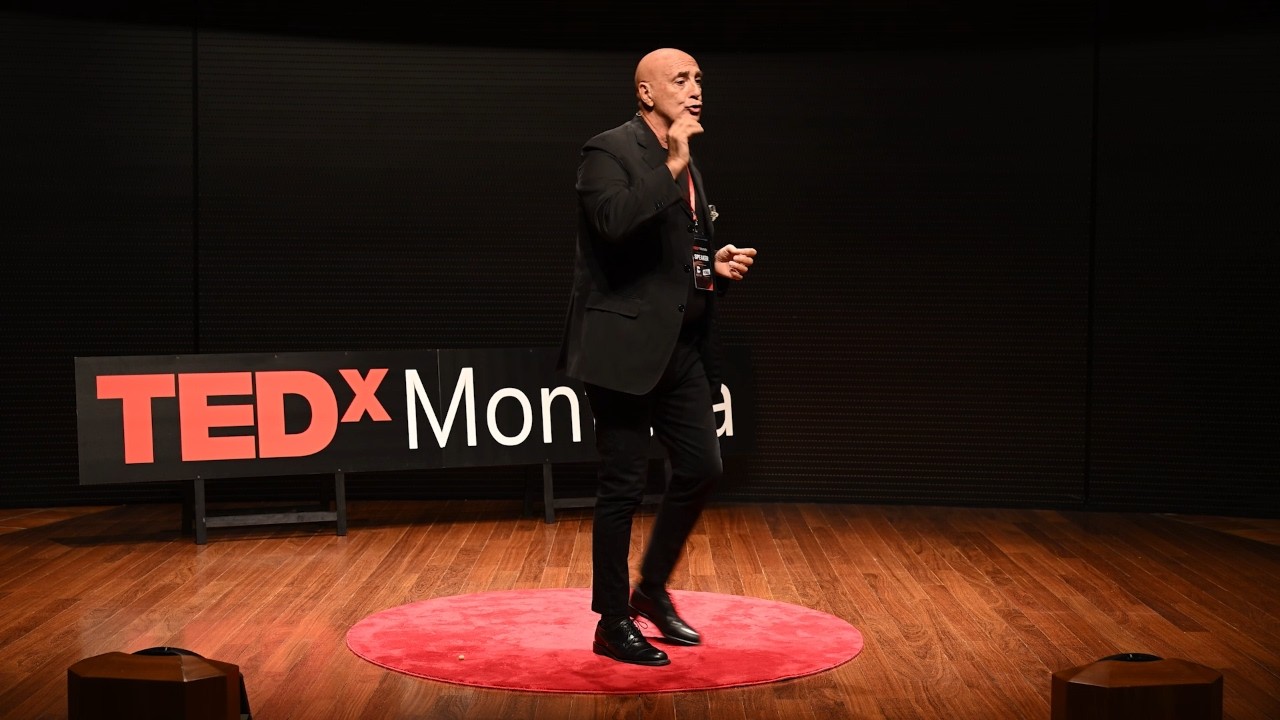
TEDx Montella - Giuseppe D'Agostino | Giuseppe D'Agostino | TEDxMontella
Keywords
Summary
163 words
Critical Evaluation
Value of the Information & Strength of the Argument
The talk offers a clear, accessible framework for behaviour change, centred on the idea that small, consistent actions outperform sporadic motivational efforts. The ATM metaphor is effective and memorable, and the anecdotal evidence (the two students) provides relatable success stories. However, the argumentation relies heavily on personal testimony and a single unnamed book, lacking empirical evidence or references to established psychological research. The logic is intuitive but not rigorously supported, which limits its scientific value but not its practical appeal for a general audience.
Scientific Rigor, Source Quality, Title Accuracy
The speaker does not provide formal references, which significantly weakens the scientific rigour. The only cited source is the TEDx program itself (linked in the description). The book he mentions is deliberately unnamed, and the example of Duolingo is anecdotal. The title ‘TEDx Montella - Giuseppe D’Agostino’ is standard TEDx format, describing the event and speaker, but it is not descriptive of the content. No external data or studies are referenced, making it difficult to verify claims. Overall, the talk is more inspirational than evidence-based.
184 words
Title / Content Match
The title mentions the event and speaker name but gives no indication of the content, which is common for TEDx talks. It remains somewhat generic.
Quality & Reliability
4/10
The talk is based on personal anecdotal experience and references to motivational concepts, but lacks rigorous scientific citations or verifiable data. The speaker shares a simple method supported by examples, but the evidence is purely testimonial.
Key Moments
Markers derived by PSI from the transcript: the creator did not define chapters.
- Opening: interactive choice between appearing good or being useful
- Speaker recounts discovering the phrase 'dedication to the process determines progress' in a book
- Development of a course with former colleagues and publication of a book
- Debunking myth 1: motivation is unreliable and externally dependent
- Debunking myth 2: large projects are less likely to succeed; small steps are key
- Bank ATM metaphor to explain the mental process: value, trigger, action, celebration
- Real example: Alfonso Cannavale does one Duolingo exercise daily and achieves research position
- Audience exercise: set a small habit linked to a trigger and do it for two years
Cited Sources
- TEDx Program — The talk was given at a TEDx event, using the TED conference format.
Contribution & Novelties
The talk presents a simple, replicable method for sustainable personal improvement, emphasising the importance of process over motivation. It combines common psychological concepts into a single actionable model. While not scientifically novel, it offers a pragmatic synthesis that could be useful for practitioners.
Pour aller plus loin :
- Kaizen — The concept of continuous small improvements aligns directly with the speaker’s ‘small steps’ advice.
- Implementation intention — This psychological strategy (if-then planning) supports the speaker’s trigger-based approach.
- Grit (personality trait) — Angela Duckworth’s research on perseverance links closely to the idea of dedication to the process.
96 words
Radar Profile
The radar profile shows a moderately balanced pattern, with quantity being the highest dimension, reflecting the speaker's engaging but anecdotal delivery. Quality and technical level are limited, indicating a lack of deeper scientific depth, while global reliability is moderate due to the absence of verifiable sources.