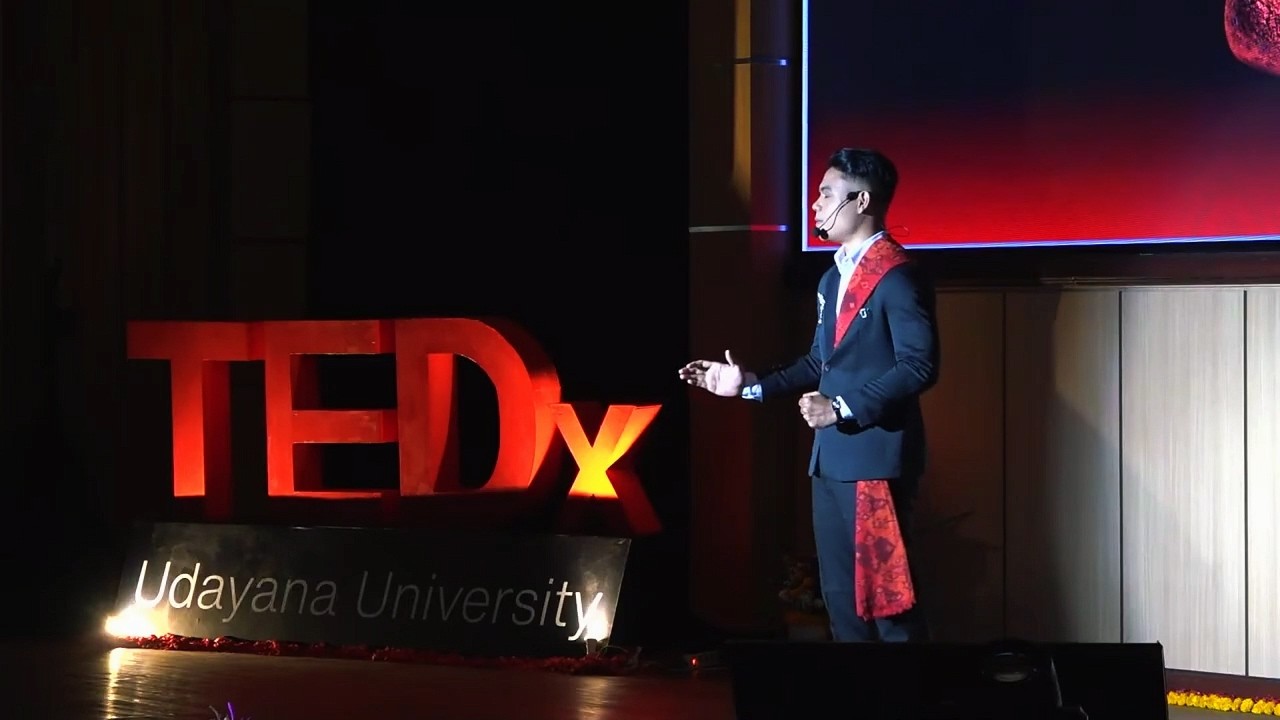
Finding My Identity Between Traditions and Modernity | Diestha Narindra | TEDxUdayana University
Title history
- Finding My Identity Between Traditions and Modernity | Diestha Narindra | TEDxUdayana University (PSI archive)
- Finding My Identity Between Traditions and Modernity | Diestha Narindra | TEDxUdayana University — observed on 20261114-0310 UTC (YouTube)
Keywords
Summary
180 words
Critical Evaluation
Value of the Information & Strength of the Argument
The talk offers valuable insights into the dynamics of cultural identity, challenging the dichotomy between tradition and modernity by highlighting their shared mechanism of uncritical acceptance. The argumentation builds on relatable personal stories and clear reasoning, effectively demonstrating that understanding the ‘why’ behind practices is essential for authentic identity formation. The examples are well-chosen and illustrate the nuances without oversimplifying. The logical progression from the concert experience, to the cookie analogy, to the university project, and finally the community example, creates a cohesive and persuasive narrative. The conclusion that identity begins when we choose it after true understanding is impactful and well-supported.
Scientific Rigor, Source Quality, Title Accuracy
Rigour is based on experiential knowledge and introspective analysis rather than academic sources. The speaker does not cite external studies, but this is consistent with the format of a personal TEDx talk. The only source mentioned in the description is the general TEDx page. The title accurately describes the content and the speaker’s personal journey. The talk is well-structured and maintains a clear focus on its central question, providing a coherent narrative. While not scientifically rigorous, it demonstrates intellectual honesty and a thoughtful approach to cultural heritage.
204 words
Title / Content Match
The title accurately reflects the talk's central theme of negotiating identity between traditional and modern influences.
Quality & Reliability
7/10
Reflective TEDx talk based on personal anecdotes and reasoning, coherent and thought-provoking, but lacks explicit scientific references and empirical evidence.
Key Moments
Markers derived by PSI from the transcript: the creator did not define chapters.
- Speaker introduces the Balinese concept of 'God's body' and his early experience of tradition without understanding.
- Recounts the provincial concert where he was repeatedly asked 'why' about traditions, leading to self-awareness.
- Ponders whether preserving a tradition without knowing its reason preserves the practice or the meaning.
- Uses the example of buying a branded cookie to illustrate how modern habits are also followed uncritically.
- Describes a university project on population structure where the goal was to present choices, not dictate decisions.
- Shares the story of Dinda, a volunteer who initially joined for external reasons but later found personal meaning.
- Concludes that identity begins when we understand a value or practice well enough to consciously choose it.
Cited Sources
- TEDx Program — Official TEDx page explaining the program and the talk's context.
Contribution & Novelties
The talk contributes a fresh perspective on the tradition-modernity debate by highlighting their structural similarity: both can become unquestioned routines. It shifts the focus from choosing between the two to developing the capacity to question and understand before adopting any cultural element. This personal and reflective approach offers a practical framework for individuals navigating similar cultural tensions.
Pour aller plus loin :
- Cultural identity — Relevant concept for understanding how individuals relate to their cultural heritage.
- Tradition — Background on the role and transmission of traditions in societies.
- Modernity — Overview of the modern worldview and its impact on identity.
100 words
Radar Profile
The radar profile shows moderate scores across information quality and reliability, with lower technical depth, reflecting a personal narrative rather than a data-driven analysis. The balanced pattern suggests a talk that is accessible and engaging, but not heavily research-based.