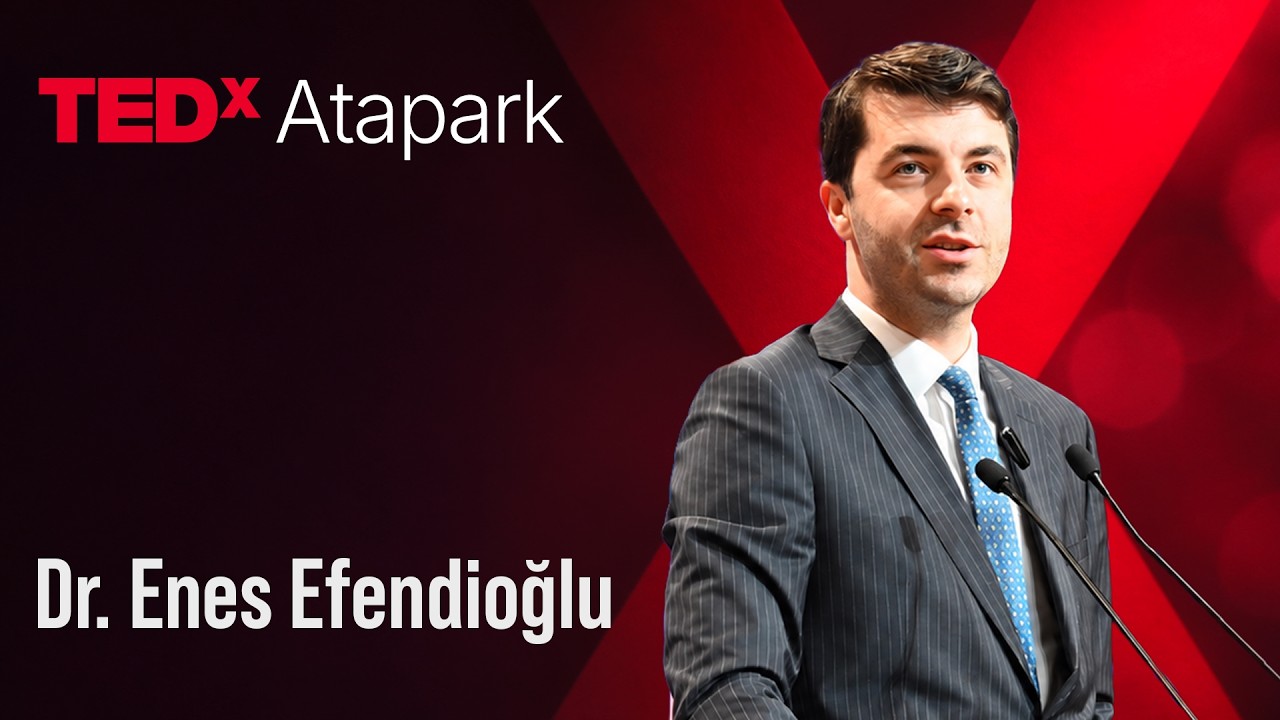
Hayallerini Erteleme: Başla, Gör ve Bitir | Dr.Enes EFENDİOĞLU | TEDxAtapark
Don't Postpone Your Dreams: Start, See and Finish | Dr.Enes EFENDİOĞLU | TEDxAtapark
Title history
- Hayallerini Erteleme: Başla, Gör ve Bitir | Dr.Enes EFENDİOĞLU | TEDxAtapark — observed on 20261119-1754 UTC (YouTube)
Keywords
Summary
169 words
Critical Evaluation
Value of the Information & Strength of the Argument
The value lies in the concrete, relatable examples and the motivational impact. The speaker draws on credible, real-life experiences and successful initiatives, making the message persuasive. However, the argumentation is largely anecdotal and relies on selective references, sometimes oversimplifying research findings (e.g., Harvard Grant Study conclusions are presented as broad certainties). The logic is coherent but not deeply analytical; it provides inspiration rather than rigorous evidence.
Scientific Rigor, Source Quality, Title Accuracy
The speaker mentions Erik Erikson and the Harvard Grant Study but gives no precise references. He also alludes to Simon Sinek’s TED talk and the printing press invention by Gutenberg. These are accurate references but presented without depth or nuance. The title matches the content, which is a personal development talk centered on these three themes. The scientific rigor is moderate: claims are made with confidence but lack detailed support. The talk could benefit from citing specific studies more accurately and acknowledging statistical variability.
165 words
Title / Content Match
The title accurately reflects the talk's content and message, which is focused on taking action, observing opportunities, and completing tasks.
Quality & Reliability
6/10
The talk is a personal testimony and motivational speech based on the speaker's experience and a few well-known studies (Erikson, Harvard Grant Study) that are presented in a simplified and partly imprecise manner. No direct citations or detailed references are provided; the scientific rigor is moderate.
Key Moments
Markers derived by PSI from the transcript: the creator did not define chapters.
- Introduction and speaker's background
- Mention of Erik Erikson's stages of psychosocial development
- Harvard Grant Study: childhood work capacity predicts adult success
- Comparison of student work rates: USA vs Turkey
- Example of the tack box: seeing beyond the obvious
- Seyahatsever project: repurposing dormitories for youth travel
- Gutenberg and the printing press as an example of combining existing elements
- The importance of finishing; pottery class anecdote
- Reference to Simon Sinek's 'Start with Why' and the idea of a deeper purpose
Cited Sources
- TEDx Talks official page — Link provided in the video description, indicating the TEDx format and general context.
Contribution & Novelties
The talk offers a concise and memorable framework (start, see, finish) for personal achievement, supported by personal anecdotes and a few well-known studies. Its originality lies in the combination of these elements, particularly the ‘Seyahatsever’ example, which demonstrates practical innovation in public service.
Pour aller plus loin :
- Harvard Grant Study (Wikipedia) — The longitudinal study mentioned, more detailed than the speaker’s summary.
- Erikson’s stages of psychosocial development (Wikipedia) — Provides a comprehensive overview of the theory referenced.
- Simon Sinek’s ‘Start with Why’ (TED talk) — The original talk cited by the speaker, clarifying the concept.
- Learning by doing (Wikipedia) — The educational principle the speaker implicitly advocates.
108 words
Radar Profile
The radar profile shows moderate scores across the board, with a slightly higher score on 'quantite_information' compared to 'niveau_technique', indicating a talk that is informative and engaging but not highly technical. The low 'fiabilite_globale' reflects the lack of rigorous sourcing.