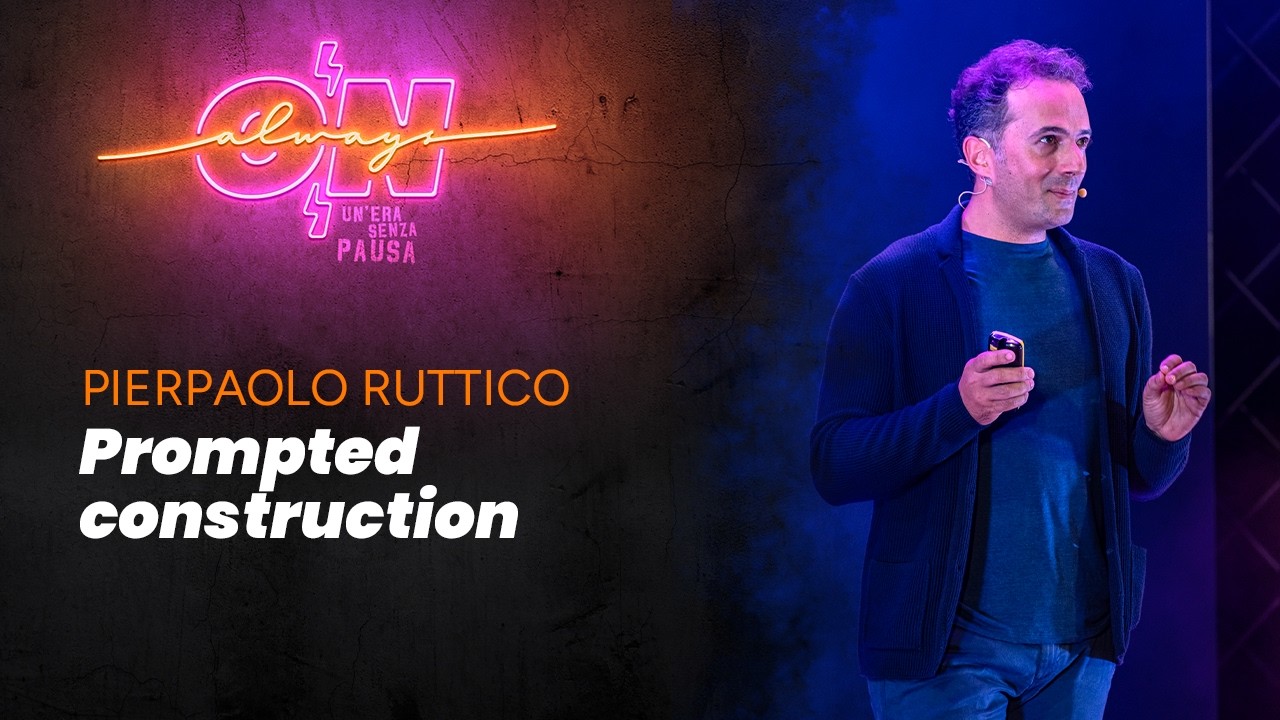
Prompted Construction | Pierpaolo Ruttico | TEDxLecco
Keywords
Summary
175 words
Critical Evaluation
Value of the Information & Strength of the Argument
The speaker provides compelling examples of AI applied to construction, demonstrating real-world implementations. However, the argumentation relies heavily on anecdotal evidence and lacks comparative data or rigorous validation. The value lies in highlighting emerging possibilities and the paradigm shift in design automation. The speaker effectively uses historical analogies to ground the novelty of the approach, but stops short of offering a critical evaluation of limitations or risks.
Scientific Rigor, Source Quality, Title Accuracy
The talk is primarily based on the speaker’s own research and projects, which adds authenticity but limits scientific rigor. No academic references are cited beyond the speaker’s own book mentioned in the description. The title matches the content well, capturing the central theme of prompt-driven construction.
128 words
Title / Content Match
Title accurately reflects the core topic of prompt-based construction.
Quality & Reliability
7/10
Expert speaker discusses innovative AI-driven construction processes, but relies primarily on anecdotal examples and lacks detailed empirical data or external verifiable references.
Key Moments
Markers derived by PSI from the transcript: the creator did not define chapters.
- Opening and definition of a prompt as a musical score.
- Historical pioneers: Hogarth, Suardi, and Brunelleschi.
- Computational design revolution and Grasshopper.
- Founding of INDEXLAB and integration of robotics.
- Project 1: Prompt to curve — carving the Fuji Mountain.
- Projects 2 and 3: Prompt to 3D print and prompt to cut.
- Future of robotics, humanoids, and European research project.
Cited Sources
- TEDx Program — General information about this independently organized TEDx event.
Contribution & Novelties
The talk introduces the concept of ‘prompted construction’ as a novel paradigm where AI directly generates machine instructions, eliminating traditional design-to-production bottlenecks. It presents concrete case studies from the speaker’s lab, illustrating the feasibility of prompt-driven manufacturing across different materials and processes. This contributes to the ongoing discourse on human-robot collaboration and the shifting role of the architect.
Pour aller plus loin :
- Digital fabrication — Relevant background on computer-controlled manufacturing technologies.
- Parametric design — Foundation of algorithmic design methods used in architecture.
- Generative design — Related AI-driven design exploration approach.
91 words
Radar Profile
The profile shows a balanced presentation with strong informational content but moderate technical depth. The speaker delivers substantial information about applied AI in construction, yet the level of technical detail remains introductory, and the reliance on personal experience limits the overall scientific rigor.