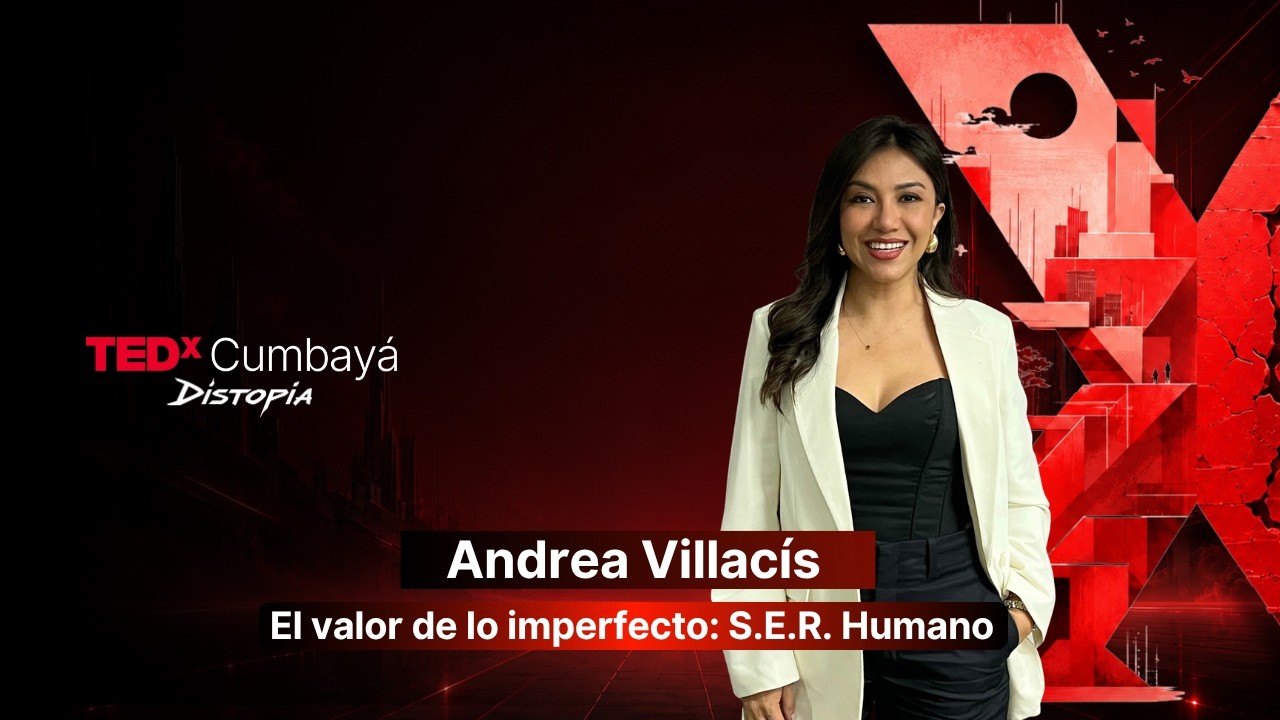
El valor de lo imperfecto: S.E.R. Humano | Andrea Villacís | TEDxCumbaya
The Value of the Imperfect: Being Human | Andrea Villacís | TEDxCumbaya
Keywords
Summary
175 words
Critical Evaluation
Value of the Information & Strength of the Argument
The value of this talk lies in its practical, experience-based perspective on AI adoption, offering a personal framework (S.E.R.) instead of abstract theory. The argumentation is logically structured: starting from the dangers of uncritical reliance on AI, she builds a case for a balanced approach, backed by anecdotes and references to popular works like Harari’s. However, the reasoning is largely anecdotal and lacks quantitative evidence or robust scientific grounding, which weakens its persuasive strength for a critical audience. The rhetorical style is engaging and emotional, but the solidity of her argumentation is moderate, as it relies on personal conviction and broad observations rather than data-driven analysis.
Scientific Rigor, Source Quality, Title Accuracy
The talk is a typical TEDx presentation, technically well-delivered but with limited scientific rigor. The sources mentioned, such as Harari’s ‘Sapiens’ and ‘Homo Deus’, are popular works and are not cited precisely, nor are they rigorously analyzed. The title accurately reflects the content, which consistently returns to the value of human imperfection and the S.E.R. model. No conflicting sources are addressed, and the speaker does not present alternative viewpoints, which limits the depth of critical engagement. Overall, the sources are not academically robust, and the title is a good fit, but it does not compensate for the lack of verifiable references.
222 words
Title / Content Match
The title highlights the value of imperfection and the S.E.R. model, which strongly aligns with the core message about preserving human qualities in the age of AI.
Quality & Reliability
5/10
The talk is a personal reflection and expert opinion, not a scientific study. It references Harari's books without specific citations and relies on anecdotes, making it moderately reliable but lacking empirical data.
Key Moments
Markers derived by PSI from the transcript: the creator did not define chapters.
- Introduction: question about who we want to become and the childhood dream.
- Speaker's professional journey from economics to technology and AI.
- Reflection on the value of common sense and lived experience versus AI's instant answers.
- Presentation of the S.E.R. model (Sensibility, Evolution, Responsibility).
- Three roles: architect of culture, curator of context, and guardian of people.
- Call for a humanistic technology pact in Ecuador and the need to address inequality.
Cited Sources
- TEDx program — Information about the TEDx event format, independently organized.
- Sapiens: A Brief History of Humankind — Mentioned as inspiration for understanding human evolution and purpose.
- Homo Deus: A Brief History of Tomorrow — Referenced in the discussion about the future of humanity and AI.
Contribution & Novelties
The original contribution of this talk is the introduction of the S.E.R. (Sensibility, Evolution, Responsibility) model, which offers a practical, values-based framework for leaders to navigate AI adoption while preserving human dignity. It emphasizes the importance of not automating certain human conversations and decisions, advocating for what the speaker calls ’technological humanism.’ This is not a technical or scientific innovation but rather a personal and actionable vision for integrating AI into life and work.
Pour aller plus loin :
- AI ethics — Relevant framework for thinking about responsible AI use.
- Human-centered design — Approach that prioritizes human needs in technology development.
- Yuval Noah Harari — Author cited in the talk, provides broader context on technology and society.
117 words
Radar Profile
The radar profile shows a balanced distribution with moderate scores in information quality and reliability, reflecting a thoughtful personal reflection, but with low technical level and moderate information quantity. This suggests a talk that is accessible and engaging but not deeply technical or data-driven.